Military Factory
Military Pay Chart
Global Firepower
Military Industrial Complex
Second World War
Home
Military Pay Scale
Military Ranks
Small Arms
Aircraft
Land Systems
Navy
Education
Military Factory Facebook Logo
flag of Nazi Germany

Messerschmitt Me 264 Amerika (America) Long-Range Bomber / Reconnaissance / Maritime Patrol Aircraft (1942)

Authored By Dan Alex | Last Updated: 7/9/2012

The massive Messerschmitt Me 264 long-range bomber was cancelled on September 23rd, 1944 - this after three were constructed.

Find a School Near You
Follow Military Factory on Facebook:
Trending on Military Factory:
Recent Articles:
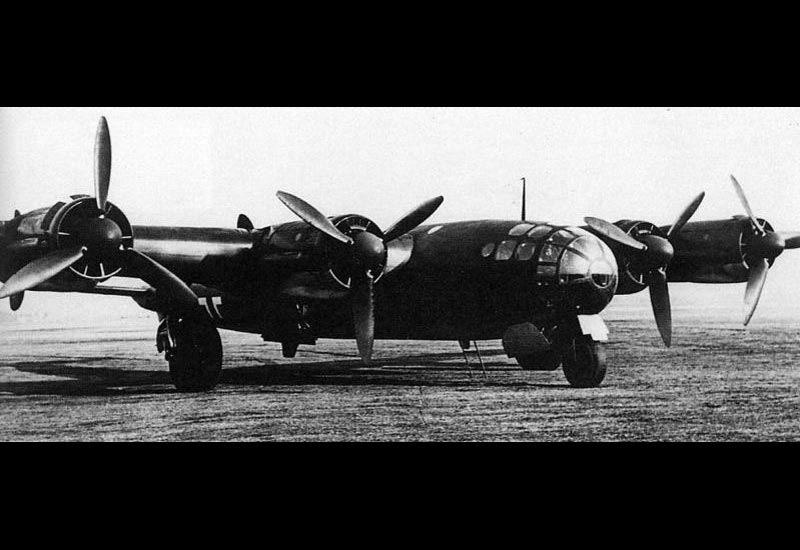
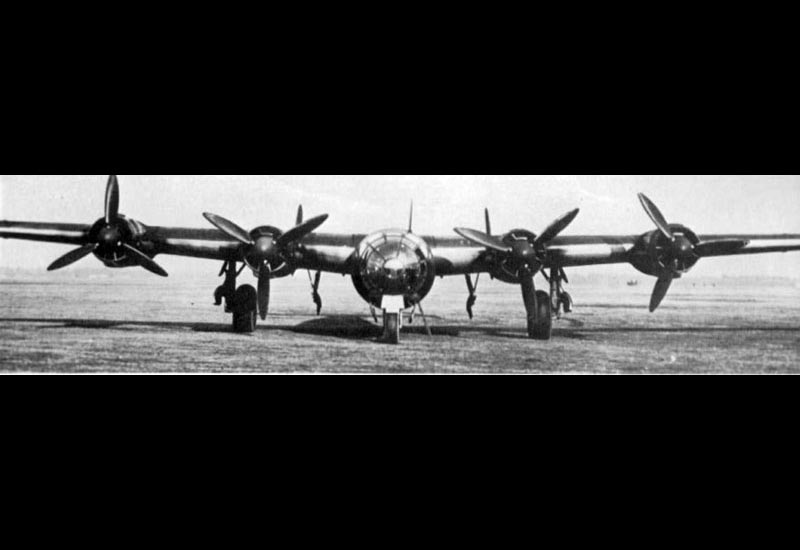
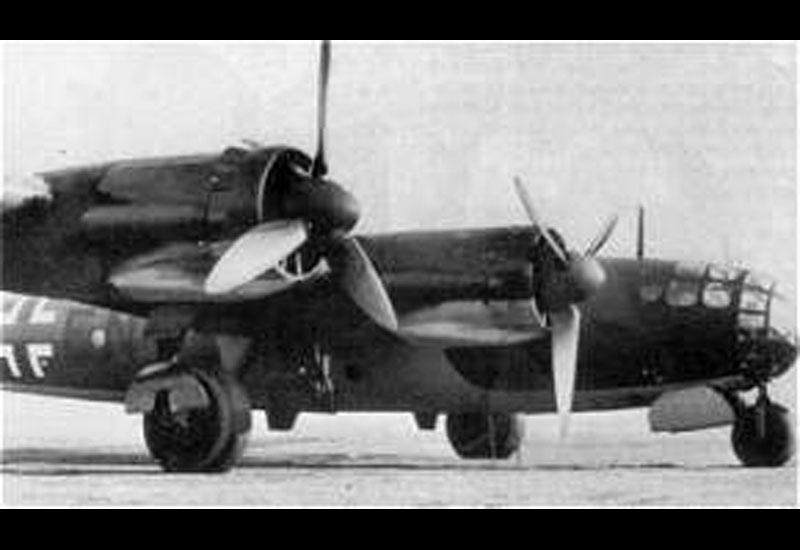
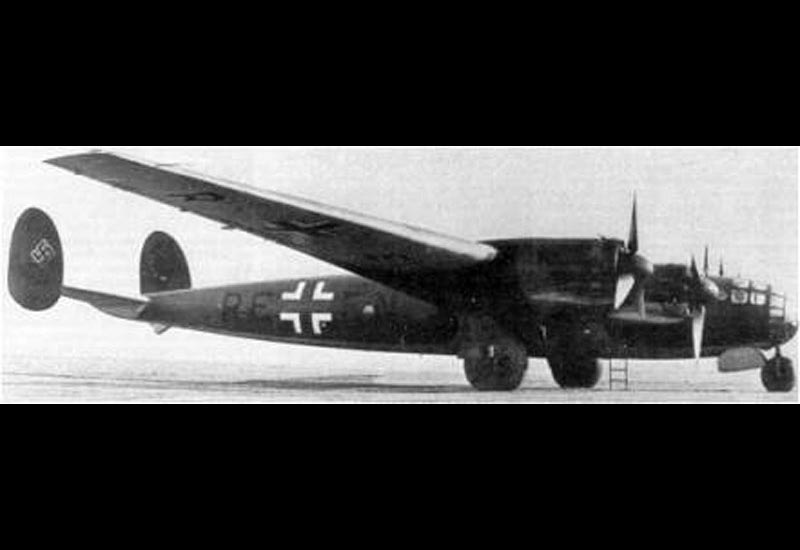
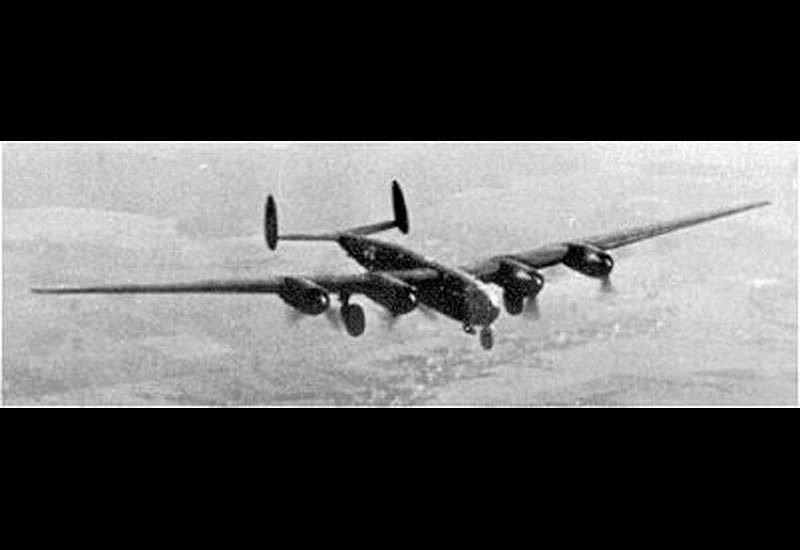
The Messerschmitt Me 264 was intended as a long-range aircraft and reconnaissance platform that was to supply the German Luftwaffe with a bomber capable of hitting targets within America as well as support Kriegsmarine U-boat operations in the Atlantic. However, an underperforming prototype and subsequent construction delays soon pushed the Me 264 into the background as German authorities moved their focus to more promising projects. Development of the Me 264 spanned some eight years, culminating in only three prototypes - only one of which was able to achieve flight (this being the Me 264 V1). Design of this interesting aircraft was credited to Wolfgang Degel, Paul Konrad and Waldemar Voigt of Messerschmitt.

Background

Successful long-range, multi-engine bombers with ideal payloads were hard to come by for the German Luftwaffe during World War 2. Much of their production efforts had always been placed into their fighter lines and this became evermore important as the war turned into a defensive fight for the Vaterland. As such, development of a heavy-hitter comparable to the what the Allies were fielding in their Avro Lancasters and Consolidated B-24 Liberators proved quite elusive to the most powerful military in the world. The most competent of the German crop became the multi-role Focke-Wulf Fw 200 "Condor" - a large four-engine design achieving first flight in 1937 and only seeing production totals of 275 aircraft. Another front-runner of note was the Heinkel He 111, but this was a 1930's-era twin-engine medium bomber with limited range and equally-limited ordnance-carrying capabilities. Comparatively, the He 111 was produced in over 6,500 examples.

The Fw 200 Condor was assigned to work alongside the Kriegsmarine, becoming active across the North Sea and the Atlantic Ocean as Germany's territory expanded. The Fw 200 proved a vital component in disrupting the Allied shipping lanes during the "Battle of the Atlantic" to the point that Winston Churchill himself tagged the German aircraft as the "Scourge of the Atlantic". However, the limited numbers of the Condors would soon restrict their direct combat activities as the war began progressing in favor of the Allies. By the end of 1943, the aircraft was relegated almost exclusively to the transport role. The Allied invasion of France further removed the Condor from any type of maritime operations. In the reconnaissance role, the Fw 200 was ultimately replaced by the newer Junkers Ju 290, this coming late in the war.

Development

Development of a long-range reconnaissance platform began in 1937. The German declaration of war against the United States began to advance the project. Hitler envisioned hitting targets within America from territories under German (and Japanese) control. In effect, Hitler wanted "harassing" actions against the country in an effort to disrupt production and instill fear into the American populace. At the same time, the German Navy was also looking for a long-range aircraft for use in maritime reconnaissance and bombing. Messerschmitt developed their P.1061 model and, by 1941, the type was ordered in six prototype forms (later reduced to three) as the Me 264. The prototypes were committed to this endeavor in three developmental forms as the Me 264 V1, Me 264 V2 and the Me 264 V3.

After a protracted construction period, the Me 264 V1 achieved first flight on December 23rd, 1942, with 4 x Jumo 211J series liquid-cooled inline piston engines of 1,340 horsepower each and was built sans armor or weapons. By the end of 1943, the powerplants were replaced by 4 x BMW 801G radial piston engines of 1,750 horsepower each. It was hoped that the V1 would be ready for flight testing as early as October 10th 1942, but this proved optimistic to say the least. In-flight testing revealed some inherent faults in the design with the major factor being high wing loading - this itself leading to a host of handling and performance issues. Wing loading essentially represented the loaded weight of the aircraft divided by the area of its wings. A fully-loaded Me 264 was soon found to exhibit a poor rate-of-climb and equally degraded maneuverability - this before armor and weaponry were even added to the mix. Performance from the BMW 801 series (G or H) radial engines netted the Me 264 a top speed of 350 miles per hour with an impressive range of 9,500 miles. The service ceiling was a reported 26,000 feet with a rate-of-climb equaling 390 feet per minute.

The Me 264 V2 was constructed with armor in place though sans its defensive guns but was not fully completed. The Me 264 V3 was given its guns and full armor (this one too never fully completed) but by this time, German interest in the project had waned. The Me 264 faced a slew of material delays and underperformed in tests despite claims made by the people at Messerschmitt. The German Navy (and the RLM for that matter) instead decided to focus their attentions on using the Junkers Ju 290 in the preferred roles and wait on its intended long-range, six-engine cousin - the Ju 390 - to achieve operational status. The official call for cancellation involving the fruitless Me 264 program came to an end in Reichsmarschall Technical Order Nr. 2. The Me 264 program was closed down officially on September 23rd, 1944.

Proposed Developments

The Me 264 V4 would have been fitted with BMW 801 E turbocharged engines and a GM-1 boost system. Other visions saw the Me 264 in an armed transport role, fitted with a remote-controlled turret. Still other developments could have been powered by jet engines and turboprops or fitted with drop tanks or a bevy of reconnaissance cameras. An armed, long-distance reconnaissance platform was designated as the Me 264A while a long-range bomber variant was to take on the designation of Me 264B.

Walk-Around

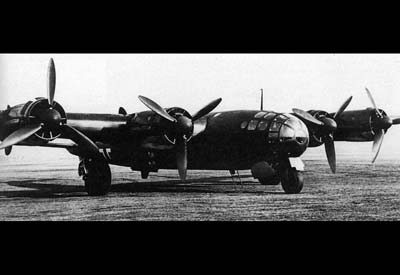
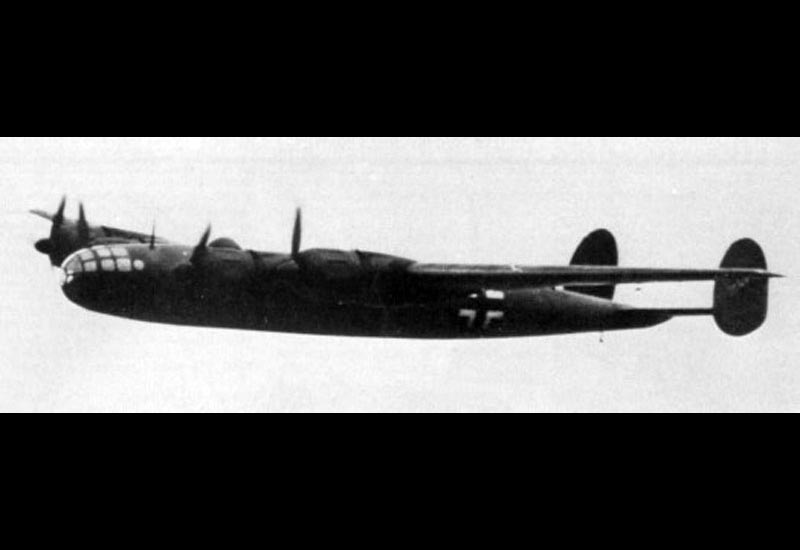
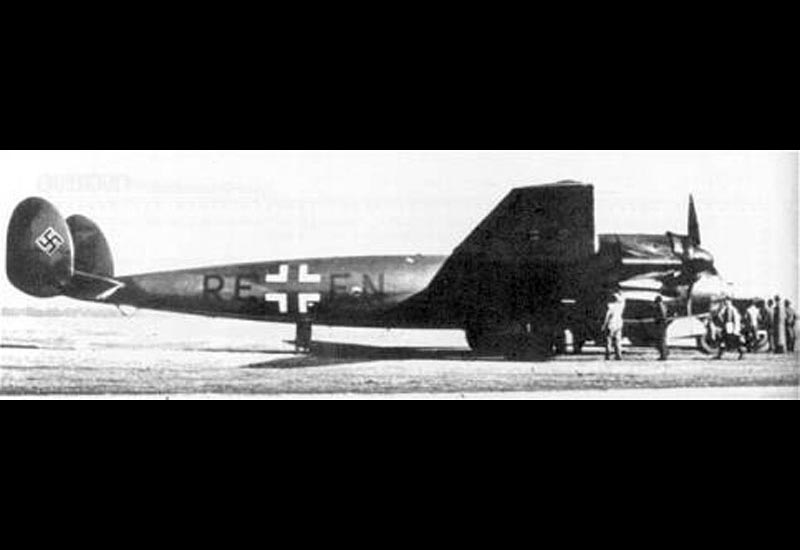
The external appearance of the Me 264 was not unlike that of the upcoming American-produced Boeing B-29 Superfortress. The aircraft sported a torpedo-like, all-metal, tubular fuselage with a streamlined and heavily-glazed forward area housing the cockpit. The fuselage quickly tapered off into an empennage and topped by a "T" style tail assembly sporting a pair of rounded vertical tail fins (ala the B-24 Liberator). The main, large-span wings were high-mounted assemblies extending out just aft of the cockpit and ahead of the fuselage center. Each wing housed two radial piston engines in streamlined nacelles emanating from the wing leading edges. The wing leading edges themselves were swept while the trailing edges were straight. The undercarriage was fully retractable and made up of single-wheeled ("donut" style) main landing gear legs and a single-wheeled nose landing gear leg. The main landing gears recessed into underwing wells while the nose landing gear recessed rearwards under the cockpit floor. The nose gear was further complicated by rotating some 90 degrees to lie flat underneath the cockpit floor.

Defensive armament was to have been comprised of 4 x 13mm MG 131 machine guns complimented by a pair of 20mm MG 151/20 cannons in remote-controlled turrets (ala the B-29 Superfortress). The offensive internal bomb load was limited to 6,614lbs.

The End of the Line

Junkers eventually won out in the long run with their large Ju 390 - a design that could take advantage of the existing Ju 290 parts already in circulation and production. In all, only the three Me 264 airframes were produced, with the V1 only ever achieving flight and this eventually being fielded in a limited role with Transportstaffel 5. Under German orders, Messerschmitt's focus then turned on developing their Me 262 twin-engine, jet-powered fighter. Hitler's dream of harassing the American East Coast was dead.

While the V2 and V3 prototypes were destroyed in subsequent Allied bombing raids, the V1 forged on until suffering a direct hit in another Allied air raid. The V1 was not repaired, however, and therefore left out of operational service for the duration of the war.

Miscellaneous

Some reports based on the interrogation of a German POW based at Lechfeld in 1943 revealed that a Sonderkommando Nebel Me 264 flew a regular route from somewhere in Finland to locations in Japan. This is of particular note for it showcases the range inherent in the Me 264 design as well as possible future German plans to field the Me 264 in the Pacific Theater against the Australian mainland and regionally-located American and British forces.
Text ©2003-2013 www.MilitaryFactory.com • All Rights Reserved • No Reproduction Permitted
MilitaryFactory.com does NOT sell equipment/weaponry. Material presented throughout this website is for historical and entertainment value and should not to be construed as usable for hardware restoration, maintenance or general operation. Please consult manufacturers for such information. Our disclaimer. Email corrections / Comments to MilitaryFactory at Gmail dot com.
Picture of Messerschmitt Me 264 Amerika (America)
Pic of the Messerschmitt Me 264 Amerika (America)
Image of the Messerschmitt Me 264 Amerika (America)
View All Images (7)

Specifications for the
Messerschmitt Me 264 Amerika (America)
Long-Range Bomber / Reconnaissance / Maritime Patrol Aircraft


Country of Origin: Nazi Germany
Manufacturer: Messerschmitt - Germany
Initial Year of Service: 1942
Production: 3


Focus Model: Messerschmitt Me 264 Amerika (America)
Crew: 8


Length: 69.88ft (21.3m)
Width: 141.08ft (43.00m)
Height: 14.11ft (4.30m)
Weight (Empty): 46,628lbs (21,150kg)
Weight (MTOW): 123,459lbs (56,000kg)


Powerplant: 4 x BMW 801 G/H radial piston engines delivering 1,730 horsepower each.


Maximum Speed: 348mph (560kmh; 302kts)
Maximum Range: 9,321miles (15,000km)
Service Ceiling: 26,247ft (8,000m; 5.0miles)
Rate-of-Climb: 390 feet per minute (119m/min)


Hardpoints: 0
Armament Suite:
STANDARD:
2 x 20mm MG 151/20 cannons
4 x 13mm MG 131 machine guns

OPTIONAL:
Up to 6,614lbs of munitions in an internal bomb bay.


Variants:
P.1061 - Messerschmitt Projekt Designation


Me 264 V1 - Initial Prototype; 4 x Jumo 211J inline piston engines of 1,340 horsepower each; later fitted with 4 x BMW 801G radial piston engines of 1,750 horsepower each.

Me 264 V2 - Second Prototype; full armor; sans armament; never completed.

Me 264 V3 - Third Prototype; full armor and armament; never completed.

Me 264A - Proposed Long-Distance Reconnaissance; 3 x Rb 50/30 camera; 1 x MG 130/2; 1 x DHL 151Z; 1 x MG 151; 2 x MG 131.

Me 264B - Proposed Long-Range Bomber; 4 x BMW radial piston engines.


Operators: Nazi Germany

ALL AIRCRAFT CATEGORIES

BY DECADE:


1900 to 1909
1910 to 1919
1920 to 1929
1930 to 1939
1940 to 1949
1950 to 1959
1960 to 1969
1970 to 1979
1980 to 1989
1990 to 1999
2000 to 2009
2010 to 2019
2020 to 2029
VIEW ALL
Compare Aircraft


BY TYPE:


Anti-Submarine Warfare (ASW)
Attack Helicopters
Bomber Aircraft
Medium Bombers
Heavy Bombers
Close-Air Support (CAS)
Commercial Aircraft
Dive Bombers
Electronic Warfare Aircraft (EWA)
Experimental / X-Planes
Fighter Aircraft
Floatplane Aircraft
Flying Boat Aircraft
Aerial Refueling Tankers
Helicopters (ALL)
Interceptor Aircraft
Multi-Role Aircraft
Navy Carrier Aircraft
Night Fighters
Reconnaissance / Scout
Search & Rescue (SAR)
Scout Helicopters
Special Purpose
Torpedo Bombers
Trainer Aircraft
Transport Aircraft
Transport Helicopters
Unmanned Aerial Vehicles (UAVs)
Unmanned Combat Air Vehicles (UCAVs)


COLLECTIONS:


4th Generation Fighter Aircraft
5th Generation Fighter Aircraft
US X-Planes
Classic US Warbirds
French Military Helicopters
Grumman "Cats"
Howard Hughes Aircraft
Indian Air Force
Israeli Air Force
Libyan Aircraft
Modern Chinese Aircraft
Modern Chinese Fighters
Modern Military Aircraft
Modern North Korean Aircraft
Modern Trainer Aircraft
Modern US Aircraft
Mikoyan Aircraft
Sukhoi Aircraft
Syrian Aircraft
Top 10 Fighter Aircraft of All Time


AIRCRAFT BY CONFLICT:


Arab-Israeli War (1948)
Cuban Missile Crisis (1959-1962)
Falklands War (1982)
Indo-Pak War (1965, 1971)
Iran-Iraq War (1980-1988)
Lebanon War (1982)
Operation Allied Force (1999)
Operation Desert Storm (1991)
Six Day War (1967)
Spanish Civil War (1936)
Soviet-Afghan War (1979-1989)
Yom Kippur War (1973)


MISCELLANEOUS:


Aircraft Cockpits
Aircraft Manufacturers List
Aircraft Timeline

WORLD WAR 2:


1939 Aircraft
1940 Aircraft
1941 Aircraft
1942 Aircraft
1943 Aircraft
1944 Aircraft
1945 Aircraft
1946 Aircraft
Australian Aircraft
Battle of Britain Aircraft
Bombers
Four-Engine Bombers
British Aircraft
British Bombers
British Transports
Dive Bombers
Canadian Aircraft
Fighters
Chinese Aircraft
French Aircraft
German Aircraft
German Fighters
German Flying Boats
German Jets
Secret Weapons of the Luftwaffe
Italian Aircraft
Imperial Japanese Aircraft
Imperial Japanese Fighters
Mitsubishi Bombers
Navy Aircraft
Pearl Harbor
Polish Aircraft
Romanian Aircraft
US Aircraft
US Bombers
US Navy Aircraft
Soviet Aircraft
Torpedo Bombers
Trainer Aircraft
Transport Aircraft
Tuskegee Airmen Aircraft
W.A.S.P. Aircraft
WW2 Aircraft Ranked by Speed
VIEW ALL


WORLD WAR 1:


1914 Aircraft
1915 Aircraft
1916 Aircraft
1917 Aircraft
1918 Aircraft
Aircraft Timeline
Austro-Hungarian Aircraft
Bomber Aircraft
British Aircraft
Fighters
Flying Boats
French Aircraft
Imperial German Aircraft
Italian Aircraft
Scout Aircraft
Russian Empire Aircraft
US Aircraft
WW1 Aircraft Ranked by Speed
VIEW ALL


KOREAN WAR:


Australian Aircraft
Korean War Aces
Korean War Jets
North Korean Aircraft
US Military Aircraft
VIEW ALL


VIETNAM WAR:


Helicopters
North Vietnam Air Force
US Airpower
VIEW ALL


COLD WAR:


1950s French Aircraft
British V-Bombers
Cold War Bombers
Soviet Aircraft
Soviet Bombers
Soviet Interceptors
Soviet Helicopters
Strategic Air Command
US Aircraft
US Bombers
US Interceptors
VIEW ALL

Site Disclaimer | Privacy Policy | Site Map | MF Origins


©2013 www.MilitaryFactory.com • Content ©2003-2013 MilitaryFactory.com • All Rights Reserved • Site Contact Email: militaryfactory at gmail dot com. The "Military Factory" name and MilitaryFactory.com logo are registered ® trademarks and protected by all applicable domestic and international intellectual property laws.


Top MF Stuff: 2013 Military Pay Scale | Military Ranks | WW2 Weapons | Sniper Rifles | Kts to Mph | WW1 Aircraft | Automatic Rifles | Aircraft Cockpits | Vietnam War Weapons | Main Battle Tanks | Submachine Guns | Shotguns | French Military Victories


Most photographic images appearing on this site are courtesy of the United States Department of Defense and are approved for public use. Other images acquired through the public domain. Digital art work courtesy of Dan Alex. Business Consulting by Kyle Williams. Material presented throughout this website is for historical and entertainment value and should not to be construed as usable for hardware restoration, maintenance or general operation. Please consult manufacturers for such information.


eXTReMe Tracker