Military Factory
Military Pay Chart
Global Firepower
Military Industrial Complex
Second World War
Home
Military Pay Scale
Military Ranks
Small Arms
Aircraft
Land Systems
Navy
Education
Military Factory Facebook Logo
flag of Austria-Hungary

Aviatik D.I (Berg D.I) Fighter (1917)

Authored By Staff Writer | Last Updated: 9/23/2009

The Aviatik D.I became the first indigenously designed fighter to be built in Austria.

Find a School Near You
Follow Military Factory on Facebook:
Trending on Military Factory:
Recent Articles:
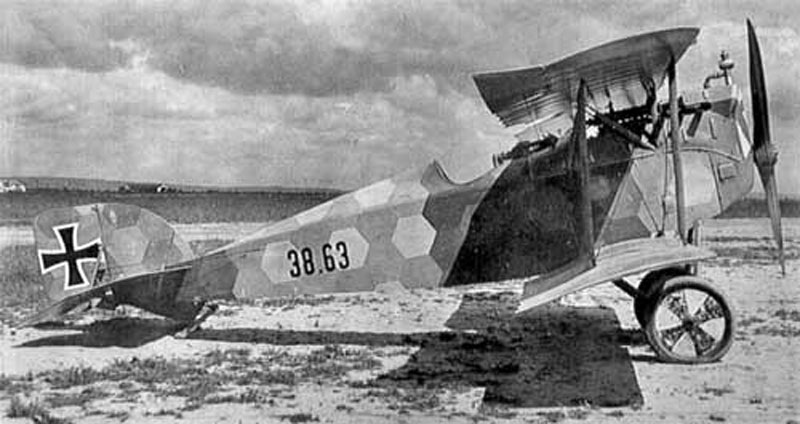
The Aviatik D.I served the Austro-Hungarian Empire as a fighter and reconnaissance escort through the final years of World War 1. The system eventually proved a capable combat aircraft with good speed, climbing ability and service ceiling after the original design was made clear of its inherent deficiencies. The D.I was designed to replace the Hansa-Brandenburg D.I series (a biplane designed by Ernst Heinkel and appearing in 1916 and leaving an ace-making yet fatally accident-prone legacy). Nevertheless, the D.I fought on until the closing bell of World War 1 and was produced in upwards of 700 examples. The Aviatik D.I holds the distinction of becoming the first indigenously-designed fighter to be build in whole in Austria.

The D.I began life in prototype form in August of 1916 with a first flight recorded on January 24th, 1917. The test flight proved fatal, however, and took the life of its test pilot. As such, the initial design was revised to compensate for defects and three more prototypes soon emerged, each charged with a distinct development purpose as well as its 8mm Schwarzlose machine gun fitted to the top wing assembly. After additional testing, production aircraft were ordered and delivered - these with the synchronized (via a propeller interrupter gear) 2 x 7.92mm Schwarzlose forward-firing machine guns along the upper sides of the engine.

Design-wise, the Aviatik D.I was of a conventional single-seat biplane arrangement. Wings were fitted as an upper and lower staggered assembly of equal span with parallel struts and single bays. The engine - an Austro-Daimler water-cooled inline producing 200 horsepower - was fitted to the extreme forward portion of the fuselage and powered a two-blade propeller. The undercarriage was of a fixed arrangement and made up of two main landing wheels and a tail skid. The spacious cockpit was situated aft of the engine at about amidships and offered a relatively good field of vision (as good as vision gets in a biplane). The pilot sat behind the upper wing assembly (which was held relatively close to the top of the engine compartment) behind a simple windscreen in an open-air cockpit. The fuselage tapered into the empennage which featured a single large vertical tail fin and applicable horizontal planes. Performance specifications included a top speed of 115 miles per hour, a service ceiling of approximately 20,100 feet and operational endurance totaling 2 hours, 30 minutes.

Though primary manufacture of the Aviatik D.I was handled by Austrian Aviatik, license-production was also undertaken at multiple facilities during her tenure. These included Lohner, Lloyd, MAG, Thone und Fiala and WKF under various batch series designations and differed mainly in horsepower output of their selected Austro-Daimler engines. In all, roughly 700 of all types were produced from 1917 into 1918. Deliveries began in the Fall of 1917 and continued on into October of 1918.

When in action, early-form D.Is exhibited engine overheating issues and structural weaknesses (namely the fabric tearing away from the understructure or loss of parts and wings while at high speeds). The guns on the original production models were also situated well out of reach of the pilot meaning that a jammed gun stayed jammed until the pilot landed his mount for repairs. As production continued, the structure received attention in areas and was reinforced based on pilot feedback. Likewise, the guns were now moved within reach of the pilot. Engine overheating was solved in-the-field by simply flying without the engine covers on.

The Aviatik D.I also went under the known names of "Berg Fighter" or "Berg D.I" in reference to its designer, Julius von Berg. Austro-Hungarian air elements flew their D.Is in good numbers until the end of the war.

The D.I appeared in a revised form as the D.II with a cantilever low wing assembly. The D.II was produced in limited quantities in two batches beginning in 1918 but arrived too late to see useful delivery to combat units. The D.I was also considered in a few other notable "one-off" prototype forms - mainly the D.III, a high-altitude variant fitting a Hiero engine of 230 horsepower and the Dr.I, a triplane design based on the D.I biplane.
Text ©2003-2013 www.MilitaryFactory.com • All Rights Reserved • No Reproduction Permitted
MilitaryFactory.com does NOT sell equipment/weaponry. Material presented throughout this website is for historical and entertainment value and should not to be construed as usable for hardware restoration, maintenance or general operation. Please consult manufacturers for such information. Our disclaimer. Email corrections / Comments to MilitaryFactory at Gmail dot com.
Picture of Aviatik D.I (Berg D.I)
View All Images (1)

Specifications for the
Aviatik D.I (Berg D.I)
Fighter


Country of Origin: Austria-Hungary
Manufacturer: Osterreichisch-Ungarische Flugzeugfabrik Aviatik - Austria
Initial Year of Service: 1917
Production: 700


Focus Model: Aviatik D.I
Crew: 1


Length: 31.66ft (9.65m)
Width: 26.25ft (8.00m)
Height: 8.14ft (2.48m)
Weight (Empty): 1,475lbs (669kg)
Weight (MTOW): 1,878lbs (852kg)


Powerplant: 1 x Austro-Daimler liquid-cooled 6-cylinder inline piston engine developing 200 horsepower.


Maximum Speed: 115mph (185kmh; 100kts)
Maximum Range: 225miles (362km)
Service Ceiling: 20,177ft (6,150m; 3.8miles)
Rate-of-Climb: 0 feet per minute (0m/min)


Hardpoints: 0
Armament Suite:
2 x 8mm Schwarzlose synchronized forward-firing machine guns.


Variants:
D.I - Base Production Biplane; 700 examples produced from 1917 to 1918.


D.II - Based on the D.I; cantilever lower wing assembly; production beginning 1918 in Series 39 and Series 339 marks.

D.III - High-altitude variant; fitted with Hiero piston engine of 230 horsepower.

Dr.I - Proposed Triplane Development; prototype forms only.


Operators: Austria-Hungary

ALL AIRCRAFT CATEGORIES

BY DECADE:


1900 to 1909
1910 to 1919
1920 to 1929
1930 to 1939
1940 to 1949
1950 to 1959
1960 to 1969
1970 to 1979
1980 to 1989
1990 to 1999
2000 to 2009
2010 to 2019
2020 to 2029
VIEW ALL
Compare Aircraft


BY TYPE:


Anti-Submarine Warfare (ASW)
Attack Helicopters
Bomber Aircraft
Medium Bombers
Heavy Bombers
Close-Air Support (CAS)
Commercial Aircraft
Dive Bombers
Electronic Warfare Aircraft (EWA)
Experimental / X-Planes
Fighter Aircraft
Floatplane Aircraft
Flying Boat Aircraft
Aerial Refueling Tankers
Helicopters (ALL)
Interceptor Aircraft
Multi-Role Aircraft
Navy Carrier Aircraft
Night Fighters
Reconnaissance / Scout
Search & Rescue (SAR)
Scout Helicopters
Special Purpose
Torpedo Bombers
Trainer Aircraft
Transport Aircraft
Transport Helicopters
Unmanned Aerial Vehicles (UAVs)
Unmanned Combat Air Vehicles (UCAVs)


COLLECTIONS:


4th Generation Fighter Aircraft
5th Generation Fighter Aircraft
US X-Planes
Classic US Warbirds
French Military Helicopters
Grumman "Cats"
Howard Hughes Aircraft
Indian Air Force
Israeli Air Force
Libyan Aircraft
Modern Chinese Aircraft
Modern Chinese Fighters
Modern Military Aircraft
Modern North Korean Aircraft
Modern Trainer Aircraft
Modern US Aircraft
Mikoyan Aircraft
Sukhoi Aircraft
Syrian Aircraft
Top 10 Fighter Aircraft of All Time


AIRCRAFT BY CONFLICT:


Arab-Israeli War (1948)
Cuban Missile Crisis (1959-1962)
Falklands War (1982)
Indo-Pak War (1965, 1971)
Iran-Iraq War (1980-1988)
Lebanon War (1982)
Operation Allied Force (1999)
Operation Desert Storm (1991)
Six Day War (1967)
Spanish Civil War (1936)
Soviet-Afghan War (1979-1989)
Yom Kippur War (1973)


MISCELLANEOUS:


Aircraft Cockpits
Aircraft Manufacturers List
Aircraft Timeline

WORLD WAR 2:


1939 Aircraft
1940 Aircraft
1941 Aircraft
1942 Aircraft
1943 Aircraft
1944 Aircraft
1945 Aircraft
1946 Aircraft
Australian Aircraft
Battle of Britain Aircraft
Bombers
Four-Engine Bombers
British Aircraft
British Bombers
British Transports
Dive Bombers
Canadian Aircraft
Fighters
Chinese Aircraft
French Aircraft
German Aircraft
German Fighters
German Flying Boats
German Jets
Secret Weapons of the Luftwaffe
Italian Aircraft
Imperial Japanese Aircraft
Imperial Japanese Fighters
Mitsubishi Bombers
Navy Aircraft
Pearl Harbor
Polish Aircraft
Romanian Aircraft
US Aircraft
US Bombers
US Navy Aircraft
Soviet Aircraft
Torpedo Bombers
Transport Aircraft
Tuskegee Airmen Aircraft
W.A.S.P. Aircraft
WW2 Aircraft Ranked by Speed
VIEW ALL


WORLD WAR 1:


1914 Aircraft
1915 Aircraft
1916 Aircraft
1917 Aircraft
1918 Aircraft
Aircraft Timeline
Austro-Hungarian Aircraft
Bomber Aircraft
British Aircraft
Fighters
Flying Boats
French Aircraft
Imperial German Aircraft
Italian Aircraft
Scout Aircraft
Russian Empire Aircraft
US Aircraft
WW1 Aircraft Ranked by Speed
VIEW ALL


KOREAN WAR:


Australian Aircraft
Korean War Aces
Korean War Jets
North Korean Aircraft
US Military Aircraft
VIEW ALL


VIETNAM WAR:


Helicopters
North Vietnam Air Force
US Airpower
VIEW ALL


COLD WAR:


1950s French Aircraft
British V-Bombers
Cold War Bombers
Soviet Aircraft
Soviet Bombers
Soviet Interceptors
Soviet Helicopters
Strategic Air Command
US Aircraft
US Bombers
US Interceptors
VIEW ALL

Site Disclaimer | Privacy Policy | Site Map | MF Origins


©2013 www.MilitaryFactory.com • Content ©2003-2013 MilitaryFactory.com • All Rights Reserved • Site Contact Email: militaryfactory at gmail dot com. The "Military Factory" name and MilitaryFactory.com logo are registered ® trademarks and protected by all applicable domestic and international intellectual property laws.


Top MF Stuff: 2013 Military Pay Scale | Military Ranks | WW2 Weapons | Sniper Rifles | Kts to Mph | WW1 Aircraft | Automatic Rifles | Aircraft Cockpits | Vietnam War Weapons | Main Battle Tanks | Submachine Guns | Shotguns | French Military Victories


Most photographic images appearing on this site are courtesy of the United States Department of Defense and are approved for public use. Other images acquired through the public domain. Digital art work courtesy of Dan Alex. Business Consulting by Kyle Williams. Material presented throughout this website is for historical and entertainment value and should not to be construed as usable for hardware restoration, maintenance or general operation. Please consult manufacturers for such information.


eXTReMe Tracker