Military Factory
Military Pay Chart
Global Firepower
Military Industrial Complex
Second World War
Home
Military Pay Scale
Military Ranks
Small Arms
Aircraft
Land Systems
Navy
Education
Military Factory Facebook Logo
flag of United States

Curtiss A-12 (Shrike) Strike Aircraft (1933)

Authored By Staff Writer | Last Updated: 12/5/2011

The Curtiss A-12 Shrike was never used in combat and led a short production life.

Find a School Near You
Follow Military Factory on Facebook:
Trending on Military Factory:
Recent Articles:
The A-12 was an inter-war product of the Curtiss Aeroplane and Motor Company first appearing in 1933. The type became the first quantitative monoplane aircraft in service with the United States Army Air Corps upon its inception. Only 46 production examples of the Shrike appeared and several of these were present at the Japanese attack on Pearl Harbor. Its 1930s-era design philosophy quickly made it obsolete with many in the product line being grounded or relegated to training units after the attack. Many fell to the scrapyard after their effective use.

Origins of the A-12 lay in the original A-8 Curtiss production model. The A-8 was the result of a 1920's US Army requirement to replace the Curtiss A-3 Falcon biplane. Atlantic-Fokker Company (General Aviation) and Curtiss both submitted low-wing monoplane designs (known as XA-7 and XA-8 respectively) of all-metal construction and fitting the Curtiss V-1570 Conqueror V-12 liquid-cooled inline piston engine. After an evaluation period, the Curtiss submission was chosen over the Atlantic-Fokker design. Several test aircraft were ordered under the YA-8 designation and eventual production aircraft became the A-8.

The first YA-8 was set aside and reused in a feasibility test in which a air-cooled radial engine was installed in place of the liquid-cooled inline. By the early 1930;s, the US Army Air Corps had developed a belief that air-cooled engines should be made the norm on all of their future aircraft products. Their reasons lay in the vulnerability of liquid-cooled engines when exposed to enemy ground fire as a single random hit could very well render such an engine, associated aircraft and its pilot inoperable. Another school of thought placed the operational costs and level of maintenance in favor of air-cooled engine types over that of inline-engine types. These two reasons led to the selection of a Pratt & Whitney powerplant as the engine of choice to replace the original Curtiss-based Conqueror.

With the new engine in place, the YA-8 was now redesignated as the YA-10 to signify the conversion. The conversion itself was accomplished by September of 1932 and the completed aircraft yielded comparable performance statistics to the original A-8 platform. All remaining A-8B's on order (some 46 total) with their Conqueror liquid-cooled engines were now changed to include the replacement Pratt & Whitney radial powerplant. The new production designation of A-12 was then assigned to mark these models. Though often designated with the "Shrike" name, the aircraft was formally known simply as the "A-12" in USAAC nomenclature. Shrike was an official Curtiss company name assigned to its A-12 product.

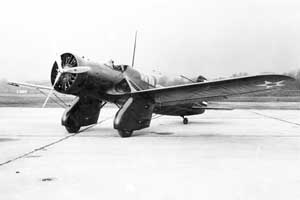
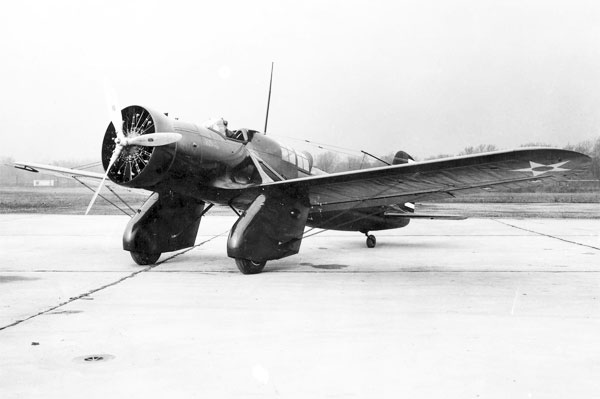
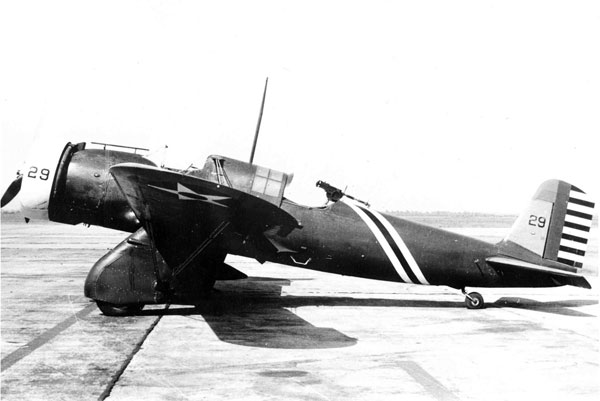
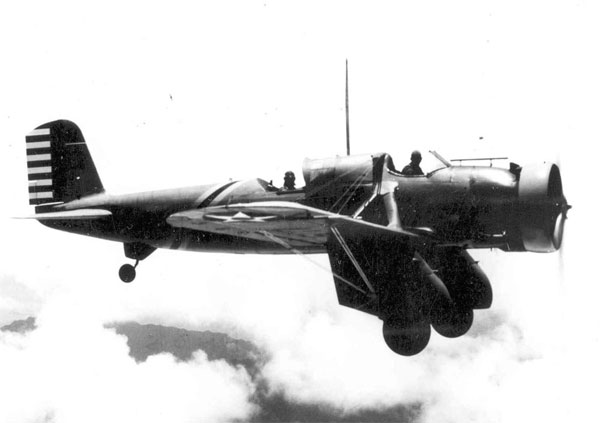
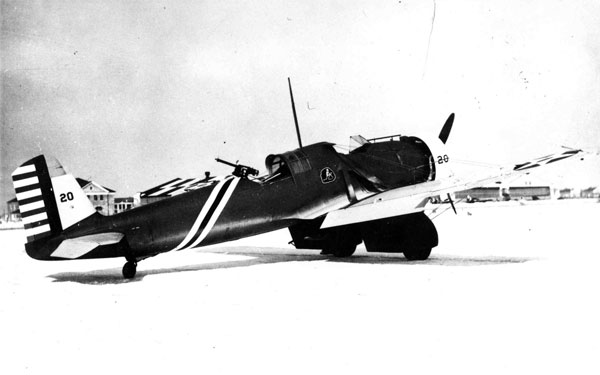
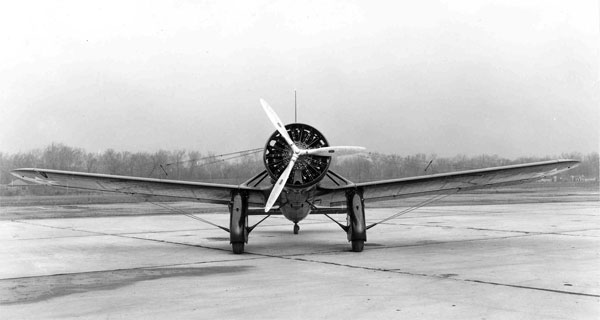
Externally, the A-12 retained much of the A-8's features. The chief difference between the two became the obvious inclusion of the air-cooled radial piston engine over that of the liquid-cooled inline. The two cockpits were also brought closer together to facilitate better communication between the pilot - situated in the forward open-air cockpit - and the gunner/observer in the rear position. An antenna structure rose high atop the fuselage, above and between the two cockpit positions. The pilot sat behind angled windscreens in a very utilitarian cockpit, complete a forward instrument panel and open sides revealing wiring, cables and piping. The continuous cockpit was housed over behind the pilots head and continued up until the rear gunners position. The rear gunner also sat in an open air cockpit but his position featured some glazing to help conform the fuselage to better aerodynamic principles. The fuselage itself was of a smooth tubular design and was made up of all-metal construction. A distinct characteristic of the A-12 was its fixed undercarriage with excessively faired-over main landing gears - one positioned under each wing - and a simple conventional tail wheel at rear. Wings were low-mounted monoplane assemblies with noticeable cable bracing and struts with slight dihedral. Wings were also of all-metal construction though the ailerons were covered over in fabric. The Wright R-1820-21 Cyclone radial piston engine of 690 horsepower powered a three-bladed propeller system and was fitted in the extreme forward of the fuselage, ahead of the pilots windscreen. The empennage was of a conventional arrangement with a single vertical tail fin and horizontal planes. Tail surfaces were also of all-metal construction but the rudder and elevator components were covered over in fabric.

Standard armament for the A-12 Shrike included a battery of 4 x .30 caliber machine guns in a fixed forward-firing set up with two guns fitted into each landing gear spat (600 rounds of .30 caliber ammunition allotted to each gun). A C-4 gunsight was afforded the pilot. The rear gunner had access to a .30 caliber machine gun on a flexible mounting to protect the aircraft's "six". Aside from the machine gun armament, the A-12 was cleared for light bombing duty and could field up to four 122lb conventional drop bombs under the wings. In place of these munitions, the Shrike could also utilize up to 10 x 30lb fragmentation bombs or flares for marking targets at night. A 52-gallon external fuel tank could be used in place of the bombs and could be jettisoned when empty. Interestingly enough, the main fuel tank aboard the A-12's fuselage could also be jettisoned via a hand crank.

The A-12 was delivered to the USAAC in 1933. Initial examples became a single production model and two service test aircraft. A-12's eventually made up the mount of choice for the 3rd Attack Group and 37th Attack Squadron of the 8th Pursuit Group. The aircraft was eventually shipped off the mainland and ended up in Hawaii via Wheeler Field and then later at Hickam Field. Incidentally, Hickam Field itself was named after Lieutenant Horace Meek Hickam whom died while attempting to land his A-12 Shrike at Fort Crockett in Texas.

Some A-12's underwent further periods of notable development. One such conversion involved the addition of ski-like implements in place of the landing gear fairings to make the A-12 more "bad-weather friendly". Not only did this allow the Shrike to operate from icy or snowbound airstrips, it provided for viable landings and take-off operations from dirt, grass and paved-over runways as well. Another such development involved adding inflatable air bladders to the sides of the fuselage. Should the crew and aircraft be forced into an emergency landing over water, the air bladders could be filled to allow the A-12 to stay above water until help arrived. Needless to say, these implements were never put into production A-12s.

Operationally, the A-12 was never used in anger by American forces. Though present at the attack on Pearl Harbor, the aircraft never went airborne in defense of the island and the type was dropped from service soon afterwards. A-12's maintained a limited capacity as reconnaissance platforms as well and could be modified for the role through the use of onboard cameras. Beyond that, the A-12 was already obsolete by the arrival of World War 2.

At least 20 export versions of the A-12 were sold to China in 1936. These A-12's sported a more powerful version of the air-cooled engine in the Wright SR-1820F-52 of 775 horsepower supplying a better maximum speed of 182 miles-per-hour. These Shrikes were soon pressed into service with Chinese forces against the Japanese to which the A-12's were wholly outclassed with few surviving if any.
Text ©2003-2013 www.MilitaryFactory.com • All Rights Reserved • No Reproduction Permitted
MilitaryFactory.com does NOT sell equipment/weaponry. Material presented throughout this website is for historical and entertainment value and should not to be construed as usable for hardware restoration, maintenance or general operation. Please consult manufacturers for such information. Our disclaimer. Email corrections / Comments to MilitaryFactory at Gmail dot com.
Picture of Curtiss A-12 (Shrike)
Pic of the Curtiss A-12 (Shrike)
Image of the Curtiss A-12 (Shrike)
View All Images (5)

Specifications for the
Curtiss A-12 (Shrike)
Strike Aircraft


Country of Origin: United States
Manufacturer: Curtiss Aeroplane and Motor Company - USA
Initial Year of Service: 1933
Production: 46


Focus Model: Curtiss A-12 (Shrike)
Crew: 2


Length: 32.25ft (9.83m)
Width: 44.00ft (13.41m)
Height: 9.32ft (2.84m)
Weight (Empty): 3,898lbs (1,768kg)
Weight (MTOW): 5,756lbs (2,611kg)


Powerplant: 1 x Wright R-1820-21 Cyclone radial piston engine of 690 horsepower.


Maximum Speed: 177mph (285kmh; 154kts)
Maximum Range: 521miles (838km)
Service Ceiling: 15,157ft (4,620m; 2.9miles)
Rate-of-Climb: 0 feet per minute (0m/min)


Hardpoints: 4
Armament Suite:
STANDARD:
4 x .30 caliber machine guns in fixed-forward positions.
1 x .30 caliber machine gun in rear flexible mounting.

OPTIONAL:
4 x 122lb bombs
10 x 30lb fragmentation bombs
1 x 52 gallon external fuel droptank


Variants:
A-8 - Inline Piston Engine Production Model


YA-10 - Experimental Platform to test feasability of radial piston engine in the Curtiss A-8 model (then using an inline engine); converted from the Curtiss A-8; Pratt & Whitney air-cooled engine.

Model 60 - Curtiss Company Designation

A-12 - Production Designation; 46 examples produced; 20 exported to China with Wright SR-1820F-52 radial engines of 775 horsepower.


Operators: China; United States

ALL AIRCRAFT CATEGORIES

BY DECADE:


1900 to 1909
1910 to 1919
1920 to 1929
1930 to 1939
1940 to 1949
1950 to 1959
1960 to 1969
1970 to 1979
1980 to 1989
1990 to 1999
2000 to 2009
2010 to 2019
2020 to 2029
VIEW ALL
Compare Aircraft


BY TYPE:


Anti-Submarine Warfare (ASW)
Attack Helicopters
Bomber Aircraft
Medium Bombers
Heavy Bombers
Close-Air Support (CAS)
Commercial Aircraft
Dive Bombers
Electronic Warfare Aircraft (EWA)
Experimental / X-Planes
Fighter Aircraft
Floatplane Aircraft
Flying Boat Aircraft
Aerial Refueling Tankers
Helicopters (ALL)
Interceptor Aircraft
Multi-Role Aircraft
Navy Carrier Aircraft
Night Fighters
Reconnaissance / Scout
Search & Rescue (SAR)
Scout Helicopters
Special Purpose
Torpedo Bombers
Trainer Aircraft
Transport Aircraft
Transport Helicopters
Unmanned Aerial Vehicles (UAVs)
Unmanned Combat Air Vehicles (UCAVs)


COLLECTIONS:


4th Generation Fighter Aircraft
5th Generation Fighter Aircraft
US X-Planes
Classic US Warbirds
French Military Helicopters
Grumman "Cats"
Howard Hughes Aircraft
Indian Air Force
Israeli Air Force
Libyan Aircraft
Modern Chinese Aircraft
Modern Chinese Fighters
Modern Military Aircraft
Modern North Korean Aircraft
Modern Trainer Aircraft
Modern US Aircraft
Mikoyan Aircraft
Sukhoi Aircraft
Syrian Aircraft
Top 10 Fighter Aircraft of All Time


AIRCRAFT BY CONFLICT:


Arab-Israeli War (1948)
Cuban Missile Crisis (1959-1962)
Falklands War (1982)
Indo-Pak War (1965, 1971)
Iran-Iraq War (1980-1988)
Lebanon War (1982)
Operation Allied Force (1999)
Operation Desert Storm (1991)
Six Day War (1967)
Spanish Civil War (1936)
Soviet-Afghan War (1979-1989)
Yom Kippur War (1973)


MISCELLANEOUS:


Aircraft Cockpits
Aircraft Manufacturers List
Aircraft Timeline

WORLD WAR 2:


1939 Aircraft
1940 Aircraft
1941 Aircraft
1942 Aircraft
1943 Aircraft
1944 Aircraft
1945 Aircraft
1946 Aircraft
Australian Aircraft
Battle of Britain Aircraft
Bombers
Four-Engine Bombers
British Aircraft
British Bombers
British Transports
Dive Bombers
Canadian Aircraft
Fighters
Chinese Aircraft
French Aircraft
German Aircraft
German Fighters
German Flying Boats
German Jets
Secret Weapons of the Luftwaffe
Italian Aircraft
Imperial Japanese Aircraft
Imperial Japanese Fighters
Mitsubishi Bombers
Navy Aircraft
Pearl Harbor
Polish Aircraft
Romanian Aircraft
US Aircraft
US Bombers
US Navy Aircraft
Soviet Aircraft
Torpedo Bombers
Transport Aircraft
Tuskegee Airmen Aircraft
W.A.S.P. Aircraft
WW2 Aircraft Ranked by Speed
VIEW ALL


WORLD WAR 1:


1914 Aircraft
1915 Aircraft
1916 Aircraft
1917 Aircraft
1918 Aircraft
Aircraft Timeline
Austro-Hungarian Aircraft
Bomber Aircraft
British Aircraft
Fighters
Flying Boats
French Aircraft
Imperial German Aircraft
Italian Aircraft
Scout Aircraft
Russian Empire Aircraft
US Aircraft
WW1 Aircraft Ranked by Speed
VIEW ALL


KOREAN WAR:


Australian Aircraft
Korean War Aces
Korean War Jets
North Korean Aircraft
US Military Aircraft
VIEW ALL


VIETNAM WAR:


Helicopters
North Vietnam Air Force
US Airpower
VIEW ALL


COLD WAR:


1950s French Aircraft
British V-Bombers
Cold War Bombers
Soviet Aircraft
Soviet Bombers
Soviet Interceptors
Soviet Helicopters
Strategic Air Command
US Aircraft
US Bombers
US Interceptors
VIEW ALL

Site Disclaimer | Privacy Policy | Site Map | MF Origins


©2013 www.MilitaryFactory.com • Content ©2003-2013 MilitaryFactory.com • All Rights Reserved • Site Contact Email: militaryfactory at gmail dot com. The "Military Factory" name and MilitaryFactory.com logo are registered ® trademarks and protected by all applicable domestic and international intellectual property laws.


Top MF Stuff: 2013 Military Pay Scale | Military Ranks | WW2 Weapons | Sniper Rifles | Kts to Mph | WW1 Aircraft | Automatic Rifles | Aircraft Cockpits | Vietnam War Weapons | Main Battle Tanks | Submachine Guns | Shotguns | French Military Victories


Most photographic images appearing on this site are courtesy of the United States Department of Defense and are approved for public use. Other images acquired through the public domain. Digital art work courtesy of Dan Alex. Business Consulting by Kyle Williams. Material presented throughout this website is for historical and entertainment value and should not to be construed as usable for hardware restoration, maintenance or general operation. Please consult manufacturers for such information.


eXTReMe Tracker