Military Factory
Military Pay Chart
Global Firepower
Military Industrial Complex
Second World War
Home
Military Pay Scale
Military Ranks
Small Arms
Aircraft
Land Systems
Navy
Education
Military Factory Facebook Logo
flag of United States

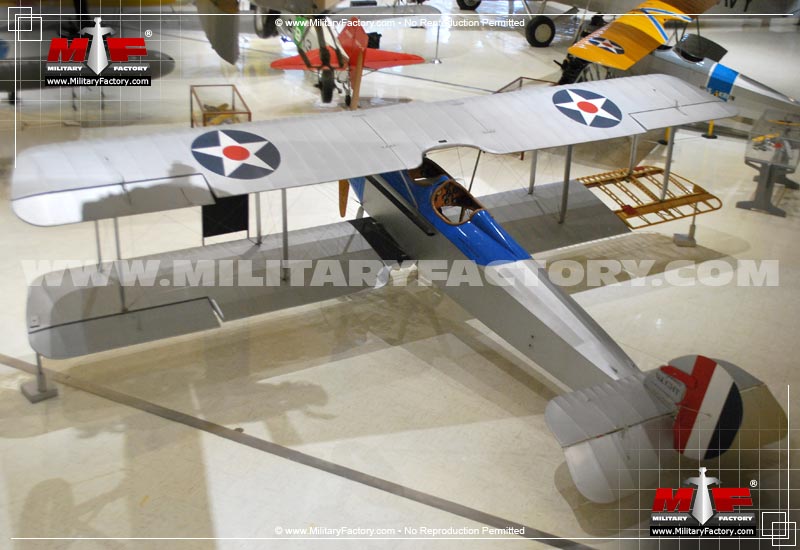
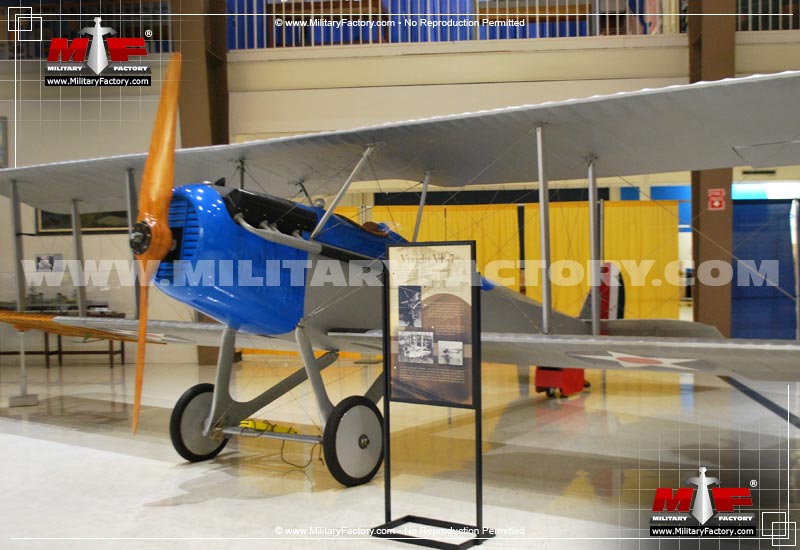
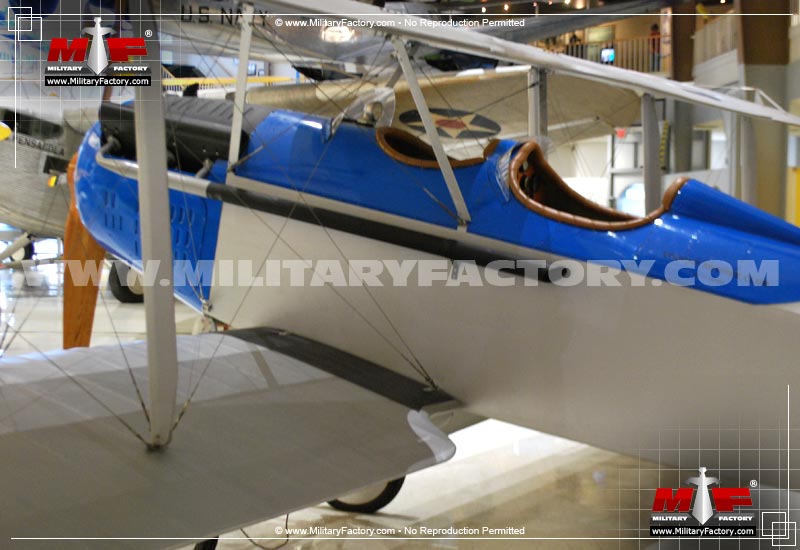
Vought VE-7 Bluebird Fighter / Trainer (1918)

Authored By JR Potts, AUS 173d AB | Last Updated: 7/20/2012

The VE-7 made up the United States Navys first two fighter squadrons in the VF-1 and VF-2.

Find a School Near You
Follow Military Factory on Facebook:
Trending on Military Factory:
Recent Articles:
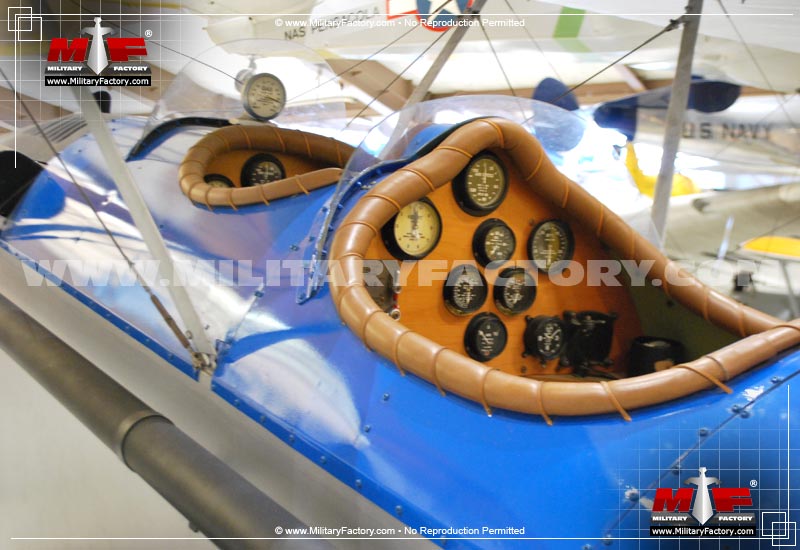
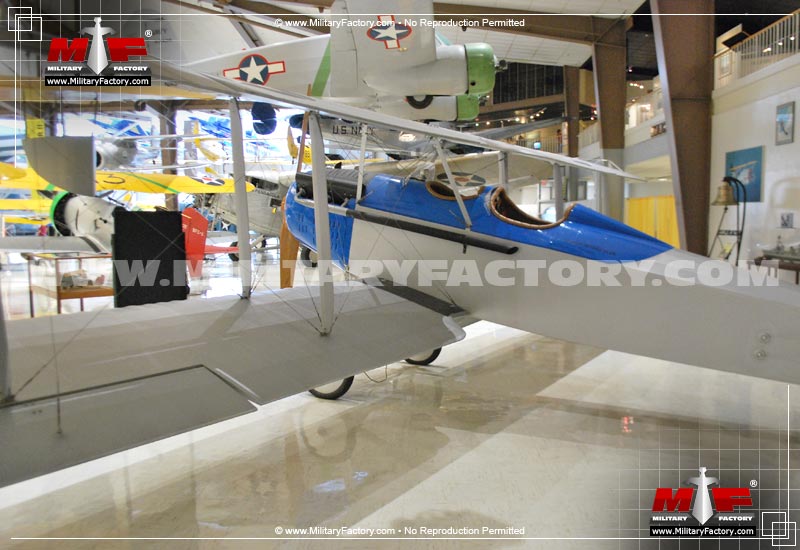
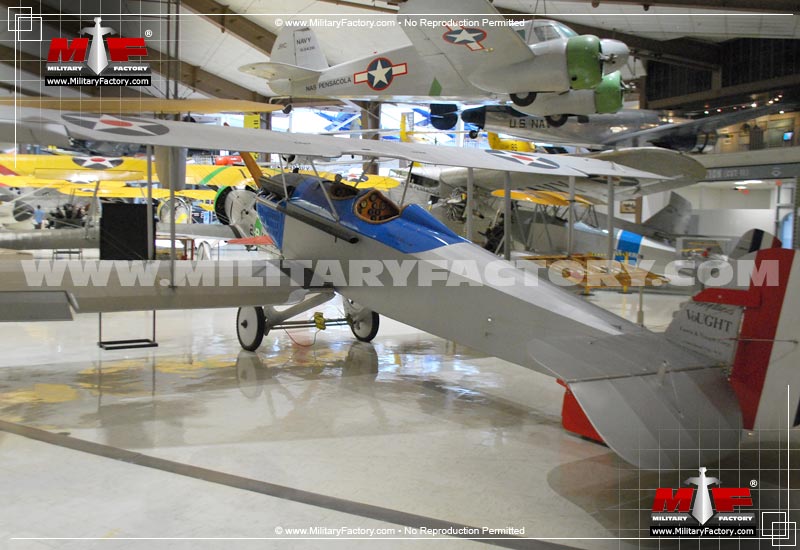
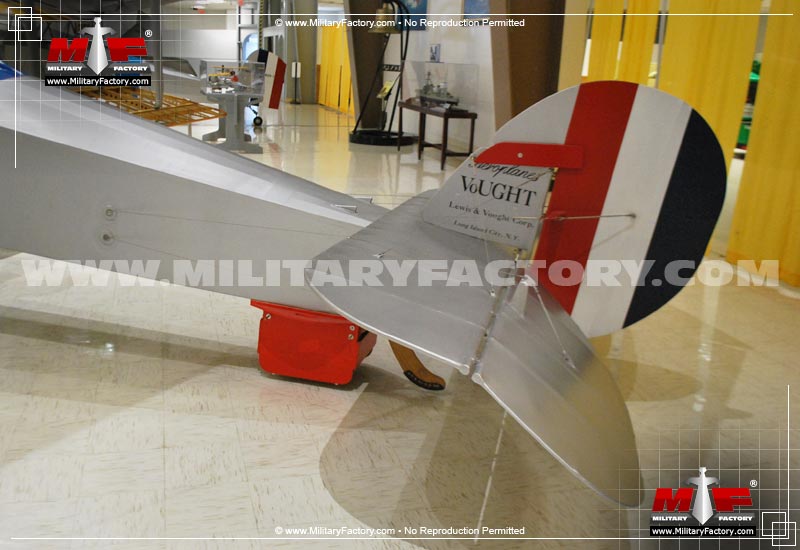
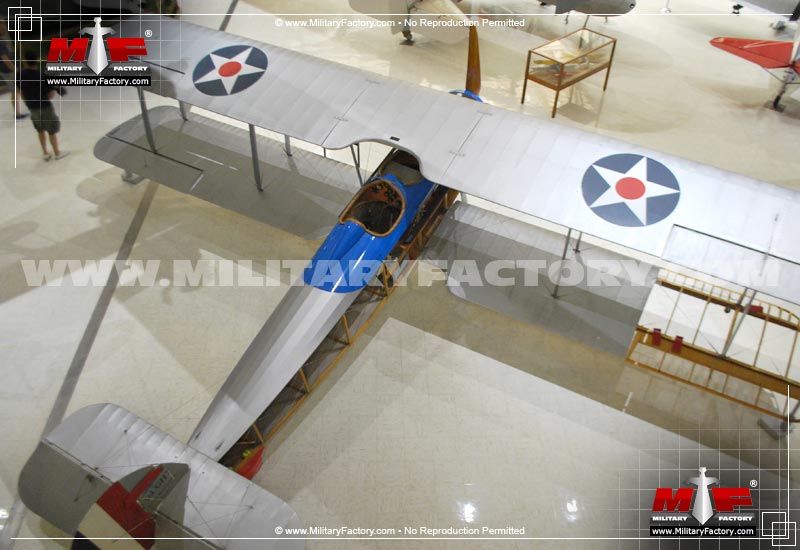
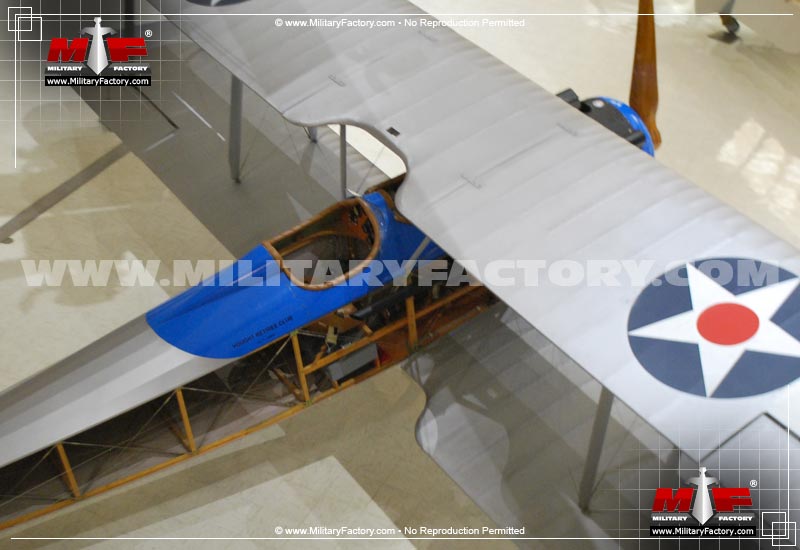
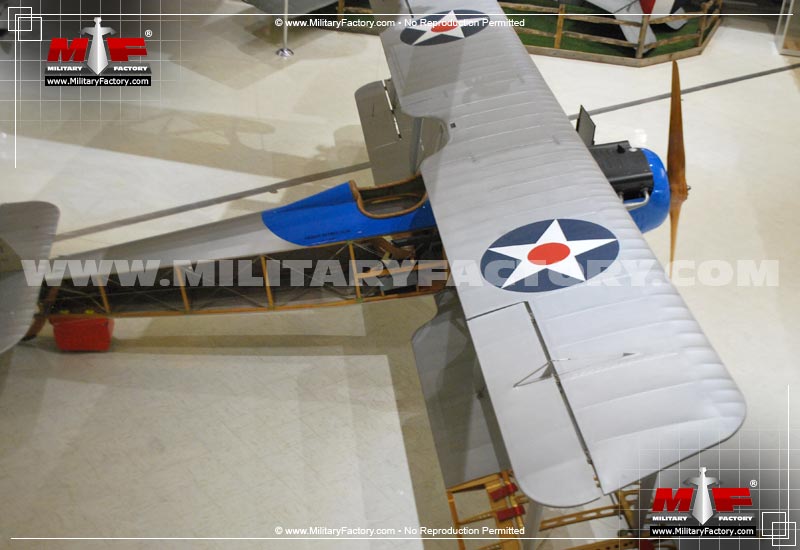
In 1917 Mr. Birdseye B. Lewis formed an aircraft business with the Vought group, becoming the Lewis & Vought Corporation in the United States. The Vought VE-7 Bluebird, named for Lewis himself, was a biplane designed that same year. Lewis & Vought produced this initial offering as a 2-seat trainer for the United States Army. While being tested and used by the Army, Brigadier General Billy Mitchell commented favorably on the aircraft's flying abilities, rating them as good as or even better than any current fighters of the day. The selected powerplant was the Wright Hispano-Suiza engine designated as HS-8A. With a compression ratio listed from 4.7 to 5.3, Swedish engineer Marc Birkigt increased the power output to 180 horsepower (132 kW) at 2,100 rpm. 49,800 of these engines were eventually produced and made itself a legacy as one of the best engines of its type. Wright-Hispano engines also powered the fabled French SPAD biplane fighters in World War 1.

After World War 1, the US Army cancelled its order for 1,000 aircraft but the US Navy was still very interested in the VE-7 concept and received an evaluation machine in May of 1920. Testing the aircraft proved it sound for USN operational requirements and the adopted the VE-7 as its very first fighter aircraft. Full rate production orders soon followed and demand proved more than the young Vought organization was capable of. The US government had anticipated this and formed the Naval Aircraft Factory (NAF). The factory was established by the United States Navy in 1918 in Philadelphia to assist such companies in solving the problem of aircraft supply versus demand. The Navy Department surmised that it was necessary to build a Navy-owned aircraft factory to guarantee a constant supply of aircraft and to help in obtaining cost data for the comparison against private manufacturing firms. Some 128 VE-7s were ultimately built and the single-seat fighter version of the VE-7 was further designated as VE-7S complete with a faired over front cockpit and room for a single Vickers-brand .30 caliber machinegun off-set left and synchronized to fire through the two-bladed propeller.

The Navy created its first two fighter squadrons in VF-1 and VF-2 and equipped them both with these VE-7s. Fighter Squadron VF-1 was originally established on July 1s, 1922, and operated as VF-1 until July 1, 1934 . Squadron VF-2 was originally established as Combat Squadron Four on September 23rd, 1921, making its home base at Naval Air Station San Diego, California. The squadron was re-designated Fighter Squadron VF-2 on July 1st, 1922 and were assigned these Vought VE-7 biplanes. The squadron, also known as the "Flying Chiefs," operated from the carrier USS Langley. Lieutenant Virgil C. Griffin made history on October 17, 1922 when he took off in a VE-7 biplane from the deck of the new USS Langley marking the first such action completed from an American Navy carrier.
Text ©2003-2013 www.MilitaryFactory.com • All Rights Reserved • No Reproduction Permitted
MilitaryFactory.com does NOT sell equipment/weaponry. Material presented throughout this website is for historical and entertainment value and should not to be construed as usable for hardware restoration, maintenance or general operation. Please consult manufacturers for such information. Our disclaimer. Email corrections / Comments to MilitaryFactory at Gmail dot com.
Picture of Vought VE-7 Bluebird
Pic of the Vought VE-7 Bluebird
View All Images (2)

Specifications for the
Vought VE-7 Bluebird
Fighter / Trainer


Country of Origin: United States
Manufacturer: Lewis & Vought Corporation - USA
Initial Year of Service: 1918
Production: 128


Focus Model: Vought VE-7 Bluebird
Crew: 2


Length: 24.44ft (7.45m)
Width: 34.35ft (10.47m)
Height: 8.63ft (2.63m)
Weight (Empty): 1,391lbs (631kg)
Weight (MTOW): 1,938lbs (879kg)


Powerplant: 1 x Wright Hispano E-3 engine delivering 180 horsepower.


Maximum Speed: 106mph (171kmh; 92kts)
Maximum Range: 290miles (467km)
Service Ceiling: 15,092ft (4,600m; 2.9miles)
Rate-of-Climb: 738 feet per minute (225m/min)


Hardpoints: 0
Armament Suite:
1 x 7.7mm (.30) Vickers synchronized machine gun


Variants:
VE-7 - Appearing in 1918; produced for the US Army Air Service (14) and the US Navy (39).


VE-7F - Appearing in 1921; 29 examples produced for the US Navy.

VE-7G - Appearing in 1921; 23 VE-7's converted for the US Navy while 1 VE-7 converted for the USMC.

VE-7GF - Appearing in 1921; single example converted from a VE-7.

VE-7H - Appearing in 1924; 9 examples produced for the US Navy.

VE-7S - Appearing in 1925; single example converted from VE-7.

VE-7SF - Appearing in 1925; 11 examples produced for the US Navy.

VE-8 - Appearing in 1918; fitted with Wright-Hispano H engine of 340 horsepower; 2 x Vickers 7.7mm machine guns; decreased wingspan, wing area and overall length performance and MTOW increases; only two produced from original four ordered by the US Army.

VE-9 - Appearing in 1921; 2 examples converted from VE-7 for the US Army; increased performance specs in top speed (119 mph) and ceiling (18,840 ft).

VE-9 - Appearing in 1927; 22 examples produced for the US Army while 17 examples were produced for the US Navy.

VE-9H - Appearing in 1927; observation floatplane aircraft variants for use on USN battleships; sans armament; catapult provision; revised vertical tail section.

VE-9W - Proposed variant; never produced.


Operators: United States

ALL AIRCRAFT CATEGORIES

BY DECADE:


1900 to 1909
1910 to 1919
1920 to 1929
1930 to 1939
1940 to 1949
1950 to 1959
1960 to 1969
1970 to 1979
1980 to 1989
1990 to 1999
2000 to 2009
2010 to 2019
2020 to 2029
VIEW ALL
Compare Aircraft


BY TYPE:


Anti-Submarine Warfare (ASW)
Attack Helicopters
Bomber Aircraft
Medium Bombers
Heavy Bombers
Close-Air Support (CAS)
Commercial Aircraft
Dive Bombers
Electronic Warfare Aircraft (EWA)
Experimental / X-Planes
Fighter Aircraft
Floatplane Aircraft
Flying Boat Aircraft
Aerial Refueling Tankers
Helicopters (ALL)
Interceptor Aircraft
Multi-Role Aircraft
Navy Carrier Aircraft
Night Fighters
Reconnaissance / Scout
Search & Rescue (SAR)
Scout Helicopters
Special Purpose
Torpedo Bombers
Trainer Aircraft
Transport Aircraft
Transport Helicopters
Unmanned Aerial Vehicles (UAVs)
Unmanned Combat Air Vehicles (UCAVs)


COLLECTIONS:


4th Generation Fighter Aircraft
5th Generation Fighter Aircraft
US X-Planes
Classic US Warbirds
French Military Helicopters
Grumman "Cats"
Howard Hughes Aircraft
Indian Air Force
Israeli Air Force
Libyan Aircraft
Modern Chinese Aircraft
Modern Chinese Fighters
Modern Military Aircraft
Modern North Korean Aircraft
Modern Trainer Aircraft
Modern US Aircraft
Mikoyan Aircraft
Sukhoi Aircraft
Syrian Aircraft
Top 10 Fighter Aircraft of All Time


AIRCRAFT BY CONFLICT:


Arab-Israeli War (1948)
Cuban Missile Crisis (1959-1962)
Falklands War (1982)
Indo-Pak War (1965, 1971)
Iran-Iraq War (1980-1988)
Lebanon War (1982)
Operation Allied Force (1999)
Operation Desert Storm (1991)
Six Day War (1967)
Spanish Civil War (1936)
Soviet-Afghan War (1979-1989)
Yom Kippur War (1973)


MISCELLANEOUS:


Aircraft Cockpits
Aircraft Manufacturers List
Aircraft Timeline

WORLD WAR 2:


1939 Aircraft
1940 Aircraft
1941 Aircraft
1942 Aircraft
1943 Aircraft
1944 Aircraft
1945 Aircraft
1946 Aircraft
Australian Aircraft
Battle of Britain Aircraft
Bombers
Four-Engine Bombers
British Aircraft
British Bombers
British Transports
Dive Bombers
Canadian Aircraft
Fighters
Chinese Aircraft
French Aircraft
German Aircraft
German Fighters
German Flying Boats
German Jets
Secret Weapons of the Luftwaffe
Italian Aircraft
Imperial Japanese Aircraft
Imperial Japanese Fighters
Mitsubishi Bombers
Navy Aircraft
Pearl Harbor
Polish Aircraft
Romanian Aircraft
US Aircraft
US Bombers
US Navy Aircraft
Soviet Aircraft
Torpedo Bombers
Transport Aircraft
Tuskegee Airmen Aircraft
W.A.S.P. Aircraft
WW2 Aircraft Ranked by Speed
VIEW ALL


WORLD WAR 1:


1914 Aircraft
1915 Aircraft
1916 Aircraft
1917 Aircraft
1918 Aircraft
Aircraft Timeline
Austro-Hungarian Aircraft
Bomber Aircraft
British Aircraft
Fighters
Flying Boats
French Aircraft
Imperial German Aircraft
Italian Aircraft
Scout Aircraft
Russian Empire Aircraft
US Aircraft
WW1 Aircraft Ranked by Speed
VIEW ALL


KOREAN WAR:


Australian Aircraft
Korean War Aces
Korean War Jets
North Korean Aircraft
US Military Aircraft
VIEW ALL


VIETNAM WAR:


Helicopters
North Vietnam Air Force
US Airpower
VIEW ALL


COLD WAR:


1950s French Aircraft
British V-Bombers
Cold War Bombers
Soviet Aircraft
Soviet Bombers
Soviet Interceptors
Soviet Helicopters
Strategic Air Command
US Aircraft
US Bombers
US Interceptors
VIEW ALL

Site Disclaimer | Privacy Policy | Site Map | MF Origins


©2013 www.MilitaryFactory.com • Content ©2003-2013 MilitaryFactory.com • All Rights Reserved • Site Contact Email: militaryfactory at gmail dot com. The "Military Factory" name and MilitaryFactory.com logo are registered ® trademarks and protected by all applicable domestic and international intellectual property laws.


Top MF Stuff: 2013 Military Pay Scale | Military Ranks | WW2 Weapons | Sniper Rifles | Kts to Mph | WW1 Aircraft | Automatic Rifles | Aircraft Cockpits | Vietnam War Weapons | Main Battle Tanks | Submachine Guns | Shotguns | French Military Victories


Most photographic images appearing on this site are courtesy of the United States Department of Defense and are approved for public use. Other images acquired through the public domain. Digital art work courtesy of Dan Alex. Business Consulting by Kyle Williams. Material presented throughout this website is for historical and entertainment value and should not to be construed as usable for hardware restoration, maintenance or general operation. Please consult manufacturers for such information.


eXTReMe Tracker