Military Factory
Military Pay Chart
Global Firepower
Military Industrial Complex
Second World War
Home
Military Pay Scale
Military Ranks
Small Arms
Aircraft
Land Systems
Navy
Education
Military Factory Facebook Logo
flag of United States

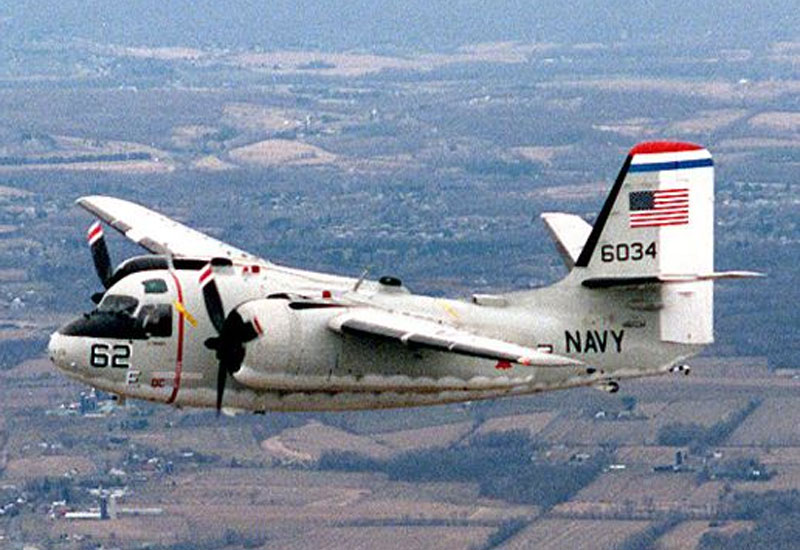
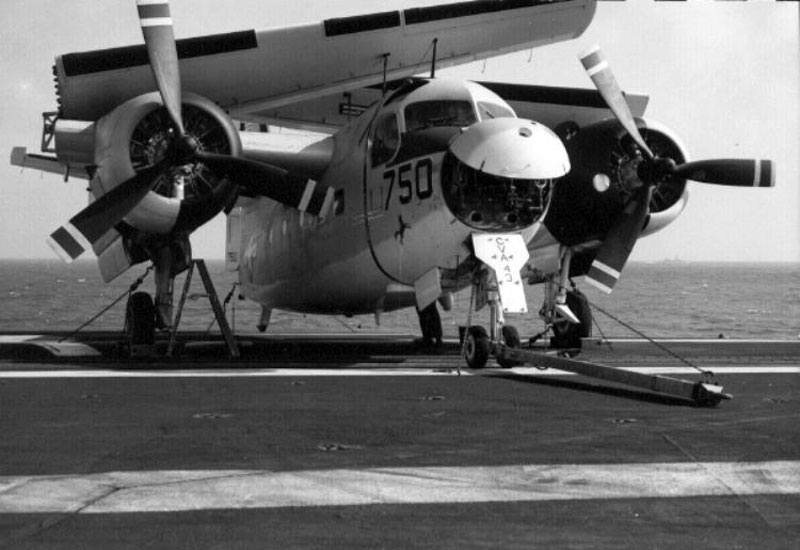
Grumman C-1A / TF-1 Trader Carrier-based Transport Aircraft (1952)

Authored By Staff Writer | Last Updated: 3/24/2010

The Grumman C-1 Trader served aboard USN carriers from the 1950s through the 1980s with notable action in the Vietnam War.

Find a School Near You
Follow Military Factory on Facebook:
Trending on Military Factory:
Recent Articles:
Little MF Logo
Little MF Logo
Little MF Logo
Little MF Logo
Little MF Logo
Little MF Logo
Little MF Logo
Little MF Logo
Little MF Logo
Little MF Logo
The C-1 Trader was a carrier-based transport (Carrier-Onboard-Delivery - COD) aircraft utilized by the United States Navy from the 1950s into the 1980s. While less than 100 examples were ultimately produced, her airframe was part of further useful and dedicated roles for the USN during her tenure. The C-1, itself, was developed into two distinct roles all her own (the TF-1/C-1A transport and the TF-1Q/EC-1A ECM platform) and shared the same airframe design with the similar Grumman "Tracker" and "Tracer" products.

Trader Origins

Origins of the Trader stemmed from a United States Navy requirement for a modern anti-submarine carrier-based warplane. In 1950, Grumman delivered on the response with their Model G89 product, a rather compact, twin-engine, propeller-driven design. The United States Navy assigned the prototype designation of XS2F-1 to the Grumman model and first flight was achieved on December 4th, 1952. Developmental models carried the designation of YS2F-1 up until 1962. Two prototypes were produced and these were followed by fifteen developmental airframes. However, while this program went on to produce the Anti-Submarine Warfare-minded "S2F-1 Tracker", the "TF-1 Trader" was born from the S2F Tracker (as was the "WF-2 Tracer"). Deliveries commenced in 1954. In comparison, the Trader saw production totals peak at only 87 examples while the Tracker went on to be produced in some 1,284 total examples.

The TF-1 Becomes the C-1, Births the TF-1Q and Evolves the WF-2

The TF-1 featured a cabin area that could be setup to ferry up to up to nine adult passengers or up to 3,500lbs of goods. She was branched off into an Electronic CounterMeasures variant in the converted "TF-1Q", of which only four existed (as part of the 87 production total). The Trader program was further developed to include a modified Airborne Early Warning (AEW) platform originally known as the "TF-1W" and this project became the radome-mounting "WF-2 Tracer" (itself ultimately to become the "E-1 Tracer" after the 1962 redesignation). 1962 saw a restructuring in the way the United States Military designated their aircraft, resulting in an all-new designation for the Trader series. She gave up her original TF-1 designation to become the "C-1A". Similarly, the TF-1Q became the "EC-1A" that same year. Other aircraft in the USAF, USN, USMC and US Army inventories followed suit.

In Action

The C-1 Trader fulfilled its rather inglorious obligation to transfer personnel and materials from land-based locations to her awaiting carriers. Throughout the 1950- and 1970-decades of the Cold War, she was used to deliver that all-important personal mail to Navy sailors as well as goods to awaiting American carriers around the world. Her role was made particularly important during America's involvement in the Vietnam War where her mail deliveries were sometimes the sole bright spots on these USN ships stationed offshore Southeast Asia. To extend her usefulness, the Trader was also put into action as an all-weather trainer and helped USN aviators get their first taste of carrier operations in all conditions. For all her service, the Trader went on to become an oft-forgotten portion of USN aviation lore. Her service with the USN ended rather quietly in 1988, leaving the US Navy as her sole operator during the whole of her tenure.

C-1 Trader Walk-Around

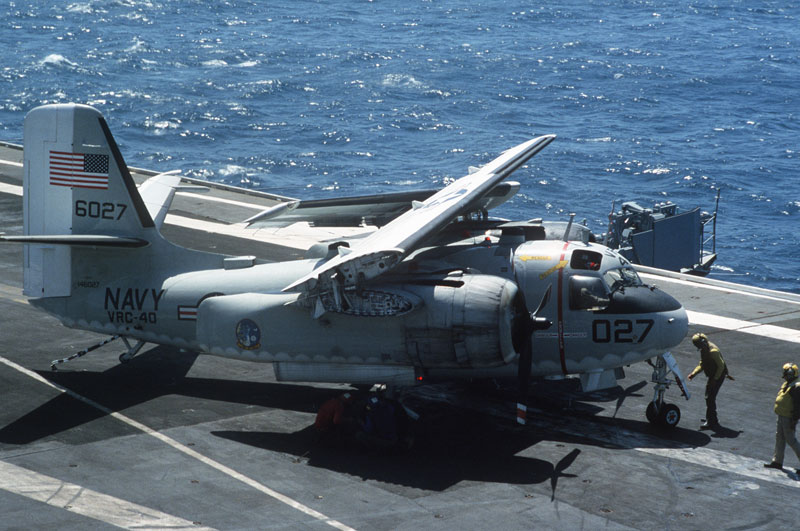
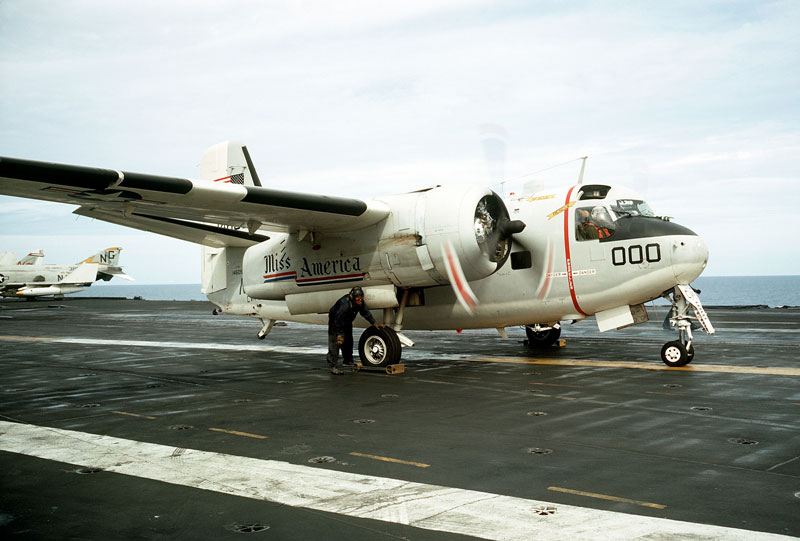
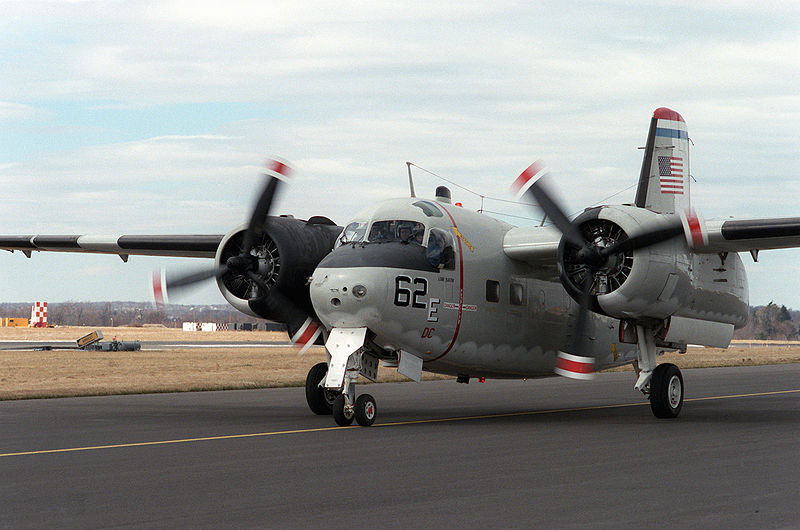
The Trader showcased a conventional exterior design. The cockpit was fitted to the extreme forward portion of the fuselage just behind a short snub-nose assembly. The pilots maintained views out of side, forward and above window panels with clear views of the engines. The cabin area was afforded a series of side-mounted viewports all their own. Wings were high mounted along the fuselage sides and could be folded (just outboard of each engine nacelle) for improved carrier storage. Each wing fitted an engine nacelle and the high wing mounting helped to provide adequate clearance for the large-diameter propeller blades. The engine nacelles ran ahead and behind the leading and trailing wing edges respectively. The wings sported some noticeable dihedral in their design. The fuselage tapered off towards amidships and collapsed down to form the base of the empennage. The tail section was dominated by a single large vertical tail fin with a swept leading edge surface and a rounded/clipped tip. Horizontal planes were affixed to either fin side and showcased strong dihedral, completing a "Y" shape at the rear. The undercarriage was of a conventional tricycle arrangement made up of two main landing gear legs (single wheeled) and a nose landing gear leg (double wheeled). The main legs retracted rearwards into each respective engine nacelle underside while the nose landing gear leg - this fitted to the extreme forward portion of the fuselage - retracted rearwards under the flight deck floor. There was a tail hook fitted to the base of the tail as well as a diminutive tail wheel - both could be retracted. A standard crew was made up of the two pilots, seated side-by-side in the cockpit.

Power and Performance

Engines were a pair of Wright R-1820-82WA Cyclone 9 cylinder radial piston engines each delivering 1,525 horsepower and spinning a large three-blade propeller. Performance included a top speed of 287 miles per hour with a range of nearly 1,300 miles. The Trader maintained an empty weight of 18,750lbs and a Maximum Take-Off Weight (MTOW) nearing 29,150lbs.

The End of the Road

The C-1 Trader was ultimately replaced by the Grumman C-2 Greyhound, a derivative of the Grumman E-2 Hawkeye.
Text ©2003-2013 www.MilitaryFactory.com • All Rights Reserved • No Reproduction Permitted
MilitaryFactory.com does NOT sell equipment/weaponry. Material presented throughout this website is for historical and entertainment value and should not to be construed as usable for hardware restoration, maintenance or general operation. Please consult manufacturers for such information. Our disclaimer. Email corrections / Comments to MilitaryFactory at Gmail dot com.
Picture of Grumman C-1A / TF-1 Trader
Pic of the Grumman C-1A / TF-1 Trader
Image of the Grumman C-1A / TF-1 Trader
View All Images (5)

Specifications for the
Grumman C-1A / TF-1 Trader
Carrier-based Transport Aircraft


Country of Origin: United States
Manufacturer: Grumman - USA
Initial Year of Service: 1952
Production: 87


Focus Model: Grumman C-1A / TF-1 Trader
Crew: 2


Length: 42.32ft (12.9m)
Width: 69.55ft (21.20m)
Height: 16.08ft (4.90m)
Weight (Empty): 18,748lbs (8,504kg)
Weight (MTOW): 29,150lbs (13,222kg)


Powerplant: 2 x Wright R-1820-82WA Cyclone 9-cylinder radial piston engines delivering 1,525 horsepower each.


Maximum Speed: 287mph (462kmh; 249kts)
Maximum Range: 1,300miles (2,092km)
Service Ceiling: 0ft (0m; 0.0miles)
Rate-of-Climb: 0 feet per minute (0m/min)


Hardpoints: 0
Armament Suite:
None.


Variants:
XS2F-1 - Original USN Designation


TF-1 - Original Designation for initial production examples based on S2F Tracker model; redesignated to C-1A beginning in 1962; 87 examples produced.

TF-1Q - Four Electronic Countermeasures Conversion Models of TF-1 production examples; redesignated to EC-1A beginning in 1962.

C-1A - Redesignation of TF-1 production models beginning in 1962.

EC-1A - Redesignation of TF-1Q Electronic Countermeasures production models beginning in 1962.

TF-1W - Airborne Early Warning derivative becoming the WF-2 (E-1) Tracer.


Operators:
United States

ALL AIRCRAFT CATEGORIES

BY DECADE:


1900 to 1909
1910 to 1919
1920 to 1929
1930 to 1939
1940 to 1949
1950 to 1959
1960 to 1969
1970 to 1979
1980 to 1989
1990 to 1999
2000 to 2009
2010 to 2019
2020 to 2029
VIEW ALL


BY TYPE:


Anti-Submarine Warfare (ASW)
Attack Helicopters
Bomber Aircraft
Medium Bombers
Heavy Bombers
Close-Air Support (CAS)
Commercial Aircraft
Dive Bombers
Electronic Warfare Aircraft (EWA)
Experimental / X-Planes
Fighter Aircraft
Floatplane Aircraft
Flying Boat Aircraft
Aerial Refueling Tankers
Helicopters (ALL)
Interceptor Aircraft
Multi-Role Aircraft
Navy Carrier Aircraft
Night Fighters
Reconnaissance / Scout
Search & Rescue (SAR)
Scout Helicopters
Special Purpose
Torpedo Bombers
Trainer Aircraft
Transport Aircraft
Transport Helicopters
Unmanned Aerial Vehicles (UAVs)
Unmanned Combat Air Vehicles (UCAVs)


COLLECTIONS:


4th Generation Fighter Aircraft
5th Generation Fighter Aircraft
US X-Planes
Classic US Warbirds
French Military Helicopters
Grumman "Cats"
Howard Hughes Aircraft
Indian Air Force
Israeli Air Force
Libyan Aircraft
Modern Chinese Aircraft
Modern Chinese Fighters
Modern Military Aircraft
Modern North Korean Aircraft
Modern Trainer Aircraft
Modern US Aircraft
Mikoyan Aircraft
Sukhoi Aircraft
Syrian Aircraft
Top 10 Fighter Aircraft of All Time


AIRCRAFT BY CONFLICT:


Arab-Israeli War (1948)
Cuban Missile Crisis (1959-1962)
Falklands War (1982)
Indo-Pak War (1965, 1971)
Iran-Iraq War (1980-1988)
Lebanon War (1982)
Operation Allied Force (1999)
Operation Desert Storm (1991)
Six Day War (1967)
Spanish Civil War (1936)
Soviet-Afghan War (1979-1989)
Yom Kippur War (1973)


MISCELLANEOUS:


Aircraft Cockpit Pictures
Aircraft Comparison Tool
Aircraft Manufacturers
Aircraft Production Totals
Aircraft Timeline

WORLD WAR 2:


1939 Aircraft
1940 Aircraft
1941 Aircraft
1942 Aircraft
1943 Aircraft
1944 Aircraft
1945 Aircraft
1946 Aircraft
Australian Aircraft
Battle of Britain Aircraft
Bombers
Four-Engine Bombers
British Aircraft
British Bombers
British Transports
Dive Bombers
Canadian Aircraft
Fighters
Chinese Aircraft
French Aircraft
German Aircraft
German Fighters
German Flying Boats
German Jets
Secret Weapons of the Luftwaffe
Italian Aircraft
Imperial Japanese Aircraft
Imperial Japanese Fighters
Mitsubishi Bombers
Navy Aircraft
Pearl Harbor
Polish Aircraft
Romanian Aircraft
US Aircraft
US Bombers
US Navy Aircraft
Soviet Aircraft
Torpedo Bombers
Trainer Aircraft
Transport Aircraft
Tuskegee Airmen Aircraft
W.A.S.P. Aircraft
WW2 Aircraft Ranked by Speed
VIEW ALL


WORLD WAR 1:


1914 Aircraft
1915 Aircraft
1916 Aircraft
1917 Aircraft
1918 Aircraft
Aircraft Timeline
Austro-Hungarian Aircraft
Bomber Aircraft
British Aircraft
Fighters
Flying Boats
French Aircraft
Imperial German Aircraft
Italian Aircraft
Scout Aircraft
Russian Empire Aircraft
US Aircraft
WW1 Aircraft Ranked by Speed
VIEW ALL


KOREAN WAR:


Australian Aircraft
Korean War Aces
Korean War Jets
North Korean Aircraft
US Military Aircraft
VIEW ALL


VIETNAM WAR:


Helicopters (ALL)
Transport Helicopters
North Vietnam Air Force
US Airpower
VIEW ALL


COLD WAR:


1950s French Aircraft
British V-Bombers
Cold War Bombers
Soviet Aircraft
Soviet Bombers
Soviet Interceptors
Soviet Helicopters
Strategic Air Command
US Aircraft
US Bombers
US Interceptors
VIEW ALL

Site Disclaimer | Privacy Policy | Site Map | MF Origins


©2013 www.MilitaryFactory.com • Content ©2003-2013 MilitaryFactory.com • All Rights Reserved • Site Contact Email: militaryfactory at gmail dot com. The "Military Factory" name and MilitaryFactory.com logo are registered ® trademarks and protected by all applicable domestic and international intellectual property laws.


Top MF Stuff: 2013 Military Pay Scale | Military Ranks | WW2 Weapons | Sniper Rifles | Kts to Mph | WW1 Aircraft | Automatic Rifles | Aircraft Cockpits | Vietnam War Weapons | Main Battle Tanks | Submachine Guns | Shotguns | French Military Victories


Most photographic images appearing on this site are courtesy of the United States Department of Defense and are approved for public use. Other images acquired through the public domain. Digital art work courtesy of Dan Alex. Business Consulting by Kyle Williams. Material presented throughout this website is for historical and entertainment value and should not to be construed as usable for hardware restoration, maintenance or general operation. Please consult manufacturers for such information.


eXTReMe Tracker