Military Factory
Military Pay Chart
Global Firepower
Military Industrial Complex
Second World War
Home
Military Pay Scale
Military Ranks
Small Arms
Aircraft
Land Systems
Navy
Education
Military Factory Facebook Logo
flag of United States

Northrop Grumman B-2 Spirit (Stealth Bomber) Low Observables Strategic Stealth Heavy Bomber (1997)

Authored By Staff Writer | Last Updated: 8/7/2012

Jack Northrops dream of the flying wing was finally realized in the B-2 Spirit.

Find a School Near You
Follow Military Factory on Facebook:
Trending on Military Factory:
Recent Articles:
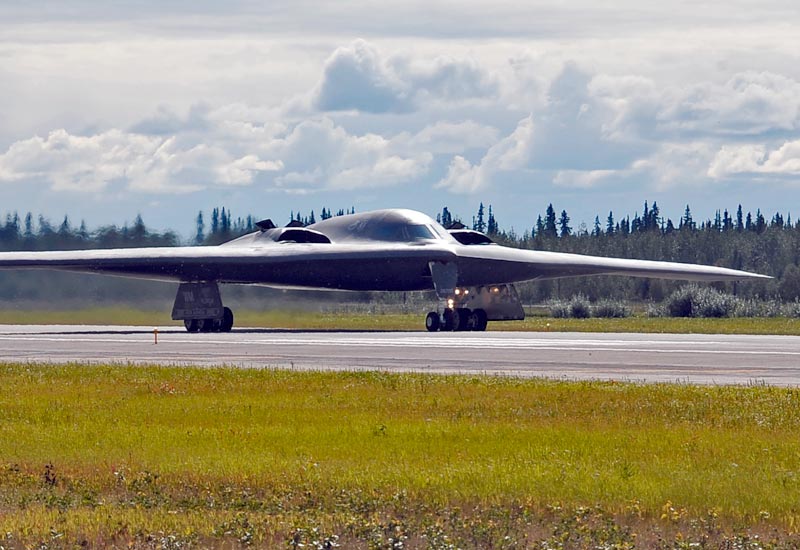
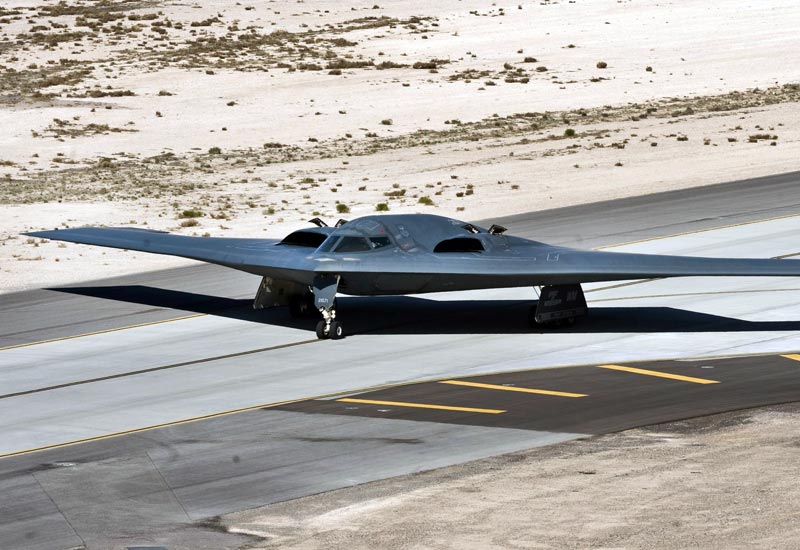
The B-2 Spirit (generically known as the "Stealth Bomber") was the pinnacle of tail-less flight designs beginning in the mind of Jack Northrop, founder of the Northrop aircraft company. Not only was the B-2 groundbreaking in its sans vertical tail surfaces concept but the aircraft was designed from the outset with stealth capabilities in mind - from a small heat signature and profile to specialized avionics and body-coating materials. In essence, the mission of the B-2 would be to infiltrate enemy airspace, hitting vital targets against an unsuspecting enemy, and then leaving the area undetected - allowing for further waves of non-stealth aircraft to finish the job. This first-strike capability had become an essential facet of warfare in the 21st century and - as shown in the war in Kosovo through Allied Force - the B-2 would not disappoint.

Developed as early as the 1970's the B-2 was not unveiled until 1988. It would be 1989 before the system would see its first flight time and from there on, the Spirit would be tabbed with succeeding the Rockwell B-1B Lancer. Armed with a potent APQ-181 radar, the B-2 Spirit is capable of pin-point strikes on most any hardened target available such as underground bunkers.

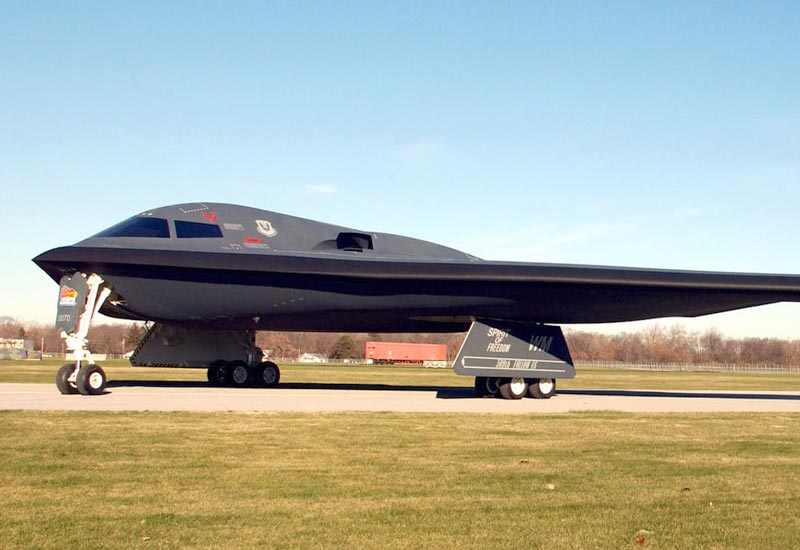
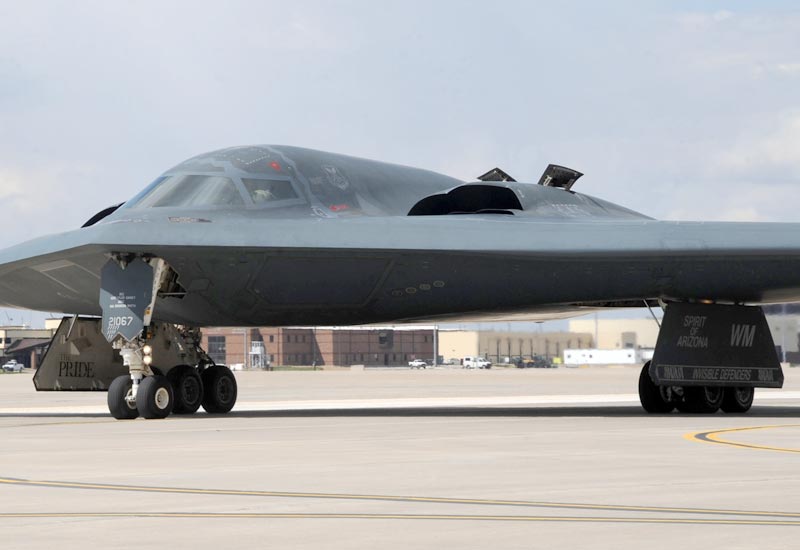
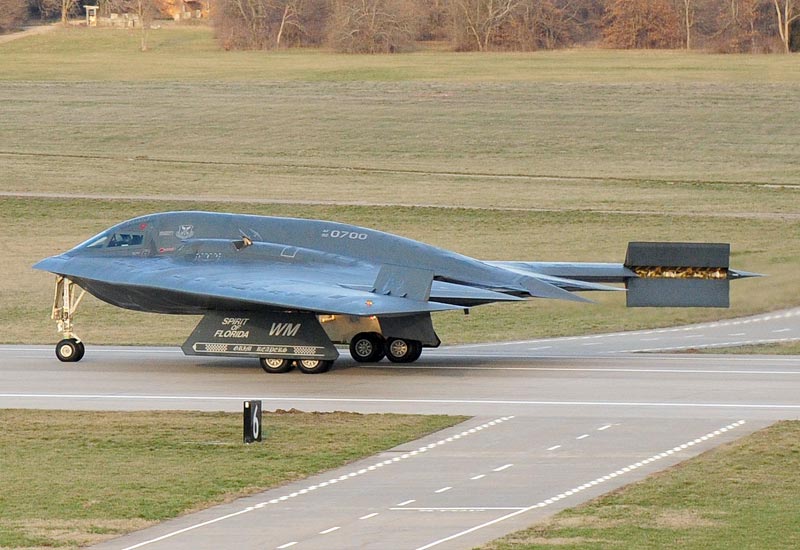
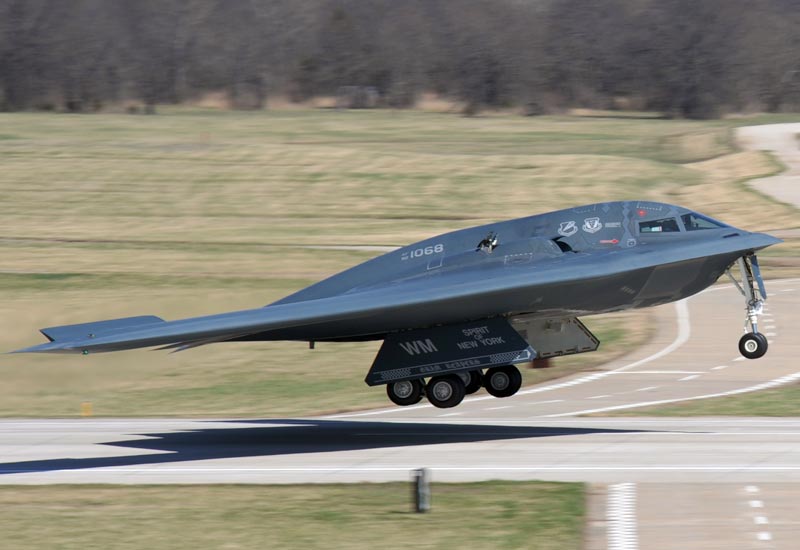
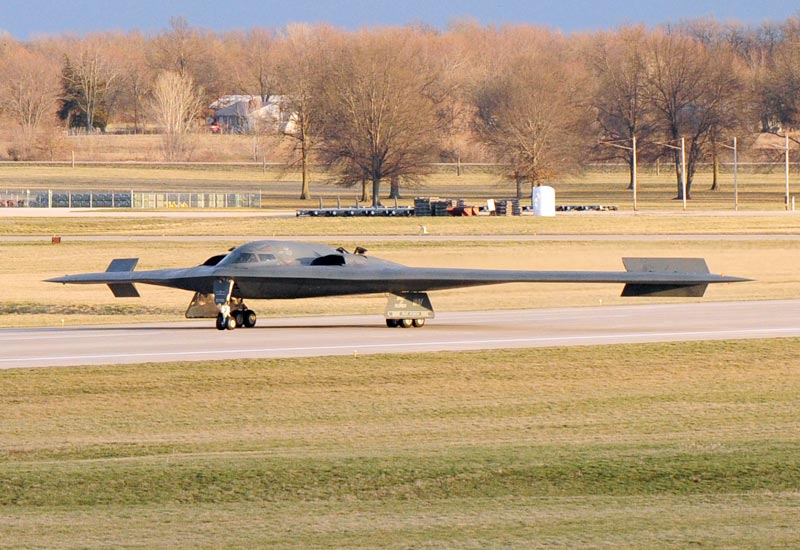
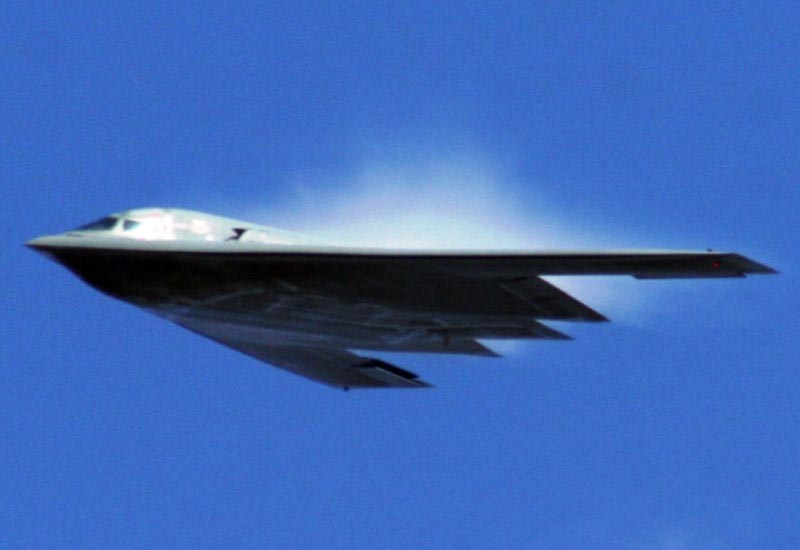
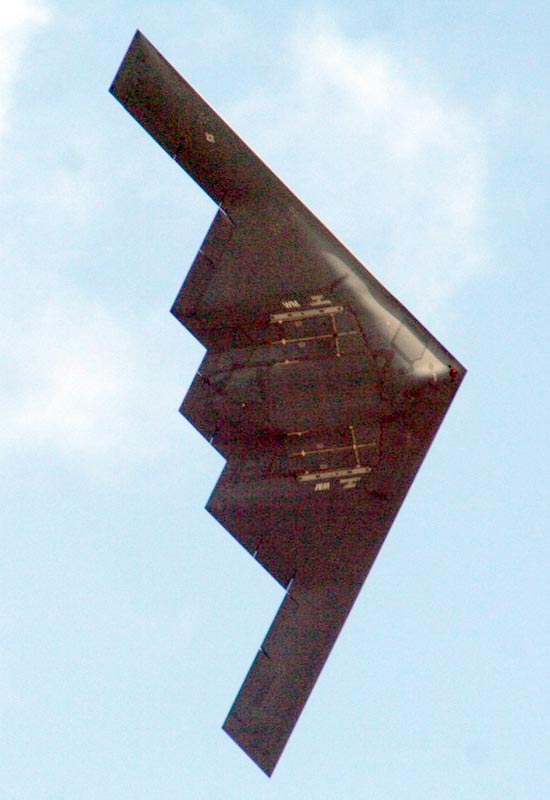
From above, the B-2's body design is high prevalent in the use of the double-W shape. Vertical tail surfaces are non-existent and the large delta wing shape provides maximum stability. Maneuverability is made possible by the use of computer-controlled flight characteristics that were hard to come by on Northrop's earlier flying wing attempts. This measure of ability is not to be underscored as the basic flying wing design presents many stability issues that had to be ironed out before the flying wing concept could be realized. To put the importance of this advancement into context, the previous flying wing attempts of Northrop had a deadly tendency to stall and - in one case - killing the crew. The internal systems of the B-2 reportedly do not let the aircraft stall, thus eliminating any piloting mistakes that could lead to a disastrous loss of the aircraft and its sensitive flight technology.

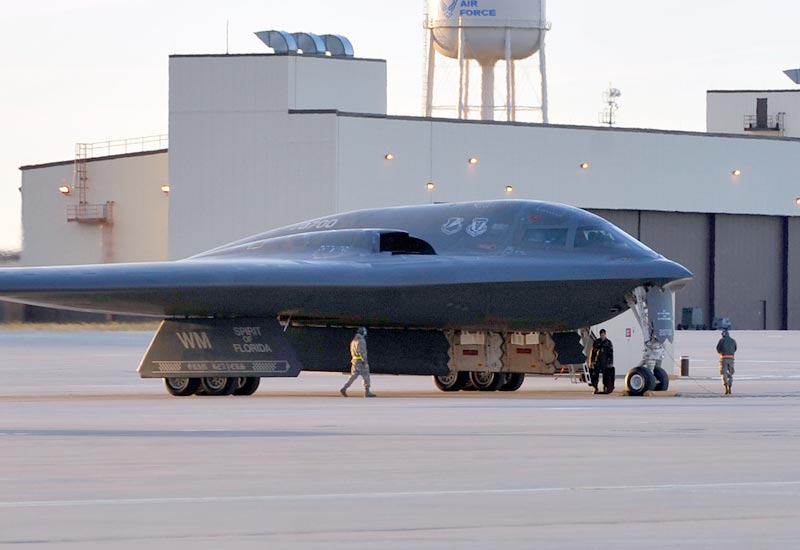
The wind-tunnel friendly profile of the B-2 shows off the low-profile design. Engines are housed in blended nacelles on either side of the equally-blended cockpit. A crew of two personnel can man the machine - a pilot and co-pilot - taking turns at flying the aircraft on longer missions. An in-air lavatory has also been installed just behind the cockpit for such missions. Sleeping for the crew can also be accomplished in a designated area. The large wing area of flying wings serves many beneficial purposes to the overall design. Additional fuel can be stored throughout the design and - more importantly - internal weapons bays allows for munitions to be held inside thus further reducing the radar signature of the Spirit.

With 132 B-2 Spirits initially planned for production, ballooning costs (the B-2 program cost well over $45 billion dollars to fund with a single B-2 costing about $1.2 billion dollars) and the end of the Cold War substantially reduced those figures to just 21. This end production total also included the 6 developmental B-2 aircraft which were later all upgraded to full operational use. Full air groups were formed in 1999, with the last B-2 delivered from the production lines in 1998.

The B-2 saw its first action in the war over Kosovo in 1999 as well as over Afghanistan in 2001 with pinpoint strikes using JDAMs and GPS-guided munitions. Missions were flown from locations within the United States (Missouri is the home state of the B-2 flight group) via inflight refueling. To that end, the B-2 became the realization that Jack Northrop saw with the XB-35 prop-powered flying wing all those years ago. Mr. Northrop himself was able to see the B-2 under development in its still-classified form shortly before his death. Today the B-2 - though limited in operational numbers - provides the United States with a lethal first-strike / first-kill capability unmatched throughout the world.

On February 22, 2008, the first reported accident of a stealth bomber was reported when a B-2 Spirit crashed shortly after takeoff in Guam while on support of western-Pacific operations. Both pilots ejected safely but the incident resulted in the grounding of the other three B-2's present at the airbase. Investigation revealed that humidity had built up on several of the B-2's sensors, distorting pre-flight checks leading to the accident.
Text ©2003-2013 www.MilitaryFactory.com • All Rights Reserved • No Reproduction Permitted
MilitaryFactory.com does NOT sell equipment/weaponry. Material presented throughout this website is for historical and entertainment value and should not to be construed as usable for hardware restoration, maintenance or general operation. Please consult manufacturers for such information. Our disclaimer. Email corrections / Comments to MilitaryFactory at Gmail dot com.
Picture of Northrop Grumman B-2 Spirit (Stealth Bomber)
Pic of the Northrop Grumman B-2 Spirit (Stealth Bomber)
Image of the Northrop Grumman B-2 Spirit (Stealth Bomber)
View All Images (5)

Specifications for the
Northrop Grumman B-2 Spirit (Stealth Bomber)
Low Observables Strategic Stealth Heavy Bomber


Country of Origin: United States
Manufacturer: Northrop Grumman - USA
Initial Year of Service: 1997
Production: 21


Focus Model: Northrop Grumman B-2A Spirit (Stealth Bomber)
Crew: 2 or 3


Length: 69.00ft (21.03m)
Width: 172.01ft (52.43m)
Height: 16.99ft (5.18m)
Weight (Empty): 153,700lbs (69,717kg)
Weight (MTOW): 336,503lbs (152,635kg)


Powerplant: 4 x General Electric F118-GE-110 turbofans generating 17,300lbs of thrust.


Maximum Speed: 569mph (915kmh; 494kts)
Maximum Range: 7,248miles (11,665km)
Service Ceiling: 50,000ft (15,240m; 9.5miles)
Rate-of-Climb: 0 feet per minute (0m/min)


Hardpoints: 0
Armament Suite:
Mission-specific ordnance can include any of the follow arrangements held in an internal bomb bay:

16 x AGM-129 ACMs
16 x B61 strategic freefall nuclear bomb
16 x B83 strategic freefall nuclear bomb
80 x MK 82 bombs
16 x MK 84 bombs
16 x JDAM
16 x GAM
EGBU-28
JSOW
JASSM


Variants:
B-2A - Initial Production Model Designation


Operators: the United States of America

ALL AIRCRAFT CATEGORIES

BY DECADE:


1900 to 1909
1910 to 1919
1920 to 1929
1930 to 1939
1940 to 1949
1950 to 1959
1960 to 1969
1970 to 1979
1980 to 1989
1990 to 1999
2000 to 2009
2010 to 2019
2020 to 2029
VIEW ALL
Compare Aircraft


BY TYPE:


Anti-Submarine Warfare (ASW)
Attack Helicopters
Bomber Aircraft
Medium Bombers
Heavy Bombers
Close-Air Support (CAS)
Commercial Aircraft
Dive Bombers
Electronic Warfare Aircraft (EWA)
Experimental / X-Planes
Fighter Aircraft
Floatplane Aircraft
Flying Boat Aircraft
Aerial Refueling Tankers
Helicopters (ALL)
Interceptor Aircraft
Multi-Role Aircraft
Navy Carrier Aircraft
Night Fighters
Reconnaissance / Scout
Search & Rescue (SAR)
Scout Helicopters
Special Purpose
Torpedo Bombers
Trainer Aircraft
Transport Aircraft
Transport Helicopters
Unmanned Aerial Vehicles (UAVs)
Unmanned Combat Air Vehicles (UCAVs)


COLLECTIONS:


4th Generation Fighter Aircraft
5th Generation Fighter Aircraft
US X-Planes
Classic US Warbirds
French Military Helicopters
Grumman "Cats"
Howard Hughes Aircraft
Indian Air Force
Israeli Air Force
Libyan Aircraft
Modern Chinese Aircraft
Modern Chinese Fighters
Modern Military Aircraft
Modern North Korean Aircraft
Modern Trainer Aircraft
Modern US Aircraft
Mikoyan Aircraft
Sukhoi Aircraft
Syrian Aircraft
Top 10 Fighter Aircraft of All Time


AIRCRAFT BY CONFLICT:


Arab-Israeli War (1948)
Cuban Missile Crisis (1959-1962)
Falklands War (1982)
Indo-Pak War (1965, 1971)
Iran-Iraq War (1980-1988)
Lebanon War (1982)
Operation Allied Force (1999)
Operation Desert Storm (1991)
Six Day War (1967)
Spanish Civil War (1936)
Soviet-Afghan War (1979-1989)
Yom Kippur War (1973)


MISCELLANEOUS:


Aircraft Cockpits
Aircraft Manufacturers List
Aircraft Timeline

WORLD WAR 2:


1939 Aircraft
1940 Aircraft
1941 Aircraft
1942 Aircraft
1943 Aircraft
1944 Aircraft
1945 Aircraft
1946 Aircraft
Australian Aircraft
Battle of Britain Aircraft
Bombers
Four-Engine Bombers
British Aircraft
British Bombers
British Transports
Dive Bombers
Canadian Aircraft
Fighters
Chinese Aircraft
French Aircraft
German Aircraft
German Fighters
German Flying Boats
German Jets
Secret Weapons of the Luftwaffe
Italian Aircraft
Imperial Japanese Aircraft
Imperial Japanese Fighters
Mitsubishi Bombers
Navy Aircraft
Pearl Harbor
Polish Aircraft
Romanian Aircraft
US Aircraft
US Bombers
US Navy Aircraft
Soviet Aircraft
Torpedo Bombers
Transport Aircraft
Tuskegee Airmen Aircraft
W.A.S.P. Aircraft
WW2 Aircraft Ranked by Speed
VIEW ALL


WORLD WAR 1:


1914 Aircraft
1915 Aircraft
1916 Aircraft
1917 Aircraft
1918 Aircraft
Aircraft Timeline
Austro-Hungarian Aircraft
Bomber Aircraft
British Aircraft
Fighters
Flying Boats
French Aircraft
Imperial German Aircraft
Italian Aircraft
Scout Aircraft
Russian Empire Aircraft
US Aircraft
WW1 Aircraft Ranked by Speed
VIEW ALL


KOREAN WAR:


Australian Aircraft
Korean War Aces
Korean War Jets
North Korean Aircraft
US Military Aircraft
VIEW ALL


VIETNAM WAR:


Helicopters
North Vietnam Air Force
US Airpower
VIEW ALL


COLD WAR:


1950s French Aircraft
British V-Bombers
Cold War Bombers
Soviet Aircraft
Soviet Bombers
Soviet Interceptors
Soviet Helicopters
Strategic Air Command
US Aircraft
US Bombers
US Interceptors
VIEW ALL

Site Disclaimer | Privacy Policy | Site Map | MF Origins


©2013 www.MilitaryFactory.com • Content ©2003-2013 MilitaryFactory.com • All Rights Reserved • Site Contact Email: militaryfactory at gmail dot com. The "Military Factory" name and MilitaryFactory.com logo are registered ® trademarks and protected by all applicable domestic and international intellectual property laws.


Top MF Stuff: 2013 Military Pay Scale | Military Ranks | WW2 Weapons | Sniper Rifles | Kts to Mph | WW1 Aircraft | Automatic Rifles | Aircraft Cockpits | Vietnam War Weapons | Main Battle Tanks | Submachine Guns | Shotguns | French Military Victories


Most photographic images appearing on this site are courtesy of the United States Department of Defense and are approved for public use. Other images acquired through the public domain. Digital art work courtesy of Dan Alex. Business Consulting by Kyle Williams. Material presented throughout this website is for historical and entertainment value and should not to be construed as usable for hardware restoration, maintenance or general operation. Please consult manufacturers for such information.


eXTReMe Tracker