Military Factory
Military Pay Chart
Global Firepower
Military Industrial Complex
Second World War
Home
Military Pay Scale
Military Ranks
Small Arms
Aircraft
Land Systems
Navy
Education
Military Factory Facebook Logo
flag of Nazi Germany

Dornier Do 24 Reconnaissance / Transport / Search and Rescue Flying Boat (1937)

Authored By Staff Writer | Last Updated: 7/22/2008

The Dornier Do 24 is one of the few World War 2 aircraft with the distinction of having served on both sides of the conflict.

Find a School Near You
Follow Military Factory on Facebook:
Trending on Military Factory:
Recent Articles:
Little MF Logo
Little MF Logo
Little MF Logo
Little MF Logo
Little MF Logo
Little MF Logo
Little MF Logo
Little MF Logo
Little MF Logo
Little MF Logo
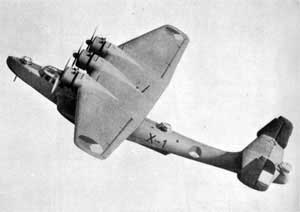
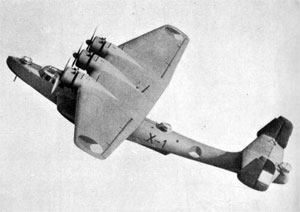
The Dornier Do 24 was a capable flying both serving in limited numbers both Allied and Axis powers in World War 2. The system was classified as a flying boat, capable of operations on both land and sea, and was the product of German engineering and a Dutch Navy requirement. The Do 24 achieved her maiden flight on July 3rd, 1937 and entered service in November of that year. Some 279 total examples were produced before, during and after the war with several models serving up until the early 1950s.

Design of the Do 24 was conventional as flying boats go. The system featured a hull-like fuselage with sponsons for added on-water stability. The wings were high-mounted monoplane systems held in place by struts extending from the fuselage and sponsons. The cockpit was held forward of the wings with entry to the fuselage made through a wide hinged door in the upper portion under the wing assembly. Three BMW/Bramo Fafnir 323R-2 series 9-cylinder air-cooled radial piston engines developed 1,000 horsepower each, provided up to 340 kilometers of speed and were fitted across the middle of the wing section, over the main body of the fuselage. These engines featured a slim nacelle design and five-bladed propellers (Do 24 ATT). The tail section consisted of a split "T" type with twin vertical fins extending out from the fuselage end. Crew accommodations amounted to 5 or 6 personnel. Armament was strictly defensive - as is expected for the type of role she was designed for - and consisted of a two 7.92mm MG 15 machine guns in a bow and tail position, 1 x 20mm MG 151 cannon in a central fuselage position and up to 12 x 110lb bombs as needed.

With the Dornier Wals of the Dutch Navy effectively on their way out of service, the brand decided a replacement was in order and contracted the German aircraft firm of Dornier to design the replacement. Utilizing this Dutch requirement, the Do 24 was born as an all-metal constructed system capable of the needed operations in the Dutch East Indies where they would be used. The initial batch of early aircraft appeared with varying powerplants, the first two featuring Junkers Jumo types followed by three more with Wright Cyclone types. Production was handled by both German and Netherlands facilities.

All progressed as planned until the eventual occupation of the Netherlands by German forces, effectively killing all future Dutch production of the system. The German occupation forced the confiscation of all completed and under construction systems for Luftwaffe use. Future models produced in Dutch facilities naturally shifted use of German powerplants away from the American Wright-branded products and featured the BMW Bramo series. In action through World War 2, the Do 24 served with German, Australian (existing Do 24 systems already operating in the East Indies) and Spain. Spain offered up the type in a somewhat neutral role, providing search and rescue services for pilots of both sides of the conflict. France made use of the time for a time and the Sweden "captured" a German Do 24 making an emergency landing in the neutral nation. The aircraft appeared in various arrangements through her production life, differing mainly through powerplants and minor changes throughout.
Text ©2003-2013 www.MilitaryFactory.com • All Rights Reserved • No Reproduction Permitted
MilitaryFactory.com does NOT sell equipment/weaponry. Material presented throughout this website is for historical and entertainment value and should not to be construed as usable for hardware restoration, maintenance or general operation. Please consult manufacturers for such information. Our disclaimer. Email corrections / Comments to MilitaryFactory at Gmail dot com.
Picture of Dornier Do 24
View All Images (1)

Specifications for the
Dornier Do 24
Reconnaissance / Transport / Search and Rescue Flying Boat


Country of Origin: Nazi Germany
Manufacturer: Dornier Flugzeugwerke - Germany / Aviolanda-de Schelde - Netherlands
Initial Year of Service: 1937
Production: 279


Focus Model: Dornier Do 24T-1
Crew: 5 to 6


Length: 72.18ft (22m)
Width: 88.58ft (27.00m)
Height: 18.86ft (5.75m)
Weight (Empty): 20,062lbs (9,100kg)
Weight (MTOW): 40,565lbs (18,400kg)


Powerplant: 3 x BMW/Bramo Fafnir 323R-2 9-cylinder air-cooled radial engines developing 1,000hp each.


Maximum Speed: 211mph (340kmh; 184kts)
Maximum Range: 2,952miles (4,750km)
Service Ceiling: 19,357ft (5,900m; 3.7miles)
Rate-of-Climb: 468 feet per minute (143m/min)


Hardpoints: 4
Armament Suite:
1 x 7.92mm MG 15 machine gun in bow position
1 x 7.92mm MG 15 machine gun in tail position
1 x 20mm MG 151 cannon in midship position
12 x 110lb (50kg) bombs


Variants:
Do 24K-1 - Initial Production Model Designation; 6 examples produced.


Do 24K-2 - License production models by the Dutch; fitted with 3 x Wright R-1820-G102 engines of 1,000 horsepower each.

Do 24N-1 - License production search and rescue (SAR) models by the Dutch for German use; fitted with 3 x Wright R-1820-G102 series engines of 1,000 horsepower each; 11 examples produced.

Do 24T-1 - French and Dutch Produced Do 24; 48 examples produced by French; Dutch examples fitted with BMW Bramo 323R-2 series engines.

Do 24T-2 - Based on the Do 24T-1

Do 24T-3 - Based on the Do 24T-1

Do 24 ATT - Fitted with 3 x Pratt & Whitney Canada PT6A-45 series engines.

Do 318 - Single Example Model based on the Do 24T.


Operators:
Netherlands, Australia, France, Spain, Sweden and Nazi Germany.

ALL AIRCRAFT CATEGORIES

BY DECADE:


1900 to 1909
1910 to 1919
1920 to 1929
1930 to 1939
1940 to 1949
1950 to 1959
1960 to 1969
1970 to 1979
1980 to 1989
1990 to 1999
2000 to 2009
2010 to 2019
2020 to 2029
VIEW ALL


BY TYPE:


Anti-Submarine Warfare (ASW)
Attack Helicopters
Bomber Aircraft
Medium Bombers
Heavy Bombers
Close-Air Support (CAS)
Commercial Aircraft
Dive Bombers
Electronic Warfare Aircraft (EWA)
Experimental / X-Planes
Fighter Aircraft
Floatplane Aircraft
Flying Boat Aircraft
Aerial Refueling Tankers
Helicopters (ALL)
Interceptor Aircraft
Multi-Role Aircraft
Navy Carrier Aircraft
Night Fighters
Reconnaissance / Scout
Search & Rescue (SAR)
Scout Helicopters
Special Purpose
Torpedo Bombers
Trainer Aircraft
Transport Aircraft
Transport Helicopters
Unmanned Aerial Vehicles (UAVs)
Unmanned Combat Air Vehicles (UCAVs)


COLLECTIONS:


4th Generation Fighter Aircraft
5th Generation Fighter Aircraft
US X-Planes
Classic US Warbirds
French Military Helicopters
Grumman "Cats"
Howard Hughes Aircraft
Indian Air Force
Israeli Air Force
Libyan Aircraft
Modern Chinese Aircraft
Modern Chinese Fighters
Modern Military Aircraft
Modern North Korean Aircraft
Modern Trainer Aircraft
Modern US Aircraft
Mikoyan Aircraft
Sukhoi Aircraft
Syrian Aircraft
Top 10 Fighter Aircraft of All Time


AIRCRAFT BY CONFLICT:


Arab-Israeli War (1948)
Cuban Missile Crisis (1959-1962)
Falklands War (1982)
Indo-Pak War (1965, 1971)
Iran-Iraq War (1980-1988)
Lebanon War (1982)
Operation Allied Force (1999)
Operation Desert Storm (1991)
Six Day War (1967)
Spanish Civil War (1936)
Soviet-Afghan War (1979-1989)
Yom Kippur War (1973)


MISCELLANEOUS:


Aircraft Cockpit Pictures
Aircraft Comparison Tool
Aircraft Manufacturers
Aircraft Production Totals
Aircraft Timeline

WORLD WAR 2:


1939 Aircraft
1940 Aircraft
1941 Aircraft
1942 Aircraft
1943 Aircraft
1944 Aircraft
1945 Aircraft
1946 Aircraft
Australian Aircraft
Battle of Britain Aircraft
Bombers
Four-Engine Bombers
British Aircraft
British Bombers
British Transports
Dive Bombers
Canadian Aircraft
Fighters
Chinese Aircraft
French Aircraft
German Aircraft
German Fighters
German Flying Boats
German Jets
Secret Weapons of the Luftwaffe
Italian Aircraft
Imperial Japanese Aircraft
Imperial Japanese Fighters
Mitsubishi Bombers
Navy Aircraft
Pearl Harbor
Polish Aircraft
Romanian Aircraft
US Aircraft
US Bombers
US Navy Aircraft
Soviet Aircraft
Torpedo Bombers
Trainer Aircraft
Transport Aircraft
Tuskegee Airmen Aircraft
W.A.S.P. Aircraft
WW2 Aircraft Ranked by Speed
VIEW ALL


WORLD WAR 1:


1914 Aircraft
1915 Aircraft
1916 Aircraft
1917 Aircraft
1918 Aircraft
Aircraft Timeline
Austro-Hungarian Aircraft
Bomber Aircraft
British Aircraft
Fighters
Flying Boats
French Aircraft
Imperial German Aircraft
Italian Aircraft
Scout Aircraft
Russian Empire Aircraft
US Aircraft
WW1 Aircraft Ranked by Speed
VIEW ALL


KOREAN WAR:


Australian Aircraft
Korean War Aces
Korean War Jets
North Korean Aircraft
US Military Aircraft
VIEW ALL


VIETNAM WAR:


Helicopters (ALL)
Transport Helicopters
North Vietnam Air Force
US Airpower
VIEW ALL


COLD WAR:


1950s French Aircraft
British V-Bombers
Cold War Bombers
Soviet Aircraft
Soviet Bombers
Soviet Interceptors
Soviet Helicopters
Strategic Air Command
US Aircraft
US Bombers
US Interceptors
VIEW ALL

Site Disclaimer | Privacy Policy | Site Map | MF Origins


©2013 www.MilitaryFactory.com • Content ©2003-2013 MilitaryFactory.com • All Rights Reserved • Site Contact Email: militaryfactory at gmail dot com. The "Military Factory" name and MilitaryFactory.com logo are registered ® trademarks and protected by all applicable domestic and international intellectual property laws.


Top MF Stuff: 2013 Military Pay Scale | Military Ranks | WW2 Weapons | Sniper Rifles | Kts to Mph | WW1 Aircraft | Automatic Rifles | Aircraft Cockpits | Vietnam War Weapons | Main Battle Tanks | Submachine Guns | Shotguns | French Military Victories


Most photographic images appearing on this site are courtesy of the United States Department of Defense and are approved for public use. Other images acquired through the public domain. Digital art work courtesy of Dan Alex. Business Consulting by Kyle Williams. Material presented throughout this website is for historical and entertainment value and should not to be construed as usable for hardware restoration, maintenance or general operation. Please consult manufacturers for such information.


eXTReMe Tracker