Military Factory
Military Pay Chart
Global Firepower
Military Industrial Complex
Second World War
Home
Military Pay Scale
Military Ranks
Small Arms
Aircraft
Land Systems
Navy
Education
Military Factory Facebook Logo
flag of Imperial Japan

Mitsubishi G4M (Betty) Land-Based Medium Naval Bomber (1941)

Authored By Staff Writer | Last Updated: 8/7/2012

The G4M Betty will forever be linked to the ill-fated flight which saw the death of Admiral Yamamoto, downed by a pair of American P-38 Lightnings over Bougainville in 1943.

Find a School Near You
Follow Military Factory on Facebook:
Trending on Military Factory:
Recent Articles:
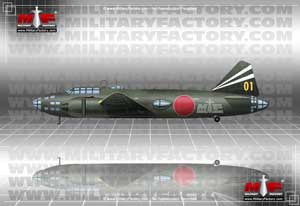
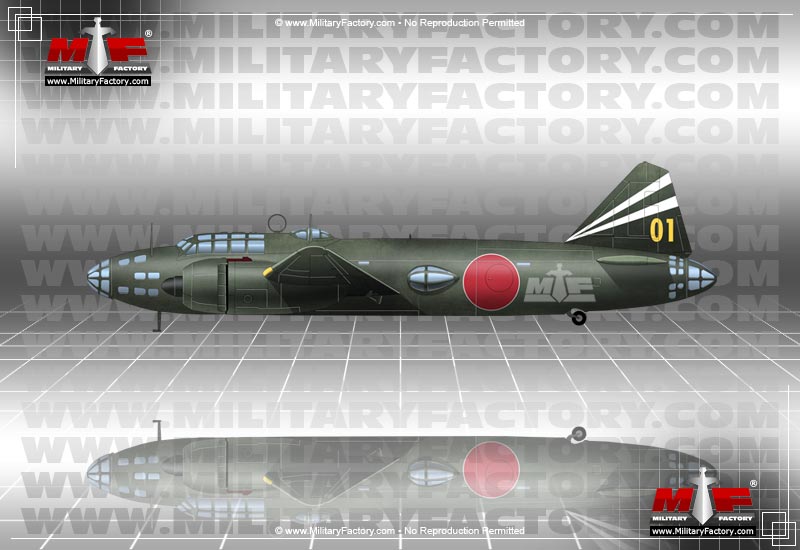
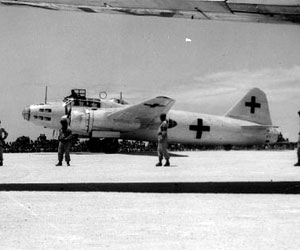
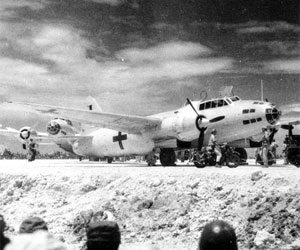
Like most of Imperial Japan's aircraft in the early stages of World War 2, the Mitsubishi G4M (codenamed "Betty" by the Allies) was a potent performer in operation as a land-based naval bomber. The system was of a strong design and featured impressive range for the time and would see combat action throughout the entire war. Though appearing in limited numbers, the G4M - at least for a time - was a weapon to be reckoned with. Despite its wartime success, the type is universally remembered as one of two "Betty" aircraft downed by a pair of American P-38 Lightnings and with it, Japanese Admiral Isoroku Yamamoto - mastermind of the Pearl Harbor attack - a disastrous blow to Imperial Japanese operations in the Pacific Theater. The P-38 pilots the day of April 18, 1943 were 1st Lt. Rex T. Barber and Captain Thomas G. Lamphier intercepting from Henderson Field, Guadalcanal.

The G4M started as a product of the Mitsubishi company, charged with filling the 1937 requirement calling for a capable long-range bomber aircraft. The system first flew in mid-October of 1939 and did not disappoint - proving the design capable of possessing both above average speed and range. Defensive armament consisted of a combination of cannon and machine guns. 2 x 7.7mm machine guns were positioned in the nose and two side blisters (one gun per blister). A single cannon was placed in the dorsal turret and in the tail gun position. Crew accommodations amounted to seven personnel and an internal bomb load of up to 2,205 pounds was afforded. With this design being of naval origins, the Betty was also slated to carry up to 1 x 1,764 anti-ship torpedo in place of the traditional bomb load.

By any regard, the Japanese Navy had found itself a capable performer and the G4M began to prove its worth in early entanglements that included the sinking of the British warships HMS Repulse and the HMS Prince of Wales, both occurring in the first year of the aircrafts service. In addition to successful action against the Allies, the G4M was also seen in combat against China.

If the G4M "Betty" contained any weakness in its design, it was a weakness that was common among many of the Japanese aircraft of the Second World War. Protection in the way of additional armor given to the crew and the fuel tanks were usually sub-standard when compared to its contemporaries. As such, the system proved to be highly susceptible to Allied gunfire with relative ease. Any sort of dominance that the G4M exhibited in the opening years of the conflict were soon reversed as the newer and better Allied fighters were made available in any kind of concentrated number across the Pacific. The days of the G4M were numbered from then on, despite seeing operational service through to the end of the war. The system was fielded in a few variants, each seen as a general improvement over the previous marks. Total production amounted to only a few thousand examples.

Note the whole number dimensions of the aircraft design (in meters).
Text ©2003-2013 www.MilitaryFactory.com • All Rights Reserved • No Reproduction Permitted
MilitaryFactory.com does NOT sell equipment/weaponry. Material presented throughout this website is for historical and entertainment value and should not to be construed as usable for hardware restoration, maintenance or general operation. Please consult manufacturers for such information. Our disclaimer. Email corrections / Comments to MilitaryFactory at Gmail dot com.
Picture of Mitsubishi G4M (Betty)
Pic of the Mitsubishi G4M (Betty)
Image of the Mitsubishi G4M (Betty)
View All Images (3)

Specifications for the
Mitsubishi G4M (Betty)
Land-Based Medium Naval Bomber


Country of Origin: Imperial Japan
Manufacturer: Mitsubishi - Japan
Initial Year of Service: 1941
Production: 2,414


Focus Model: Mitsubishi G4M2 (Betty)
Crew: 7


Length: 65.62ft (20m)
Width: 82.02ft (25.00m)
Height: 19.69ft (6.00m)
Weight (Empty): 17,990lbs (8,160kg)
Weight (MTOW): 27,558lbs (12,500kg)


Powerplant: 2 x Mitsubishi MK4P Kasei 21 radial piston engine developing 1,800hp each.


Maximum Speed: 272mph (438kmh; 237kts)
Maximum Range: 3,765miles (6,059km)
Service Ceiling: 29,364ft (8,950m; 5.6miles)
Rate-of-Climb: 810 feet per minute (247m/min)


Hardpoints: 0
Armament Suite:
2 x 7.7mm Type 92 machine guns in nose
1 x 20mm Type 99 cannon in dorsal turret
1 x 20mm Type 99 cannon in tail gun position
2 x 7.7mm Type 92 machine guns in side blister positions (one gun per side)

Maximum internal bomb loadout of up to 2,205lbs OR 1 x 1,764lb torpedo in place of bombs for anti-shipping duties.


Variants:
G4M1 - Prototype Model Designation; first flight October 23, 1939; produced in variant Model 11 and Model 22 detailed below; 1,200 examples produced.


Navy Type 1 Attack Bomber Model 11 - Initial Production Models.

Navy Type 1 Attack Bomber Model 22 - Second Production Models featuring revised engines.

G4M2 - "Improved" G4M1 Models; produced in variant Model 22A and Model 22B detailed below; 1,154 examples produced.

Navy Type 1 Attack Bomber Model 22A - Featured Mitsubishi Kasei radial engines of 1,800 horsepower; defensive armament revised along with increased fuel capacity.

Navy Type 2 Attack Bomber Model 22B - Similar to Model 22A.

Navy Type 1 Attack Bomber Model 24 - "Improved" G4M2.

G4M3 - "Improved" G4M2 Models

Navy Type 1 Attack Bomber Model 34 (G4M3); 60 examples produced.


Operators: Imperial Japan

ALL AIRCRAFT CATEGORIES

BY DECADE:


1900 to 1909
1910 to 1919
1920 to 1929
1930 to 1939
1940 to 1949
1950 to 1959
1960 to 1969
1970 to 1979
1980 to 1989
1990 to 1999
2000 to 2009
2010 to 2019
2020 to 2029
VIEW ALL
Compare Aircraft


BY TYPE:


Anti-Submarine Warfare (ASW)
Attack Helicopters
Bomber Aircraft
Medium Bombers
Heavy Bombers
Close-Air Support (CAS)
Commercial Aircraft
Dive Bombers
Electronic Warfare Aircraft (EWA)
Experimental / X-Planes
Fighter Aircraft
Floatplane Aircraft
Flying Boat Aircraft
Aerial Refueling Tankers
Helicopters (ALL)
Interceptor Aircraft
Multi-Role Aircraft
Navy Carrier Aircraft
Night Fighters
Reconnaissance / Scout
Search & Rescue (SAR)
Scout Helicopters
Special Purpose
Torpedo Bombers
Trainer Aircraft
Transport Aircraft
Transport Helicopters
Unmanned Aerial Vehicles (UAVs)
Unmanned Combat Air Vehicles (UCAVs)


COLLECTIONS:


4th Generation Fighter Aircraft
5th Generation Fighter Aircraft
US X-Planes
Classic US Warbirds
French Military Helicopters
Grumman "Cats"
Howard Hughes Aircraft
Indian Air Force
Israeli Air Force
Libyan Aircraft
Modern Chinese Aircraft
Modern Chinese Fighters
Modern Military Aircraft
Modern North Korean Aircraft
Modern Trainer Aircraft
Modern US Aircraft
Mikoyan Aircraft
Sukhoi Aircraft
Syrian Aircraft
Top 10 Fighter Aircraft of All Time


AIRCRAFT BY CONFLICT:


Arab-Israeli War (1948)
Cuban Missile Crisis (1959-1962)
Falklands War (1982)
Indo-Pak War (1965, 1971)
Iran-Iraq War (1980-1988)
Lebanon War (1982)
Operation Allied Force (1999)
Operation Desert Storm (1991)
Six Day War (1967)
Spanish Civil War (1936)
Soviet-Afghan War (1979-1989)
Yom Kippur War (1973)


MISCELLANEOUS:


Aircraft Cockpits
Aircraft Manufacturers List
Aircraft Timeline

WORLD WAR 2:


1939 Aircraft
1940 Aircraft
1941 Aircraft
1942 Aircraft
1943 Aircraft
1944 Aircraft
1945 Aircraft
1946 Aircraft
Australian Aircraft
Battle of Britain Aircraft
Bombers
Four-Engine Bombers
British Aircraft
British Bombers
British Transports
Dive Bombers
Canadian Aircraft
Fighters
Chinese Aircraft
French Aircraft
German Aircraft
German Fighters
German Flying Boats
German Jets
Secret Weapons of the Luftwaffe
Italian Aircraft
Imperial Japanese Aircraft
Imperial Japanese Fighters
Mitsubishi Bombers
Navy Aircraft
Pearl Harbor
Polish Aircraft
Romanian Aircraft
US Aircraft
US Bombers
US Navy Aircraft
Soviet Aircraft
Torpedo Bombers
Transport Aircraft
Tuskegee Airmen Aircraft
W.A.S.P. Aircraft
WW2 Aircraft Ranked by Speed
VIEW ALL


WORLD WAR 1:


1914 Aircraft
1915 Aircraft
1916 Aircraft
1917 Aircraft
1918 Aircraft
Aircraft Timeline
Austro-Hungarian Aircraft
Bomber Aircraft
British Aircraft
Fighters
Flying Boats
French Aircraft
Imperial German Aircraft
Italian Aircraft
Scout Aircraft
Russian Empire Aircraft
US Aircraft
WW1 Aircraft Ranked by Speed
VIEW ALL


KOREAN WAR:


Australian Aircraft
Korean War Aces
Korean War Jets
North Korean Aircraft
US Military Aircraft
VIEW ALL


VIETNAM WAR:


Helicopters
North Vietnam Air Force
US Airpower
VIEW ALL


COLD WAR:


1950s French Aircraft
British V-Bombers
Cold War Bombers
Soviet Aircraft
Soviet Bombers
Soviet Interceptors
Soviet Helicopters
Strategic Air Command
US Aircraft
US Bombers
US Interceptors
VIEW ALL

Site Disclaimer | Privacy Policy | Site Map | MF Origins


©2013 www.MilitaryFactory.com • Content ©2003-2013 MilitaryFactory.com • All Rights Reserved • Site Contact Email: militaryfactory at gmail dot com. The "Military Factory" name and MilitaryFactory.com logo are registered ® trademarks and protected by all applicable domestic and international intellectual property laws.


Top MF Stuff: 2013 Military Pay Scale | Military Ranks | WW2 Weapons | Sniper Rifles | Kts to Mph | WW1 Aircraft | Automatic Rifles | Aircraft Cockpits | Vietnam War Weapons | Main Battle Tanks | Submachine Guns | Shotguns | French Military Victories


Most photographic images appearing on this site are courtesy of the United States Department of Defense and are approved for public use. Other images acquired through the public domain. Digital art work courtesy of Dan Alex. Business Consulting by Kyle Williams. Material presented throughout this website is for historical and entertainment value and should not to be construed as usable for hardware restoration, maintenance or general operation. Please consult manufacturers for such information.


eXTReMe Tracker