Military Factory
Military Pay Chart
Global Firepower
Military Industrial Complex
Second World War
Home
Military Pay Scale
Military Ranks
Small Arms
Aircraft
Land Systems
Navy
Education
Military Factory Facebook Logo
flag of United Kingdom

Airco DH.2 Biplane Scout (1915)

Authored By Staff Writer | Last Updated: 7/18/2010

The Airco DH.2, a rugged and nimble design, helped to win back Allied air superiority by 1916.

Geoffrey de Havilland was hired by the Airco firm in June of 1914 as lead designer and quickly lent his design talents to developing the Airco "DH.1" (the "DH" a reference to the designer himself). The DH.1 was a two-seat reconnaissance scout biplane fitted with a water-cooled inline engine in a "pusher" arrangement. While most contemporary engines are "puller" in nature - that is to say that they are mounted forward in the airframe and "pull" the aircraft through the skies - the pusher arrangement required the engine to be located at the rear of the airframe, "pushing" the airframe through the skies instead. This arrangement was necessitated by the simple fact that no sufficient functional synchronization gear (also referred to as "interrupter gear") for the Allies powers had yet been developed. The Germans were firstly successful in this endeavor and displayed it to terrible effect in their Fokker Monoplanes and subsequent biplanes and triplanes. Interrupter gear was just that - a component within the machine gun/propeller function that allowed a pilot to shoot "through" his spinning propeller blade arc without damaging the blades in the process (hence the synchronization). This allowed the pilot all of the performance benefits of a forward-mounted engine with the stability of a solid gun platform. As such, the Allies made due by fitting rearward-set engines in pusher configurations and allocating machine armament to other parts of the aircraft. This generally produced slower aircraft platforms and machine guns were out of reach of the pilot, the latter proving detrimental when they jammed in the middle of an air fight.

De Havilland's second project, aptly designated as the DH.2, took the same pusher arrangement but instead fitted an air-cooled rotary engine. She was still a biplane aircraft not unlike the DH.1 though she was smaller in scale, having seating for just one person. The DH.2 was promising enough among the shortage of good fighter platforms that the British military sent her into operational trials over France by July of 1915. Of course, these inexperienced DH.2 pilots faced a determined and battle-hardened foe and at least one DH.2 fell to German guns, the technology being captured and re-engineered by the enemy. Within time, she formed the ranks of No. 24 Squadron who first netted an aerial victory with a DH.2 on April 2nd, 1916. The DH.2 essentially became the Royal Flying Corps (RFC) first "true" dedicated fighter platform and she did not disappoint once in service.

While the Central Powers and their excellent Fokker Monoplane enjoyed air superiority up to that point (known as the "Fokker Scourge" during the summer of 1915), the DH.2 had arrived to try and change the odds in favor of the Allies. The first Imperial German Monoplane was downed by a DH.2 on April 25th, 1916. In June alone, DH.2 pilots racked up a further 17 enemy aircraft. A further 15 were counted in August and another 15 were netted in September. Ten more enemy aircraft were tallied in November. DH.2 pilots recalled the aircraft's excellent rate-of-climb and handling qualities and this no doubt shown through in their actions. Interestingly, early DH.2 pilots found the aircraft quite sensitive and difficult to manage but experience soon dispelled these feelings. Coupled with well-trained and experienced pilots, the DH.2 proved a lethal system and was instrumental in winning back control of the skies from the Central Powers by the middle of 1916.

Once their time along the Western Front had come and gone (aircraft turnover was quite high in the Great War due to the ever-changing technology), DH.2s were sent to "continue the fight" across fronts in the Middle East. Along the Western Front, the DH.2 had already met her match by the new breed of German and Austro-Hungarian fighter mounts. To showcase her general ineffectiveness in the later stages of her tenure, on December 20th, 1916, five out of six DH.2s were lost in one aerial fight against just five Albatros D.III series fighters. By March of 1917, the DH.2 was being pulled from frontline duties. Missions beyond the Western Front covered the bloodied skies above Macedonia and Palestine. No fewer than 100 DH.2s were retained on the British mainland to help train a new generation of fighter pilot. However, by the fall of 1918, the DH.2 was officially retired from any active service with the English, replaced by more capable types in the RFC. By November of 1918, the Great War had officially come to a close with the signing of the armistice and the DH.2 was resigned to the history books.

The RFC remained the sole operator of the DH.2. She served with distinction within squadrons No.5, No.11, No.17, No.18, No.24, No.29, No.32, No.41, No.47 and No.111.

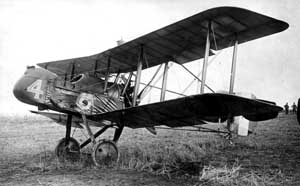
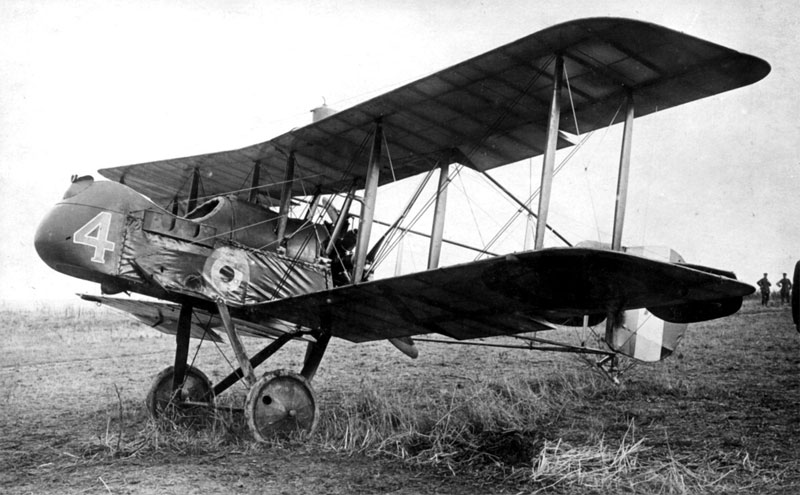
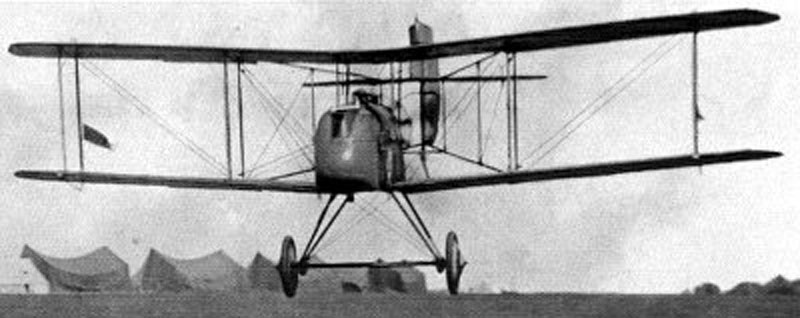
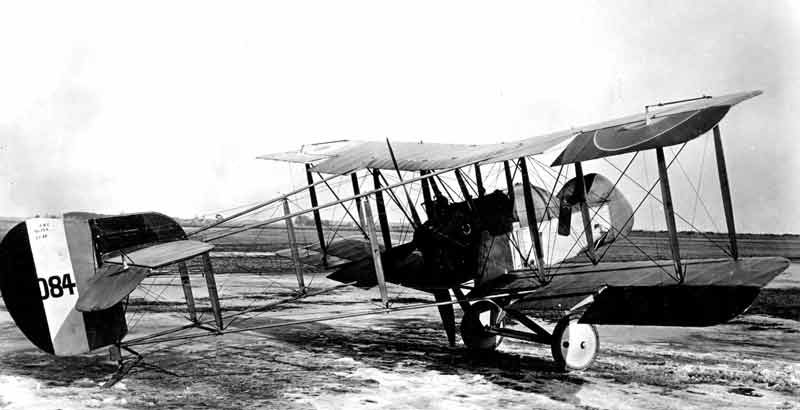
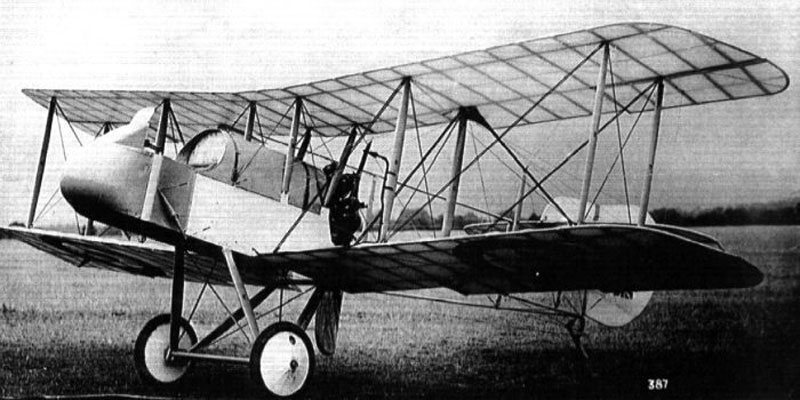
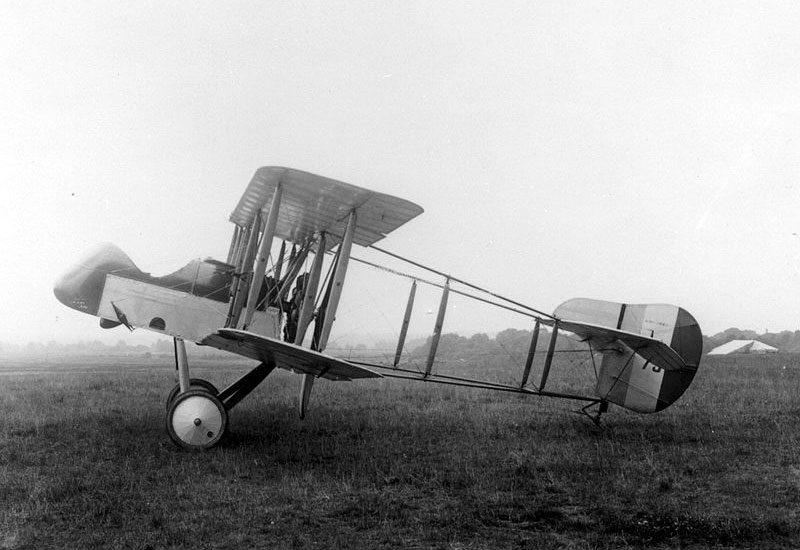
It may be hard for the modern-day reader to imagine such skeletal-looking mounts as the DH.2 to instill any sort of fear in her opponents but by World War 1 standards, she was a fighter by any definition of the word. The fuselage was contoured as an aerodynamic shape - curved along the front and top surfaces with slab sides and a flat underside - and held the armament, pilot, controls, fuel and engine. The pilot sat in an open-air cockpit "tub" like design. This forward placement meant that he was offered unparalleled views of the upcoming action. A single machine gun was fitted to the front of the fuselage. Fuel was held directly aft of the pilot and ahead of the engine, the latter mounted to the extreme end of the fuselage rear. A large, two-blade wooden propeller was powered by the engine. Wings were arranged in a two-bay setup with parallel struts additionally held in check by cabling throughout. Both upper and lower wing assemblies sported slight dihedral. Structures protruded from the innermost set of wing struts to become the empennage. The empennage tapered off to become a single vertical tail fin with a high-mounted horizontal plane affixed. Like other World War 1 mounts, the undercarriage was fixed in place and featured two large main landing gear wheels attached to the fuselage underside. The rear of the aircraft was supported by a simple tail skid when at rest on the ground.

Armament was fitted directly to the pilot's front for easy access in operation and clearing a jam. This consisted of a single semi-trainable .303 Lewis type machine gun fed by a 47-round drum magazine. The machine gun could be mounted within three pre-set positions about the cockpit, allowing the pilot to fix the weapon at advantageous angles of fire. Of course this proved highly impractical once in action. The gun would need to be physically removed from one mount and fixed onto another while in flight, the weapon along weighing some 17.5lbs. Training the machine gun in such a way against a target while also dealing with the responsibilities of flying often led to pilots running out ammunition while exercising inaccurate fire in the heat of the moment. This action also distracted the pilot from the fight at hand. Although meant for good, these three pre-set positions became largely ignored as most pilots soon learned to fix the machine gun in place and aim the entire aircraft at the intended target instead. Top ranking members, of course, disapproved of such in-field improvisation and restricted it until a formal clip could be designed and implemented. Major Lanoe Hawker produced such a clip and even revised the gunsight for improved accuracy by allowing for leading of the target. Once enacted, the new clip and gunsight - along with the fixed machine gun - lessened the pilot's workload substantially by allowing him to concentrate on flying his machine and only firing when optimal. This new armament arrangement soon made aces out of various DH.2 pilots and shooting accuracy steadily rose, as did kill tallies.

The DH.2 maintained a length of 25 feet, 2.5 inches with a wingspan of 28 feet, 3 inches. Her height was listed at 9 feet, 6.5 inches. Her empty weight was 942lbs while her maximum take-off weight was listed in the area of 1,441lbs.

Power was supplied from a single French-based Gnome Monosoupape (meaning "single valve") rotary engine delivering 100 horsepower. This supplied the DH.2 with a maximum speed of 93 miles per hour and a range of 250 miles. Total engine endurance was a reported 2.75 hours. Service ceiling was listed at 14,000 feet while rate-of-climb was a then-respectable 545 feet per minute.

Some 453 DH.2s were produced by Airco.
Text ©2003-2013 www.MilitaryFactory.com • All Rights Reserved • No Reproduction Permitted
MilitaryFactory.com does NOT sell equipment/weaponry. Material presented throughout this website is for historical and entertainment value and should not to be construed as usable for hardware restoration, maintenance or general operation. Please consult manufacturers for such information. Our disclaimer. Email corrections / Comments to MilitaryFactory at Gmail dot com.
Picture of Airco DH.2
Pic of the Airco DH.2
Image of the Airco DH.2
View All Images (5)

Specifications for the
Airco DH.2
Biplane Scout


Country of Origin: United Kingdom
Manufacturer: Airco - United Kingdom
Initial Year of Service: 1915
Production: 453


Focus Model: Airco DH.2
Crew: 1


Length: 25.20ft (7.68m)
Width: 28.25ft (8.61m)
Height: 9.55ft (2.91m)
Weight (Empty): 944lbs (428kg)
Weight (MTOW): 1,422lbs (645kg)


Powerplant: 1 x Gnome Monosoupape piston engine generating 100hp OR 1 x Le Rhone 9J rotary engine generating 110p.


Maximum Speed: 93mph (150kmh; 81kts)
Maximum Range: 249miles (400km)
Service Ceiling: 4,265ft (1,300m; 0.8miles)
Rate-of-Climb: 545 feet per minute (166m/min)


Hardpoints: 0
Armament Suite:
1 x 7.62mm forward-firing Lewis machin gun on flexible mount.


Variants:
DH.2 - Base Series Designation


Operators:
United Kingdom

ALL AIRCRAFT CATEGORIES

BY DECADE:


1900 to 1909
1910 to 1919
1920 to 1929
1930 to 1939
1940 to 1949
1950 to 1959
1960 to 1969
1970 to 1979
1980 to 1989
1990 to 1999
2000 to 2009
2010 to 2019
2020 to 2029
VIEW ALL
Compare Aircraft


BY TYPE:


Anti-Submarine Warfare (ASW)
Attack Helicopters
Bomber Aircraft
Medium Bombers
Heavy Bombers
Close-Air Support (CAS)
Commercial Aircraft
Dive Bombers
Electronic Warfare Aircraft (EWA)
Experimental / X-Planes
Fighter Aircraft
Floatplane Aircraft
Flying Boat Aircraft
Aerial Refueling Tankers
Helicopters (ALL)
Interceptor Aircraft
Multi-Role Aircraft
Navy Carrier Aircraft
Night Fighters
Reconnaissance / Scout
Search & Rescue (SAR)
Scout Helicopters
Special Purpose
Torpedo Bombers
Trainer Aircraft
Transport Aircraft
Transport Helicopters
Unmanned Aerial Vehicles (UAVs)
Unmanned Combat Air Vehicles (UCAVs)


COLLECTIONS:


4th Generation Fighter Aircraft
5th Generation Fighter Aircraft
US X-Planes
Classic US Warbirds
French Military Helicopters
Grumman "Cats"
Howard Hughes Aircraft
Indian Air Force
Israeli Air Force
Libyan Aircraft
Modern Chinese Aircraft
Modern Chinese Fighters
Modern Military Aircraft
Modern North Korean Aircraft
Modern Trainer Aircraft
Modern US Aircraft
Mikoyan Aircraft
Sukhoi Aircraft
Syrian Aircraft
Top 10 Fighter Aircraft of All Time


AIRCRAFT BY CONFLICT:


Arab-Israeli War (1948)
Cuban Missile Crisis (1959-1962)
Falklands War (1982)
Indo-Pak War (1965, 1971)
Iran-Iraq War (1980-1988)
Lebanon War (1982)
Operation Allied Force (1999)
Operation Desert Storm (1991)
Six Day War (1967)
Spanish Civil War (1936)
Soviet-Afghan War (1979-1989)
Yom Kippur War (1973)


MISCELLANEOUS:


Aircraft Cockpits
Aircraft Manufacturers List
Aircraft Production
Aircraft Timeline

WORLD WAR 2:


1939 Aircraft
1940 Aircraft
1941 Aircraft
1942 Aircraft
1943 Aircraft
1944 Aircraft
1945 Aircraft
1946 Aircraft
Australian Aircraft
Battle of Britain Aircraft
Bombers
Four-Engine Bombers
British Aircraft
British Bombers
British Transports
Dive Bombers
Canadian Aircraft
Fighters
Chinese Aircraft
French Aircraft
German Aircraft
German Fighters
German Flying Boats
German Jets
Secret Weapons of the Luftwaffe
Italian Aircraft
Imperial Japanese Aircraft
Imperial Japanese Fighters
Mitsubishi Bombers
Navy Aircraft
Pearl Harbor
Polish Aircraft
Romanian Aircraft
US Aircraft
US Bombers
US Navy Aircraft
Soviet Aircraft
Torpedo Bombers
Trainer Aircraft
Transport Aircraft
Tuskegee Airmen Aircraft
W.A.S.P. Aircraft
WW2 Aircraft Ranked by Speed
VIEW ALL


WORLD WAR 1:


1914 Aircraft
1915 Aircraft
1916 Aircraft
1917 Aircraft
1918 Aircraft
Aircraft Timeline
Austro-Hungarian Aircraft
Bomber Aircraft
British Aircraft
Fighters
Flying Boats
French Aircraft
Imperial German Aircraft
Italian Aircraft
Scout Aircraft
Russian Empire Aircraft
US Aircraft
WW1 Aircraft Ranked by Speed
VIEW ALL


KOREAN WAR:


Australian Aircraft
Korean War Aces
Korean War Jets
North Korean Aircraft
US Military Aircraft
VIEW ALL


VIETNAM WAR:


Helicopters (ALL)
Transport Helicopters
North Vietnam Air Force
US Airpower
VIEW ALL


COLD WAR:


1950s French Aircraft
British V-Bombers
Cold War Bombers
Soviet Aircraft
Soviet Bombers
Soviet Interceptors
Soviet Helicopters
Strategic Air Command
US Aircraft
US Bombers
US Interceptors
VIEW ALL

Site Disclaimer | Privacy Policy | Site Map | MF Origins


©2013 www.MilitaryFactory.com • Content ©2003-2013 MilitaryFactory.com • All Rights Reserved • Site Contact Email: militaryfactory at gmail dot com. The "Military Factory" name and MilitaryFactory.com logo are registered ® trademarks and protected by all applicable domestic and international intellectual property laws.


Top MF Stuff: 2013 Military Pay Scale | Military Ranks | WW2 Weapons | Sniper Rifles | Kts to Mph | WW1 Aircraft | Automatic Rifles | Aircraft Cockpits | Vietnam War Weapons | Main Battle Tanks | Submachine Guns | Shotguns | French Military Victories


Most photographic images appearing on this site are courtesy of the United States Department of Defense and are approved for public use. Other images acquired through the public domain. Digital art work courtesy of Dan Alex. Business Consulting by Kyle Williams. Material presented throughout this website is for historical and entertainment value and should not to be construed as usable for hardware restoration, maintenance or general operation. Please consult manufacturers for such information.


eXTReMe Tracker