Military Factory
Military Pay Chart
Global Firepower
Military Industrial Complex
Second World War
Home
Military Pay Scale
Military Ranks
Small Arms
Aircraft
Land Systems
Navy
Education
Military Factory Facebook Logo
flag of United States

Vultee XP-54 Swoose Goose Fighter (1943)

Authored By Staff Writer | Last Updated: 9/9/2009

The ill-fated Vultee XP-54 Swoose Goose tried to break out of the box on too many fronts at once.

Find a School Near You
Follow Military Factory on Facebook:
Trending on Military Factory:
Recent Articles:
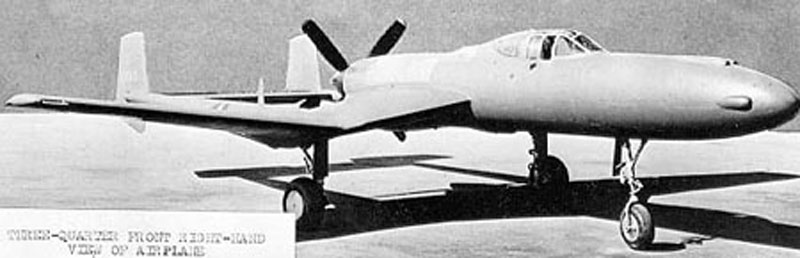
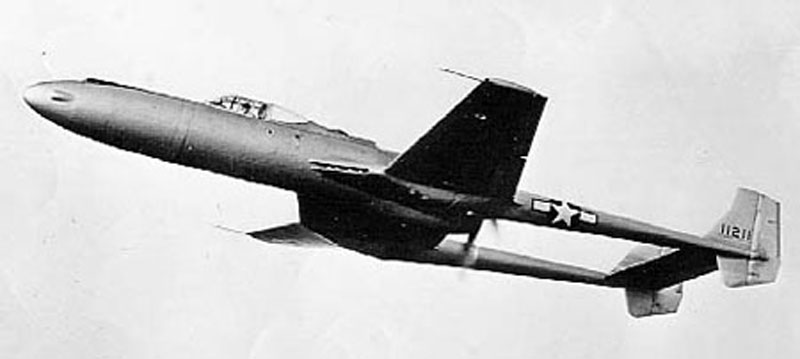
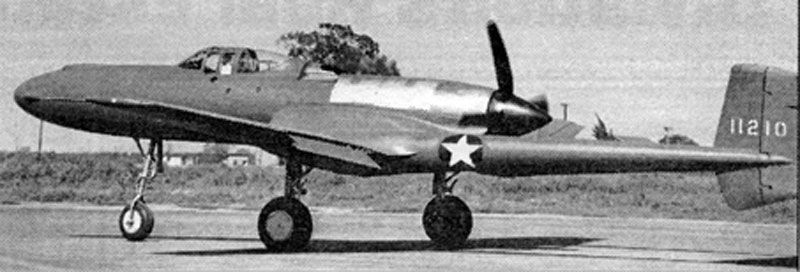
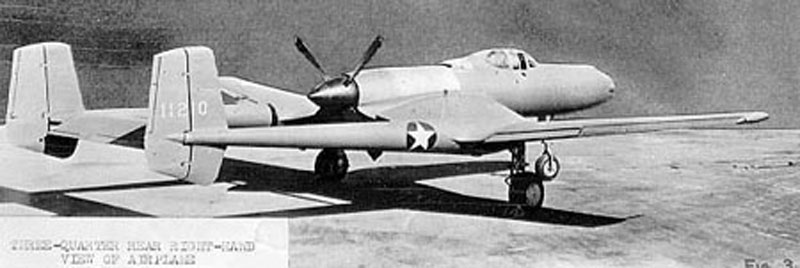
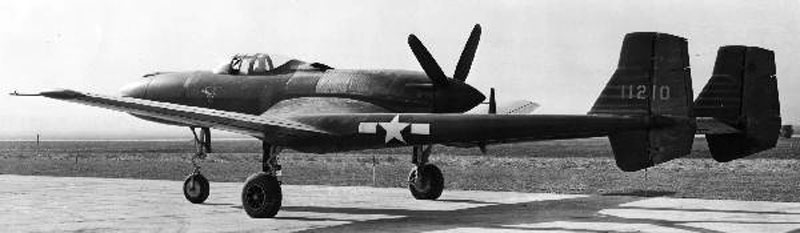
The Vultee XP-54 was one of the more distinct aircraft creations designed during World War 2. Produced through the essentially "empty canvas / blank check" approach by an Army Air Corps initiative (the specification was known as "Request for Data R-40C") , the XP-54 (later nicknamed the "Swoose Goose" by Vultee employees) doomed itself to failure thanks to the integration of a myriad of unproven systems, subsystems, design philosophies and other factors generally out of Vultee's control. Sadly, this single-engine, twin-boom fighter of a most optimistic design would not progress past two "X" developmental aircraft. Instead, the Swoose Goose would become another of America's multi-million dollar gaffes to which there was nothing to show for by project's cancellation.

Breaking a Stalemate

In the decade that was the 1930's, American aviation design and production was essentially proceeding at a snail's pace with bombers generally stealing the limelight in terms of firepower and speed over their fighter ("pursuit") counterparts. Many aircraft design firms were quite content with providing fighter creations based on an outdated yet tried-and-true formula from a decade before. This formula made heavy use of the most basic of fuselages, a standard monoplane wing structure arrangement and, at the very least, a simple twin-machine gun setup.

USAAF Initiative R-40C

The United States Army Air Corps was looking to change all that and stir the creative juices of these design firms to produce the very best aircraft possible with whatever powerplants and armament configurations the firms themselves deemed appropriate. The Army Air Corps would then evaluate each submission (submissions could include monoplane or biplane wing types) against other like-aircraft designs under a series of basic performance and armament categories by awarding points with the overall total not exceeding 1,000. With designs now coming in across all fronts from a variety of American aircraft producers (each smelling a potentially lucrative production contract to follow), the Vultee XP-54 garnered the top prize, scoring 817.9 points out of the maximum 1,000. Vultee assigned the company designation of Model 84 to the winning design and would work with the USAAF on refining the fighter. It should be noted that not one design was a biplane and all used the relatively new construction method of all-metal stressed skin. Vultee assigned relatively optimistic performance specs of a 510 mile-per-hour top speed, a 500 mile range and a ceiling of 37,000 feet with a gross weight of 8,500lbs. The USAAF signed a contract order for the Model 84 (s/n 41-1210) on January 8th, 1941.

Vultee XP-54 Swoose Goose Walk-Around

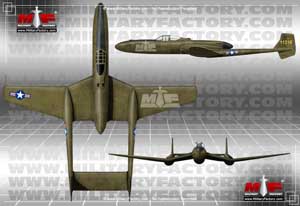
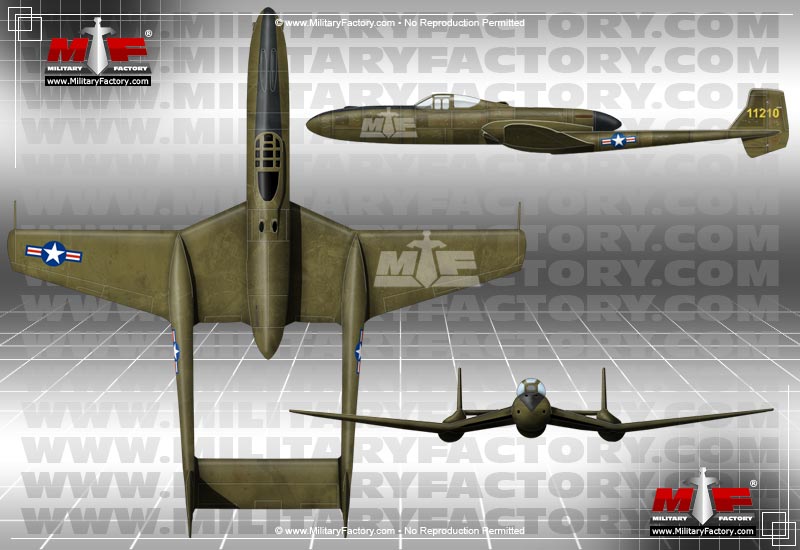
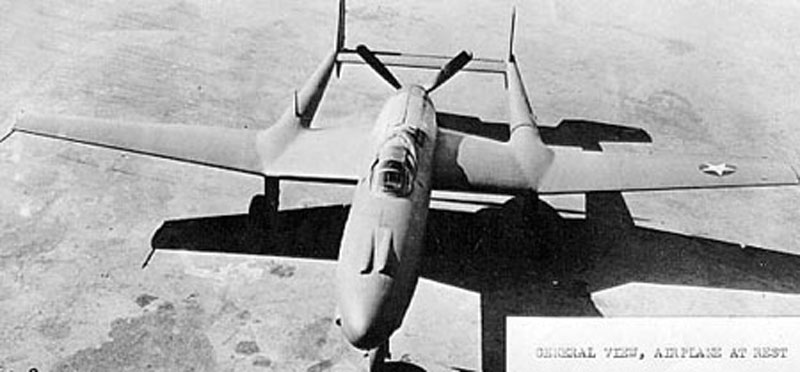
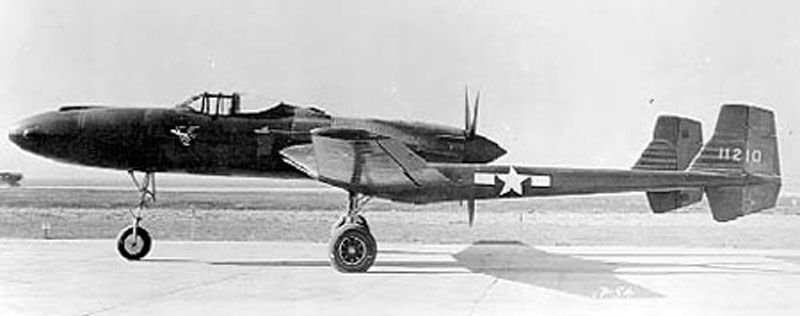
The Vultee design featured a twin-boom arrangement with a centralized fuselage nacelle containing the pilot, cockpit, fuel, engine and armament. The central nacelle was sleek and slim with the cockpit situated amidships. The engine was mounted to the rear of the nacelle and was of a "pusher" type contra-rotating arrangement while the armament would have been fitted into the nose. The twin booms emanated from the wing trailing edges and were connected aft by a large horizontal plane. Each boom was capped with a short vertical tail surface. Wings themselves were set as inverted "gull" wings. Wings would contain the needed intercoolers and radiators for the engine. The selected engine was a Pratt & Whitney X-1800 liquid-cooled system powering contra-rotating propellers fitted between the booms. The undercarriage was of a tricycle arrangement made up of two single-wheeled main landing gears retracting into the forward portions of the booms and a long-stemmed single-wheeled nose landing gear recessing under the forward fuselage.

Cockpit entry for the pilot was addressed through a rather distinct approach. The pilot activated an electrically powered lift that would drop the cockpit floor - seat and all - down to where the pilot could climb aboard. Once strapped down, the system was reactivated once more to bring the pilot up and into the cockpit.

Armament Suite

Interestingly enough, the originally intended nose-mounted armament of 6 x .50 caliber Browning air-cooled heavy machine guns was to sit with in a pivoting assembly allowing the guns to pivot 3-degrees and lower up to 6-degrees. The idea behind this technology was to aid the pilot in strafing runs while keeping his aircraft relatively level in flight. The weapon system would be managed by an equally complex sighting system that computed both angle an range to further assist the pilot. The system as a whole proved quite a novelty and perhaps even unnecessary not to mention the additional cost in weight. The addition of protective armor and self-sealing fuel tanks (quite standard features on any warplane by the end of the war) did little to offset the ballooning total.

Trouble for the Goose

While life for the Swoose Goose began rosy enough, storm clouds began to form along the horizon. Pratt & Whitney dropped support and further development of any liquid-cooled engines altogether, leaving the Vultee team to scatter for a new powerplant to power their XP-54. The selected system became an unproven Lycoming XH-2470 of 2,300 horsepower, another liquid-cooled engine that was larger and heavier than the XP-54 airframe originally intended. The new engine also forced the dropping of the contra-rotating propellers and a four-bladed Hamilton Standard propeller was selected in its place. To help provide the XP-54 with top-flight high altitude performance, a turbosupercharger was fitted to the XH-2470. This also meant that high altitude flight would require a pressurized cockpit for the pilot - all these systems adding further weight to the XP-54 airframe.

Vultee Adds Insult to Injury

Not to leave well enough alone, the Vultee team devised an effort to give the XP-54 increased lethality. With the second prototype being ordered by the Army on March 11th, 1942 (s/n 41-1211) the 6 x 12.7mm machine gun arrangement was dropped in favor of a twin 37mm cannon / 2 x .50 caliber machine gun set up. Cannons were shown to have better results against fighter and bomber targets alike but they suffered from a slower rate-of-fire when compared to machine guns. As such, the 2 x .50 caliber machine guns would complement the slower-firing cannons. The selected 37mm T-9 series cannons were a development of Oldsmobile and found some success in implements such as Bell's P-39 Airacobra. This new armament arrangement would still be installed in the nose in the same envisioned pivoting assembly as before - once again increasing the weight of the XP-54 beyond the original specifications - and once again detracting from the optimistic performance numbers.

Showtime for the Goose

The Vultee XP-54 Swoose Goose was finally completed and ready for show in January of 1943. The aircraft was trucked out to the Mojave Desert to be assembled and flown. First flight of the initial XP-54 prototype was achieved on January 15th, 1943 and lasted 30 minutes, being more or less a success. After a move to Wright Field on October 28th, 1943, the Lycoming engine failed irreparably.

An Unfitting End

This is where the legacy of the Swoose Goose effectively ends. By 1943, the USAAF was already finding successes with the pursuit fighters it already had in inventory. The XP-54 was doomed by its new engine, heavy operating weight and complicated internal workings. As such, the XP-54 - with just the one completed prototype at hand - was beginning to lose the focus of the USAAF in favor of fielding existing fighters such as the North American P-51 Mustang, the Republic P-47 Thunderbolt and the Lockheed P-38 Lightning. Despite the drop in effort on the part of the USAAF, the original prototype continued in a limited testing procedure for whatever reason, by which time, the second prototype was completed and made available. The United States Army Air Force now moved in and officially cancelled the XP-54 project in whole.

The second prototype first flew on March 24th, 1944 in another short test flight this time to Norton Army Air Force Base. Like the first prototype before it, the second prototype's engine inexplicably failed as well, putting an end to the XP-54 legacy - what little there was to it to begin with. Now that both prototypes were essentially worthless, the two airframes were dismantled and used for scrap (a common practice during World War 2). As such, no remnants of the XP-54 Swoose Goose exist except for a few photographs, some memories and text.

Not one official (or usable) product came from the USAAF initiative known as Request for Data R-40C.
Text ©2003-2013 www.MilitaryFactory.com • All Rights Reserved • No Reproduction Permitted
MilitaryFactory.com does NOT sell equipment/weaponry. Material presented throughout this website is for historical and entertainment value and should not to be construed as usable for hardware restoration, maintenance or general operation. Please consult manufacturers for such information. Our disclaimer. Email corrections / Comments to MilitaryFactory at Gmail dot com.
Picture of Vultee XP-54 Swoose Goose
Pic of the Vultee XP-54 Swoose Goose
Image of the Vultee XP-54 Swoose Goose
View All Images (10)

Specifications for the
Vultee XP-54 Swoose Goose
Fighter


Country of Origin: United States
Manufacturer: Vultee - USA
Initial Year of Service: 1943
Production: 2


Focus Model: Vultee XP-54 Swoose Goose
Crew: 1


Length: 54.79ft (16.7m)
Width: 53.90ft (16.43m)
Height: 12.99ft (3.96m)
Weight (Empty): 15,260lbs (6,922kg)
Weight (MTOW): 19,354lbs (8,779kg)


Powerplant: 1 x Lycoming XH-2470-1 engine generating 2,300hp.


Maximum Speed: 380mph (611kmh; 330kts)
Maximum Range: 500miles (804km)
Service Ceiling: 36,998ft (11,277m; 7.0miles)
Rate-of-Climb: 2,000 feet per minute (610m/min)


Hardpoints: 0
Armament Suite:
ORIGINAL:
6 x .50 caliber Browning air-cooled heavy machine guns in adjustable nose mounting.

MODIFIED:
2 x 37mm Oldsmobile T-9 cannons in adjustable nose mounting.
2 x .50 caliber Browning air-cooled heavy machine guns in adjustable nose mounting.


Variants:
Model 84 - Vultee Company Designation


XP-54 - Official Developmental Army Designation; Two prototypes produced as s/n 41-1210 and 41-1211.


Operators: United States

ALL AIRCRAFT CATEGORIES

BY DECADE:


1900 to 1909
1910 to 1919
1920 to 1929
1930 to 1939
1940 to 1949
1950 to 1959
1960 to 1969
1970 to 1979
1980 to 1989
1990 to 1999
2000 to 2009
2010 to 2019
2020 to 2029
VIEW ALL
Compare Aircraft


BY TYPE:


Anti-Submarine Warfare (ASW)
Attack Helicopters
Bomber Aircraft
Medium Bombers
Heavy Bombers
Close-Air Support (CAS)
Commercial Aircraft
Dive Bombers
Electronic Warfare Aircraft (EWA)
Experimental / X-Planes
Fighter Aircraft
Floatplane Aircraft
Flying Boat Aircraft
Aerial Refueling Tankers
Helicopters (ALL)
Interceptor Aircraft
Multi-Role Aircraft
Navy Carrier Aircraft
Night Fighters
Reconnaissance / Scout
Search & Rescue (SAR)
Scout Helicopters
Special Purpose
Torpedo Bombers
Trainer Aircraft
Transport Aircraft
Transport Helicopters
Unmanned Aerial Vehicles (UAVs)
Unmanned Combat Air Vehicles (UCAVs)


COLLECTIONS:


4th Generation Fighter Aircraft
5th Generation Fighter Aircraft
US X-Planes
Classic US Warbirds
French Military Helicopters
Grumman "Cats"
Howard Hughes Aircraft
Indian Air Force
Israeli Air Force
Libyan Aircraft
Modern Chinese Aircraft
Modern Chinese Fighters
Modern Military Aircraft
Modern North Korean Aircraft
Modern Trainer Aircraft
Modern US Aircraft
Mikoyan Aircraft
Sukhoi Aircraft
Syrian Aircraft
Top 10 Fighter Aircraft of All Time


AIRCRAFT BY CONFLICT:


Arab-Israeli War (1948)
Cuban Missile Crisis (1959-1962)
Falklands War (1982)
Indo-Pak War (1965, 1971)
Iran-Iraq War (1980-1988)
Lebanon War (1982)
Operation Allied Force (1999)
Operation Desert Storm (1991)
Six Day War (1967)
Spanish Civil War (1936)
Soviet-Afghan War (1979-1989)
Yom Kippur War (1973)


MISCELLANEOUS:


Aircraft Cockpits
Aircraft Manufacturers List
Aircraft Timeline

WORLD WAR 2:


1939 Aircraft
1940 Aircraft
1941 Aircraft
1942 Aircraft
1943 Aircraft
1944 Aircraft
1945 Aircraft
1946 Aircraft
Australian Aircraft
Battle of Britain Aircraft
Bombers
Four-Engine Bombers
British Aircraft
British Bombers
British Transports
Dive Bombers
Canadian Aircraft
Fighters
Chinese Aircraft
French Aircraft
German Aircraft
German Fighters
German Flying Boats
German Jets
Secret Weapons of the Luftwaffe
Italian Aircraft
Imperial Japanese Aircraft
Imperial Japanese Fighters
Mitsubishi Bombers
Navy Aircraft
Pearl Harbor
Polish Aircraft
Romanian Aircraft
US Aircraft
US Bombers
US Navy Aircraft
Soviet Aircraft
Torpedo Bombers
Transport Aircraft
Tuskegee Airmen Aircraft
W.A.S.P. Aircraft
WW2 Aircraft Ranked by Speed
VIEW ALL


WORLD WAR 1:


1914 Aircraft
1915 Aircraft
1916 Aircraft
1917 Aircraft
1918 Aircraft
Aircraft Timeline
Austro-Hungarian Aircraft
Bomber Aircraft
British Aircraft
Fighters
Flying Boats
French Aircraft
Imperial German Aircraft
Italian Aircraft
Scout Aircraft
Russian Empire Aircraft
US Aircraft
WW1 Aircraft Ranked by Speed
VIEW ALL


KOREAN WAR:


Australian Aircraft
Korean War Aces
Korean War Jets
North Korean Aircraft
US Military Aircraft
VIEW ALL


VIETNAM WAR:


Helicopters
North Vietnam Air Force
US Airpower
VIEW ALL


COLD WAR:


1950s French Aircraft
British V-Bombers
Cold War Bombers
Soviet Aircraft
Soviet Bombers
Soviet Interceptors
Soviet Helicopters
Strategic Air Command
US Aircraft
US Bombers
US Interceptors
VIEW ALL

Site Disclaimer | Privacy Policy | Site Map | MF Origins


©2013 www.MilitaryFactory.com • Content ©2003-2013 MilitaryFactory.com • All Rights Reserved • Site Contact Email: militaryfactory at gmail dot com. The "Military Factory" name and MilitaryFactory.com logo are registered ® trademarks and protected by all applicable domestic and international intellectual property laws.


Top MF Stuff: 2013 Military Pay Scale | Military Ranks | WW2 Weapons | Sniper Rifles | Kts to Mph | WW1 Aircraft | Automatic Rifles | Aircraft Cockpits | Vietnam War Weapons | Main Battle Tanks | Submachine Guns | Shotguns | French Military Victories


Most photographic images appearing on this site are courtesy of the United States Department of Defense and are approved for public use. Other images acquired through the public domain. Digital art work courtesy of Dan Alex. Business Consulting by Kyle Williams. Material presented throughout this website is for historical and entertainment value and should not to be construed as usable for hardware restoration, maintenance or general operation. Please consult manufacturers for such information.


eXTReMe Tracker