Military Factory
Military Pay Chart
Global Firepower
Military Industrial Complex
Second World War
Home
Military Pay Scale
Military Ranks
Small Arms
Aircraft
Land Systems
Navy
Education
Military Factory Facebook Logo
flag of Nazi Germany

Junkers Ju 390 (New York Bomber) Long-Range Heavy Bomber / Transport (1943)

Authored By Staff Writer | Last Updated: 8/7/2012

This long-range heavy bomber was to strike at the heart of New York City.

Find a School Near You
Follow Military Factory on Facebook:
Trending on Military Factory:
Recent Articles:
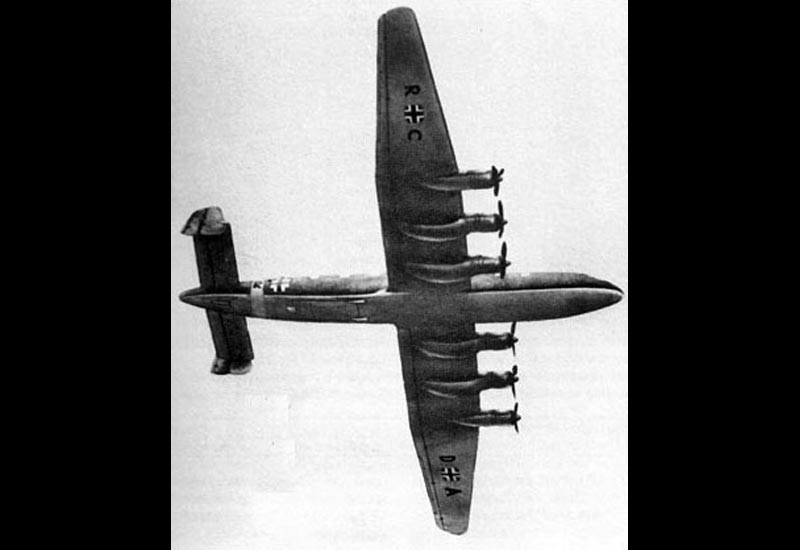
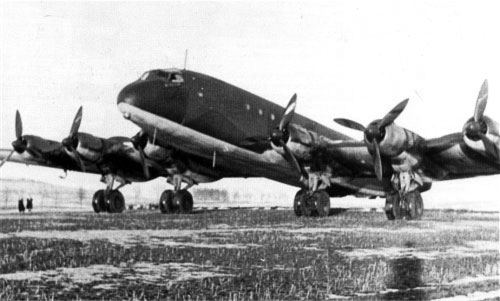
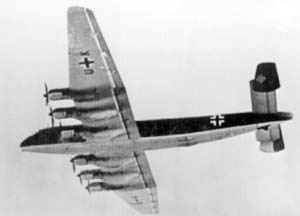
The German Junkers Ju 390 long range heavy bomber aircraft design was intended to be able to strike at locations along the east coast of the United States during World War 2. The Ju 390 itself was a further development of the Junkers Ju 290 and was also tasked to fulfill the roles of maritime reconnaissance and transport in addition to its bombing duties. The Ju 390 - also known under the unofficial name of "New York Bomber" - was developed as two working prototypes, effectively making the idea of transatlantic bombing theoretically possible for Hitler and his Luftwaffe. The Ju 390 was part of the failed "Amerika Bomber" project considered by the Germans, this including the Messerschmitt Me 264 and Focke-Wulf Ta 400 designs.

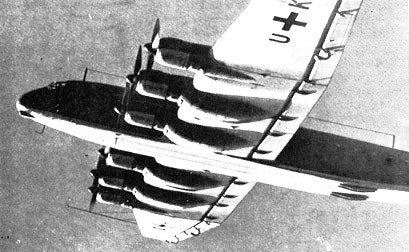
Interestingly, the Junkers Ju 390 heavy bomber came along during the war when intense effort and general German wartime philosophy was still centered primarily around the use of medium-class bomber aircraft and different fighter/bomber hybrids. As such, full developmental resources were never really delegated to the Ju 390 project en mass and the entire program floundered as a result. With origins in the Ju 290 airframe, the Ju 390 basically saw its wings lengthened via extensions fitted to help accommodate the additional engines (three to a wing for a total of six installations). The fuselage was also applicably lengthened for the long-range bombing role. Defense was supplied by a pair of 13mm machine guns in a gondola position as well as 2 x 13mm machine guns in beam positions. A pair of 20mm cannons would have been mounted to a dorsal turret and a single 20mm cannon would have been installed in the tail. Crew accommodations would have amounted to ten personnel made up of the flight crew and dedicated gunners. The heavy transport model was given the proposed designation of Ju 390A-1 while the maritime patrol and long-range heavy bombers would have been assigned Ju 390B and Ju 390C respectively.

Power for the Ju 390 V01 prototype was supplied by 6 x BMW 801D radial piston engines, each delivering 1,730 horsepower. Maximum speed was listed at 314 miles per hour with a range of approximately 6,030 miles. The service ceiling was a reported 19,700 feet. Empty weight was in the vicinity of 87,100lbs while maximum take-off weight topped at 166,400lbs. The Ju 390 maintained a length of 112 feet, 2 inches with a span of 165 feet, 1 inch. Her height was 22 feet, 7 inches.

First flight for a Ju 390 V1 prototype occurred on October 20, 1943 revealing a promising start for an aircraft of this size. Ju 390 V2 was also flown in October of 1943 with testing believed having gone into 1945. An initial order of 26 Ju 390s were ordered for serial production, however, the program was cancelled in June of 1944 to allocate critical wartime resources and development time to other more pressing projects - particularly those defensive-minded in nature as Germany increasingly began fighting a defensive war with little need for a large offensive-minded bomber such as the Ju 390. The Ju 390 was officially strickened from Luftwaffe contention in 1945. Ju 390 V1 was destroyed on the ground by the Germans as the American Army closed in on the develop facility.

The idea of a transatlantic New York Bomber was an intriguing one nonetheless. In all practicality, the type would serve more of a psychological tool to help terrorize the citizens of America, proving that even their greatest cities were not out of reach of the Luftwaffe. This would have been similar in scope to the results garnered by American forces over mainland Japan, hitting all points of the island nation within time and proving that not even Tokyo herself was safe thanks to the exploits of the "Doolittle Raiders". The Ju 390 would have hit at the heart of New York City in a way that the Luftwaffe had shown it could do to the terrified citizens of London during the "London Blitz". The end result of the Ju 390 effect went largely unknown for the results could have been highly mixed - bombing could have either demoralized the American war effort if actions proved as intended or, as in the British people, strengthen the the resolve of a nation ten-fold.

A test flight of a Ju 390 that remains largely disputed is said to have occurred and there remains evidence for both sides to accept or dispute this claim. Nevertheless, the availability of two Ju 390 prototypes certainly make the 32-hour cross-ocean flight a real possibility. However, the fact remains that such a large aircraft approach over the Atlantic, with all its naval traffic, undetected leaves many to disagree that this flight ever really took place.

In the fall of 1944, Japanese authorities were granted local production rights to the Ju 390 by the Germans though none were ever started before the Empire capitulated in August of 1945.
Text ©2003-2013 www.MilitaryFactory.com • All Rights Reserved • No Reproduction Permitted
MilitaryFactory.com does NOT sell equipment/weaponry. Material presented throughout this website is for historical and entertainment value and should not to be construed as usable for hardware restoration, maintenance or general operation. Please consult manufacturers for such information. Our disclaimer. Email corrections / Comments to MilitaryFactory at Gmail dot com.
Picture of Junkers Ju 390 (New York Bomber)
Pic of the Junkers Ju 390 (New York Bomber)
Image of the Junkers Ju 390 (New York Bomber)
View All Images (4)

Specifications for the
Junkers Ju 390 (New York Bomber)
Long-Range Heavy Bomber / Transport


Country of Origin: Nazi Germany
Manufacturer: Junkers - Germany
Initial Year of Service: 1943
Production: 2


Focus Model: Junkers Ju 390 V1 (New York Bomber)
Crew: 10


Length: 112.20ft (34.2m)
Width: 165.03ft (50.30m)
Height: 22.60ft (6.89m)
Weight (Empty): 87,083lbs (39,500kg)
Weight (MTOW): 166,449lbs (75,500kg)


Powerplant: 6 x BMW 801D radial piston engines generating 10,200hpeach.


Maximum Speed: 314mph (505kmh; 273kts)
Maximum Range: 6,027miles (9,700km)
Service Ceiling: 19,685ft (6,000m; 3.7miles)
Rate-of-Climb: 0 feet per minute (0m/min)


Hardpoints: 0
Armament Suite:
PROPOSED:
2 x 13mm MG 131 machine gun in gondola
2 x 13mm MG 131 machine guns in waist beam positions.
2 x 20mm MG 151/20 cannons in dorsal turret
1 x 20mm MG 151/20 cannon in tail gun position

Unknown internal ordnance carrying capability.


Variants:
Ju 290 - Initial Production Design Model on which the Ju 390 is based from.


Ju 390 - Main Series Designation; two examples completed.

Ju 390 V1 - Initial Prototype Model

Ju 390 V2 - Second Completed Prototype

Ju 390A-1 - Proposed designation for heavy transport model.

Ju 390B - Proposed designation for maritime reconnaissance model.

Ju 390C - Proposed designation for long-range bomber variant.


Operators: Nazi Germany

ALL AIRCRAFT CATEGORIES

BY DECADE:


1900 to 1909
1910 to 1919
1920 to 1929
1930 to 1939
1940 to 1949
1950 to 1959
1960 to 1969
1970 to 1979
1980 to 1989
1990 to 1999
2000 to 2009
2010 to 2019
2020 to 2029
VIEW ALL
Compare Aircraft


BY TYPE:


Anti-Submarine Warfare (ASW)
Attack Helicopters
Bomber Aircraft
Medium Bombers
Heavy Bombers
Close-Air Support (CAS)
Commercial Aircraft
Dive Bombers
Electronic Warfare Aircraft (EWA)
Experimental / X-Planes
Fighter Aircraft
Floatplane Aircraft
Flying Boat Aircraft
Aerial Refueling Tankers
Helicopters (ALL)
Interceptor Aircraft
Multi-Role Aircraft
Navy Carrier Aircraft
Night Fighters
Reconnaissance / Scout
Search & Rescue (SAR)
Scout Helicopters
Special Purpose
Torpedo Bombers
Trainer Aircraft
Transport Aircraft
Transport Helicopters
Unmanned Aerial Vehicles (UAVs)
Unmanned Combat Air Vehicles (UCAVs)


COLLECTIONS:


4th Generation Fighter Aircraft
5th Generation Fighter Aircraft
US X-Planes
Classic US Warbirds
French Military Helicopters
Grumman "Cats"
Howard Hughes Aircraft
Indian Air Force
Israeli Air Force
Libyan Aircraft
Modern Chinese Aircraft
Modern Chinese Fighters
Modern Military Aircraft
Modern North Korean Aircraft
Modern Trainer Aircraft
Modern US Aircraft
Mikoyan Aircraft
Sukhoi Aircraft
Syrian Aircraft
Top 10 Fighter Aircraft of All Time


AIRCRAFT BY CONFLICT:


Arab-Israeli War (1948)
Cuban Missile Crisis (1959-1962)
Falklands War (1982)
Indo-Pak War (1965, 1971)
Iran-Iraq War (1980-1988)
Lebanon War (1982)
Operation Allied Force (1999)
Operation Desert Storm (1991)
Six Day War (1967)
Spanish Civil War (1936)
Soviet-Afghan War (1979-1989)
Yom Kippur War (1973)


MISCELLANEOUS:


Aircraft Cockpits
Aircraft Manufacturers List
Aircraft Timeline

WORLD WAR 2:


1939 Aircraft
1940 Aircraft
1941 Aircraft
1942 Aircraft
1943 Aircraft
1944 Aircraft
1945 Aircraft
1946 Aircraft
Australian Aircraft
Battle of Britain Aircraft
Bombers
Four-Engine Bombers
British Aircraft
British Bombers
British Transports
Dive Bombers
Canadian Aircraft
Fighters
Chinese Aircraft
French Aircraft
German Aircraft
German Fighters
German Flying Boats
German Jets
Secret Weapons of the Luftwaffe
Italian Aircraft
Imperial Japanese Aircraft
Imperial Japanese Fighters
Mitsubishi Bombers
Navy Aircraft
Pearl Harbor
Polish Aircraft
Romanian Aircraft
US Aircraft
US Bombers
US Navy Aircraft
Soviet Aircraft
Torpedo Bombers
Transport Aircraft
Tuskegee Airmen Aircraft
W.A.S.P. Aircraft
WW2 Aircraft Ranked by Speed
VIEW ALL


WORLD WAR 1:


1914 Aircraft
1915 Aircraft
1916 Aircraft
1917 Aircraft
1918 Aircraft
Aircraft Timeline
Austro-Hungarian Aircraft
Bomber Aircraft
British Aircraft
Fighters
Flying Boats
French Aircraft
Imperial German Aircraft
Italian Aircraft
Scout Aircraft
Russian Empire Aircraft
US Aircraft
WW1 Aircraft Ranked by Speed
VIEW ALL


KOREAN WAR:


Australian Aircraft
Korean War Aces
Korean War Jets
North Korean Aircraft
US Military Aircraft
VIEW ALL


VIETNAM WAR:


Helicopters
North Vietnam Air Force
US Airpower
VIEW ALL


COLD WAR:


1950s French Aircraft
British V-Bombers
Cold War Bombers
Soviet Aircraft
Soviet Bombers
Soviet Interceptors
Soviet Helicopters
Strategic Air Command
US Aircraft
US Bombers
US Interceptors
VIEW ALL

Site Disclaimer | Privacy Policy | Site Map | MF Origins


©2013 www.MilitaryFactory.com • Content ©2003-2013 MilitaryFactory.com • All Rights Reserved • Site Contact Email: militaryfactory at gmail dot com. The "Military Factory" name and MilitaryFactory.com logo are registered ® trademarks and protected by all applicable domestic and international intellectual property laws.


Top MF Stuff: 2013 Military Pay Scale | Military Ranks | WW2 Weapons | Sniper Rifles | Kts to Mph | WW1 Aircraft | Automatic Rifles | Aircraft Cockpits | Vietnam War Weapons | Main Battle Tanks | Submachine Guns | Shotguns | French Military Victories


Most photographic images appearing on this site are courtesy of the United States Department of Defense and are approved for public use. Other images acquired through the public domain. Digital art work courtesy of Dan Alex. Business Consulting by Kyle Williams. Material presented throughout this website is for historical and entertainment value and should not to be construed as usable for hardware restoration, maintenance or general operation. Please consult manufacturers for such information.


eXTReMe Tracker