Military Factory
Military Pay Chart
Global Firepower
Military Industrial Complex
Second World War
Home
Military Pay Scale
Military Ranks
Small Arms
Aircraft
Land Systems
Navy
Education
Military Factory Facebook Logo
flag of Imperial Germany

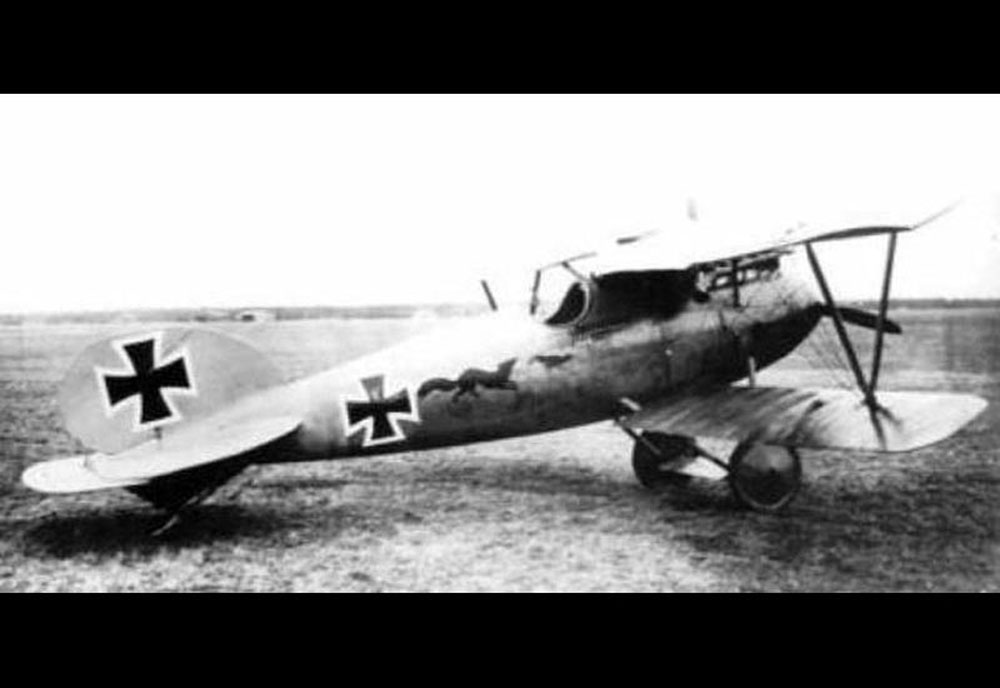
Albatros D.V Fighter (1917)

Authored By Staff Writer | Last Updated: 2/15/2011

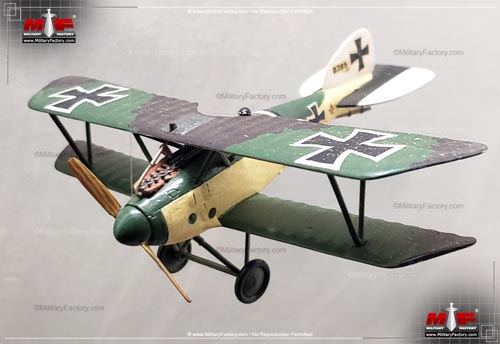
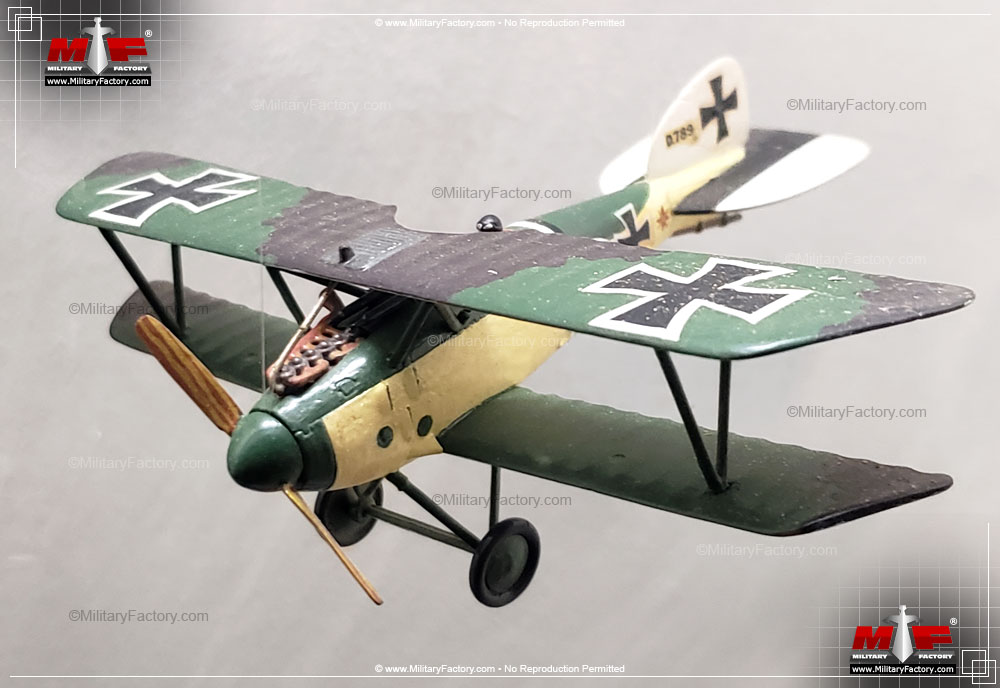
The Albatros D.V continued where the preceding D.III design left off, though it also brought along with it inherent structural issues that were never fully resolved.

Find a School Near You
Follow Military Factory on Facebook:
Trending on Military Factory:
Recent Articles:
At the time of its inception, the Albatros D-series of fighter aircraft (beginning with the D.I model) was a stellar gunnery platform in service with the Imperial German Army Air Service. The type was slightly improved in the D.II to follow and highly modified to become the D.III. While the D.III was the first of the Albatros D-series fighters to introduce the "Vee" inter-wing struts, it also brought about inherent deficiencies in the new wing design that led to in-flight break-ups or structural failings. The cause of the break-ups was found to be the main wing spar being set too far to aft on the fuselage, causing unacceptable twisting of the wing assemblies when attempting to take the aircraft into a dive or some other high level wing stress action. As such, a new reinforced lower wing section was introduced during production of the D.III series that attempted to solve the issue and pilots were dutifully warned of the serious drawback. While the situation was never fully ironed out of the design, the D.III presented a good showing for itself in its limited usage on the Western Front. However, the wing issue was present for the entire remaining life of the D-series that was to still include the upcoming D.V and D.Va production models.

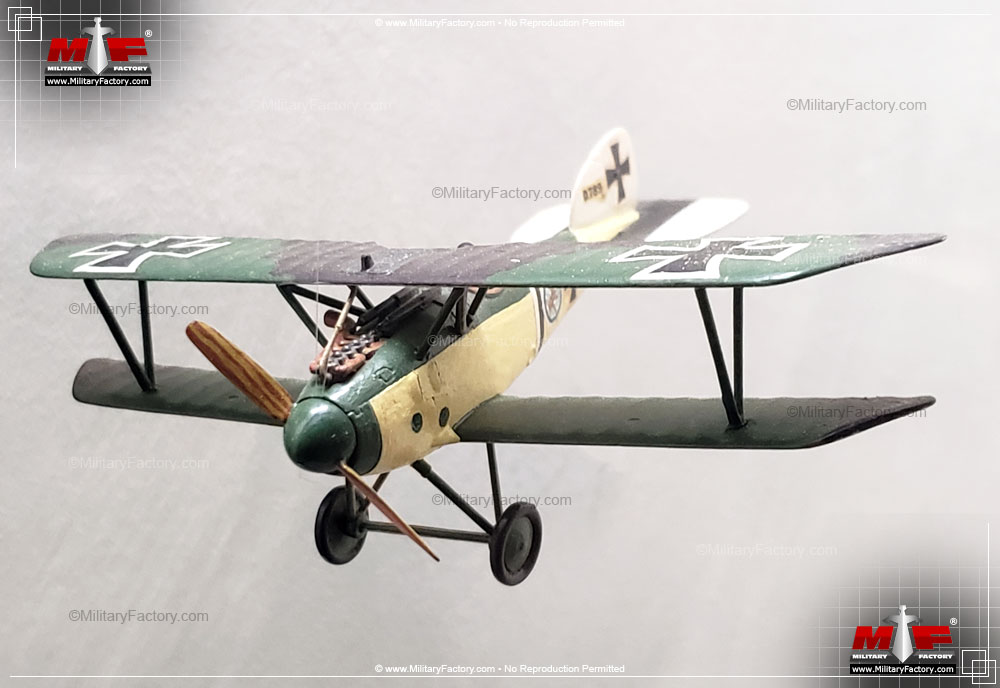
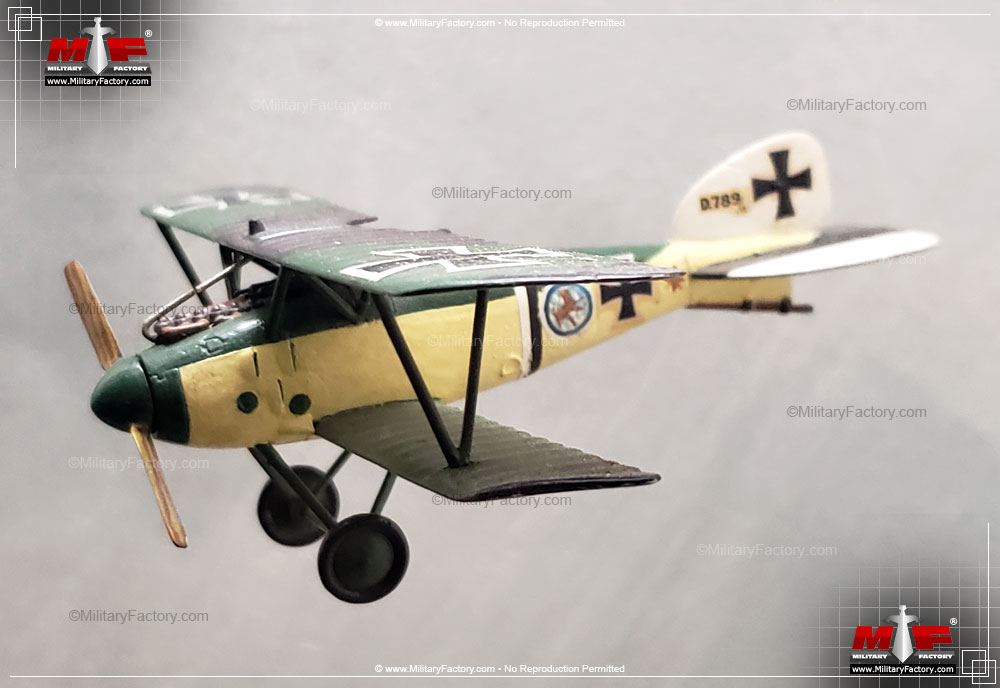
The D.V served as the direct successor to the D.III (the logical "D.IV" designation covered an abandoned Albatros design whose experimental Mercedes engine proved too temperamental). The D.V was brought about from an April 1917 German requirement looking for an improved derivative of the D.III fighter series. Albatros got to work immediately and produced a prototype within the month, naturally borrowing much of what made the D.III a success (and failure for that matter). As such, the new design was fitted with the same Mercedes D.IIIa series inline, liquid-cooled engine of 170 horsepower as the D.III. Top speed of the new mount was listed at 116 miles per hour with a service ceiling of 18,045 feet and an endurance of 2 hours. An all-new fuselage design was introduced with reduced weight. The propeller was capped with a larger, aerodynamically refined spinner and the ventral fin was enlarged for more surface area. The upper wing assembly was lowered nearly five inches to bring it ever closer to the top of the fuselage and therefore increase the pilot's views from over the upper wing. The wing roots of the lower wings now lacked the fairings found on the D.III but both upper and lower wing assemblies were essentially identical to that of the preceding model in most respects. The standard fitting of 2 x 7.92mm Spandau machine guns were retained for their lethal effectiveness and set to fire synchronized from their fixed mounts through the spinning propeller blades.

While the D.III was only introduced in January of 1917, the D.V was contracted for production by April of that same year and manufacture quickly followed in May of 1917 - such was the changing face of technology and warfare during this period of aviation history. However, by this time in the war, the once-excellent D-series was more or less an obsolete airframe compared against her Triple Entente contemporaries but its production and subsequent usage by the Imperial German Army Air Service nonetheless continued. Even with the arrival of the "improved" D.V model, the D.III continued production (out of the Schneidemuhl facility) and operation. An initial order for the D.V constituted some 200 examples and this was followed in May by a further 400 aircraft. July saw a contract for 300 more aircraft signed and, in all, approximately 900 D.V production models would be completed and all were delivered from the Johannisthal facility.

Once in service, the standard issue headrest was formally removed after pilots complained that it obscured their critical rearward vision. Those D.V production airframes sent to fight in the arid climate of Palestine were further produced with two wing radiators to help keep the engine from overheating in the higher operating temperatures. Despite all of the work to get the D.V to the front lines, the prevailing lower wing issue begun in the D.III continued to be a lethal stain on the D-series legacy as a whole and some even suggested the situation was actually made worse in the D.V than in the D.III. Pilots were quick to show their disappointment and added that the D.V offered little in the way of improvements over the D.III it was suppose to replace. Even famed World War 1 ace and aviator Manfred von Richthofen openly criticized the new mount as "inferior" to the new British offerings. To help stem the tide of wing-related accidents, additional bracing and cabling was added but the D.V still proved a hard-to-handle airframe in operational practice, unsuitable for the face-paced activity of modern dogfighting. In all respects, little more could actually be done to help extend the airworthy nature of the aircraft.

The critical reviews of the D.V product quickly pushed Albatros to revised the design further and development ultimately culminated in a D.V off-shoot designated as the "D.Va". The D.Va was fitted with a new reinforced wing structure as well as a stronger overall fuselage assembly. Once again, the costly additions did not formally and completely resolve the inherent wing stability issues and resultied in a heavier fighter aircraft whose performance suffered. A Mercedes D.IIIau engine of 180 horsepower utilizing a high compression system was installed to help counter the increased weight though this yielded with little performance effects. Regardless, the German Air Service elected to order some 1,612 total examples of the type (these beginning service in October of 1917) due to the desperate and deteriorating war situation experienced by 1918. The Albatros D-series ended her operational tenure with the D.Va.

The newly-founded Polish Air Force became a post-war operator of the D.V series and the only other use of the aircraft type.
Text ©2003-2013 www.MilitaryFactory.com • All Rights Reserved • No Reproduction Permitted
MilitaryFactory.com does NOT sell equipment/weaponry. Material presented throughout this website is for historical and entertainment value and should not to be construed as usable for hardware restoration, maintenance or general operation. Please consult manufacturers for such information. Our disclaimer. Email corrections / Comments to MilitaryFactory at Gmail dot com.
Picture of Albatros D.V
View All Images (1)

Specifications for the
Albatros D.V
Fighter


Country of Origin: Imperial Germany
Manufacturer: Albatros Werke GmbH - Germany
Initial Year of Service: 1917
Production: 900


Focus Model: Albatros D.V
Crew: 1


Length: 24.61ft (7.5m)
Width: 29.69ft (9.05m)
Height: 8.76ft (2.67m)
Weight (Empty): 1,515lbs (687kg)
Weight (MTOW): 2,066lbs (937kg)


Powerplant: 1 x Mercedes IIIa 6-cylinder, liquid-cooled inline engine delivering 180hp.


Maximum Speed: 116mph (186kmh; 100kts)
Maximum Range: 217miles (350km)
Service Ceiling: 18,698ft (5,699m; 3.5miles)
Rate-of-Climb: 820 feet per minute (250m/min)


Hardpoints: 0
Armament Suite:
STANDARD:
2 x 7.92mm Spandau LMG 08/15 fixed, forward-firing synchronized machine guns.


Variants:
D.I - Base D-series


D.II - Lowered top wing; Fundamental and minor aerodynamic changes.

D.III - V-shaped struts introduced

D.V - Streamlined fuselage

D.Va - Slightly modified D.V model


Operators: Imperial Germany; Poland

ALL AIRCRAFT CATEGORIES

BY DECADE:


1900 to 1909
1910 to 1919
1920 to 1929
1930 to 1939
1940 to 1949
1950 to 1959
1960 to 1969
1970 to 1979
1980 to 1989
1990 to 1999
2000 to 2009
2010 to 2019
2020 to 2029
VIEW ALL
Compare Aircraft


BY TYPE:


Anti-Submarine Warfare (ASW)
Attack Helicopters
Bomber Aircraft
Medium Bombers
Heavy Bombers
Close-Air Support (CAS)
Commercial Aircraft
Dive Bombers
Electronic Warfare Aircraft (EWA)
Experimental / X-Planes
Fighter Aircraft
Floatplane Aircraft
Flying Boat Aircraft
Aerial Refueling Tankers
Helicopters (ALL)
Interceptor Aircraft
Multi-Role Aircraft
Navy Carrier Aircraft
Night Fighters
Reconnaissance / Scout
Search & Rescue (SAR)
Scout Helicopters
Special Purpose
Torpedo Bombers
Trainer Aircraft
Transport Aircraft
Transport Helicopters
Unmanned Aerial Vehicles (UAVs)
Unmanned Combat Air Vehicles (UCAVs)


COLLECTIONS:


4th Generation Fighter Aircraft
5th Generation Fighter Aircraft
US X-Planes
Classic US Warbirds
French Military Helicopters
Grumman "Cats"
Howard Hughes Aircraft
Indian Air Force
Israeli Air Force
Libyan Aircraft
Modern Chinese Aircraft
Modern Chinese Fighters
Modern Military Aircraft
Modern North Korean Aircraft
Modern Trainer Aircraft
Modern US Aircraft
Mikoyan Aircraft
Sukhoi Aircraft
Syrian Aircraft
Top 10 Fighter Aircraft of All Time


AIRCRAFT BY CONFLICT:


Arab-Israeli War (1948)
Cuban Missile Crisis (1959-1962)
Falklands War (1982)
Indo-Pak War (1965, 1971)
Iran-Iraq War (1980-1988)
Lebanon War (1982)
Operation Allied Force (1999)
Operation Desert Storm (1991)
Six Day War (1967)
Spanish Civil War (1936)
Soviet-Afghan War (1979-1989)
Yom Kippur War (1973)


MISCELLANEOUS:


Aircraft Cockpits
Aircraft Manufacturers List
Aircraft Timeline

WORLD WAR 2:


1939 Aircraft
1940 Aircraft
1941 Aircraft
1942 Aircraft
1943 Aircraft
1944 Aircraft
1945 Aircraft
1946 Aircraft
Australian Aircraft
Battle of Britain Aircraft
Bombers
Four-Engine Bombers
British Aircraft
British Bombers
British Transports
Dive Bombers
Canadian Aircraft
Fighters
Chinese Aircraft
French Aircraft
German Aircraft
German Fighters
German Flying Boats
German Jets
Secret Weapons of the Luftwaffe
Italian Aircraft
Imperial Japanese Aircraft
Imperial Japanese Fighters
Mitsubishi Bombers
Navy Aircraft
Pearl Harbor
Polish Aircraft
Romanian Aircraft
US Aircraft
US Bombers
US Navy Aircraft
Soviet Aircraft
Torpedo Bombers
Trainer Aircraft
Transport Aircraft
Tuskegee Airmen Aircraft
W.A.S.P. Aircraft
WW2 Aircraft Ranked by Speed
VIEW ALL


WORLD WAR 1:


1914 Aircraft
1915 Aircraft
1916 Aircraft
1917 Aircraft
1918 Aircraft
Aircraft Timeline
Austro-Hungarian Aircraft
Bomber Aircraft
British Aircraft
Fighters
Flying Boats
French Aircraft
Imperial German Aircraft
Italian Aircraft
Scout Aircraft
Russian Empire Aircraft
US Aircraft
WW1 Aircraft Ranked by Speed
VIEW ALL


KOREAN WAR:


Australian Aircraft
Korean War Aces
Korean War Jets
North Korean Aircraft
US Military Aircraft
VIEW ALL


VIETNAM WAR:


Helicopters
North Vietnam Air Force
US Airpower
VIEW ALL


COLD WAR:


1950s French Aircraft
British V-Bombers
Cold War Bombers
Soviet Aircraft
Soviet Bombers
Soviet Interceptors
Soviet Helicopters
Strategic Air Command
US Aircraft
US Bombers
US Interceptors
VIEW ALL

Site Disclaimer | Privacy Policy | Site Map | MF Origins


©2013 www.MilitaryFactory.com • Content ©2003-2013 MilitaryFactory.com • All Rights Reserved • Site Contact Email: militaryfactory at gmail dot com. The "Military Factory" name and MilitaryFactory.com logo are registered ® trademarks and protected by all applicable domestic and international intellectual property laws.


Top MF Stuff: 2013 Military Pay Scale | Military Ranks | WW2 Weapons | Sniper Rifles | Kts to Mph | WW1 Aircraft | Automatic Rifles | Aircraft Cockpits | Vietnam War Weapons | Main Battle Tanks | Submachine Guns | Shotguns | French Military Victories


Most photographic images appearing on this site are courtesy of the United States Department of Defense and are approved for public use. Other images acquired through the public domain. Digital art work courtesy of Dan Alex. Business Consulting by Kyle Williams. Material presented throughout this website is for historical and entertainment value and should not to be construed as usable for hardware restoration, maintenance or general operation. Please consult manufacturers for such information.


eXTReMe Tracker