Global Firepower | Military Industrial Complex | Second World War History
Home | Military Pay Scale Chart | Aircraft | Infantry Weapons | Military Vehicles | Navy Ships | Military Education | French Military Victories | Military Ranks | WW2 Weapons
Military Factory Latest from Military Factory
Thumbnail picture of the Dardo infantry fighting vehicle
Dardo IFV
Thumbnail picture of the Supermarine Scimitar fighter
Supermarine Scimitar
Thumbnail picture of the Centauro B1 8x8 tank killer
Centauro 8x8
Thumbnail picture of the Novi Avion fighter
Novi Avion
Thumbnail picture of the FR F2 bolt-action sniper rifle
FR F2
Thumbnail picture of the Lebel Model 1886 bolt-action rifle
Lebel Model 1886
2009 Military Pay Scale Chart - for Army, Navy, Air Force and Marines
  BY DECADE
    · 1900 to 1909
    · 1910 to 1919
    · 1920 to 1929
    · 1930 to 1939
    · 1940 to 1949
    · 1950 to 1959
    · 1960 to 1969
    · 1970 to 1979
    · 1980 to 1989
    · 1990 to 1999
    · 2000 to 2009
    · 2010 to 2019
    · View All Aircraft
  BY TYPE
    · Attack Helicopters
    · Bombers
    · Close-Support
    · Commercial
    · Dive Bombers
    · Experimental
    · Fighters
    · Floatplanes
    · Flying Boats
    · Fuel Tankers
    · Helicopters
    · Interceptors
    · Multi-Role
    · Navy Aircraft
    · Night-Fighters
    · Recon Aircraft
    · Recon Helos
    · Special Purpose
    · Torpedo Bombers
    · Trainer Aircraft
    · Transport Aircraft
    · Transport Helos
    · UAVs
  WORLD WAR 2
    · Full List
    · 1939
    · 1940
    · 1941
    · 1942
    · 1943
    · 1944
    · 1945
    · Australia
    · Battle of Britain
    · Bombers
    · Britain
    · Dive Bombers
    · Canada
    · Fighters
    · China
    · France
    · Germany
    · German Fighters
    · German Jets
    · Italy
    · Japan
    · Mitsubishi Bombers
    · Poland
    · USA Aircraft
    · USA Bombers
    · Soviet Union
    · Torpedo Bombers
  WORLD WAR 1
    · Full List
    · 1914
    · 1915
    · 1916
    · 1917
    · 1918
    · Aces
    · Austria-Hungary
    · Bombers
    · Britain
    · Fighters
    · France
    · Germany
    · Italy
    · Recon Aircraft
    · Russia
    · USA
  KOREAN WAR
    · Full List
    · Aces
    · Australia
    · USA
    · North Korea
  VIETNAM WAR
    · Full List
    · United States
    · North Vietnam

Military Factory > Military Aircraft > Handley Page Victor
 
 
More Pictures Cockpit View 3 View Plan QuickGraphs StatsCentral

Handley Page Victor

The Handley Page Victor formed the third - and last - point of the RAF V-Bomber triangle of nuclear-capable bombers.
By Staff Writer

Bookmark and Share

The Handley Page Victor formed the last part of the RAF's "V-Bomber" triangle also consisting of the Vickers Valliant and the Avro Vulcan. All three would make up the British strategic nuclear strike arm (given life through the 1946 British Air Ministry requirement) throughout the Cold War and, though the Victor was never to fire a shot in anger, it served well in her twilight years as an in-flight refueling tanker. The Victor was noted for its elegant lines and streamlined designs - very distinct in overall appearance when compared to her contemporaries.

Development
Victor began life as the HP.80, an early Handley Page design with superior altitude capabilities and speed. The distinct wing arrangement was courtesy of Godfrey Lee who, after the war with Germany had ended, visited the leftover plans of German aircraft. Following his journey, Lee returned to England and designed the crescent wing concept. Two prototypes were built in April of 1948. To test the validity of this new wing, a radio-controlled glider known as the HP.87 was constructed at 1/3 scale. Unfortunately for Handley Page, this test aircraft crashed on its maiden flight. This set the project back some to the point that the British Air Ministry called for a full-scale piloted version - this becoming the HP.88. The HP.88 design consisted of a Supermarine Attacker fuselage mated with the crescent wing. The tail of the Attacker was revised to a traditional high-mounted "T"-style arrangement. Despite all of this work to prove the validity of the wing design, the original HP.80 had already evolved into something more different than a Supermarine Attacker could faithfully represent, effectively nullifying all the progress done on the HP.88, itself lost in a fateful flight on August 26th, 1951. Despite the setback, production had already been ordered with an initial batch of 25 "Victor" bombers, this occurring even before either of the first two prototypes were ever completed.

The first of the two HP.80 prototypes took to the air on Christmas Eve, 1952 as the WB771 taking off from Boscombe Down (WB775 becoming the second prototype). The initial flight proved the design a success. Despite an impressive showing at the 1953 Farnborough Air Show, WB771 was also fatally lost in July of the following year due to a weakness in the tail unit. WB775 was revised to include a reinforced tail unit and went airborne on September 11th, 1954. This new tail unit, however, proved to make the design quite tail-heavy and thus production Victors had their fuselages lengthened a full 42 inches and their vertical tail fins shortened to compensate. The instrument panel was rearranged through feedback during testing and the crew entry/exit door was positioned in a more safe manner away from the engines.

The first production aircraft was airborne by early 1956 and entered service trials. This period saw the aircraft delayed on a variety of fronts as challenges were found and applicable fixes were sought in response. On June 1st, 1957, the Victor became the largest aircraft in the world to break the speed of sound. Operational status was achieved in November of that year and eventually found its first home with RAF No. 10 Squadron and then made up No. 15m No. 55 and No. 57 Squadrons. Initial production models were designated as Victor B.Mk 1's and totaled 50 examples. Due to the countless Victor program project delays - either due to fatalities or technological issues - along with enemy technological advancements, the B.1 was already in some ways made inadequate for the given role. A new standard, Victor B.Mk 1A, was devised, giving the massive bomber a defensive chance with the inclusion of the "Red Steer" tail-warning radar system. Along with this addition came jamming transmitters and a radar warning receiver (RWR) to complement the bombers defensive suite. The B.Mk 1A was also fitted with the Blue Steel, an air-launched, rocket-propelled nuclear stand-off missile common throughout the whole of the "V-Bomber" force and of British origin. These Blue Steel-armed Victors were fielded with their nuclear potency during the Cuban Missile Crisis.

1955 saw Handley Page attempting to iron out all of the workings that had made the initial production Victors a handful. The Victor B.Mk 1 served as the prototype (which was, again, fatally lost) and featured 4 x Rolls-Royce RCo.11 Conway 103 series turbojet engines of 17,250lbf thrust each. The wings were extended a total of 10 feet while the electrical suite was revamped. A mid-air refueling probe was added over the cockpit as were underwing fuel tanks for increased range. Additional defensive measures were integrated to the mix and the role of the bomber was no pressed into the low-level attack role as opposed to the original high-altitude vision. This move was necessitated by the defensive technological advancements made on the part of the Soviets and was quite unavoidable considering the cost and energies put forth into the Victor design up to this point. The new aircraft emerged as the Victor B.Mk 2. Just 34 examples of the B.Mk 2 model were produced. These were followed up by the Victor B.Mk 2(RS) model which featured more powerful engines up to 20,600lbf. Additionally, these aircraft had provisions for the "Blue Steel" standoff missile. The missile - due to its sheer size - was held externally in a recessed belly position.

From there, Victors did little in the way of armed combat. They would never release any of their ordnance in anger. As time wore on, the type served as a strategic reconnaissance platform in the form of the modified Victor SR.Mk 2. SR.Mk 2's were appropriately fitted with various photographic and reconnaissance systems for the role, and the bomb bay of the Victor proved to offer enough internal space for such a conversion. These reconnaissance systems were then pressed into service to replace the long-running - and now decidedly aged - Vickers Valiants in the role. At least 9 Victor SR.Mk 2's were created by modifying existing Victor B.Mk 2 bombers with the first being flown on February 25th, 1965 and entering service with No. 543 Squadron in May of that year.

Likewise, the first generation Victors were pressed into service as in-flight refueling tankers to replace - once again - the aging Valiants. These Victors initially took on the designations of BK.Mk 1 and BK.Mk 1A based on their former model designations but these were late more aptly named to K.Mk 1 and K.Mk 1A as their initial roles of dedicated bombers were all but over. The K.Mk 2 soon followed suit and were (naturally) based on the Victor B.Mk 2 series. K.Mk 2's operated from July 1975 onwards, joining up with No. 57 Squadron and began replacing the K.Mk 1's. Victor tankers served in an operational role through the 1993 Invasion of Iraq and quietly ended their careers from that point on.

A total of 86 Victors of all types were constructed as bomber, reconnaissance and tanker forms. Essentially, the Victor was produced in three major batches - the being the two prototype forms followed by the 50 B.Mk 1 models and then the 34 B.Mk 2 models. Tanker, reconnaissance and updated bomber forms basically appeared as conversion models of the two production batches.

Design
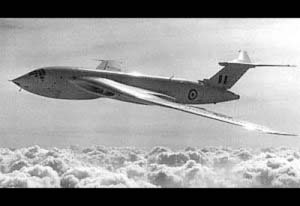
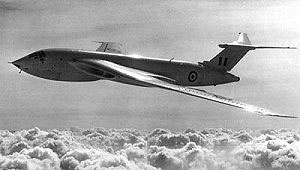
Design-wise, the Victor was such a unique aircraft even when viewed from any angle. The top-down view offered up a form similar to that of a swallow. Nothing like it had ever flown before. Wings featured the aforementioned crescent shape which consisted of the wing root, then a bend that formed the remaining inboard and outboard wing sections. The four engines - two to a side - were ingeniously mounted inside the wing roots to produce a most aerodynamic design and consisted of 4 x Armstrong-Siddeley Sapphire 7 202/207 series turbojet engines developing 11,000lbf of thrust each. This choice of engine placement, however, must not have endeared the large aircraft to her ground crews as engine access was hardly an easy affair. The fuselage was pinched at the nose and the tail. The nose appeared as though a finely crafted arrowhead or bullet with a streamlined cockpit made up of framed windows. The fuselage was larger in the forward portion consisting of the cockpit and slimmed somewhat just aft of this area. The fuselage then slimmed much more towards the empennage eventually ending to a point. The empennage was decorated with a high-mounted T-style horizontal planes on a single vertical fin mounted to the extreme point on the fin. The horizontal surfaces had noticeable dihedral. It should be noted that virtually all surfaces of the aircraft featured sweep back, making for one truly streamlined machine.

The undercarriage of the Victor was of a traditional tricycle type. The main gears retracted into the wings and featured 8 wheels to a gear. The nose landing gear was fitted with two wheels and recessed aft under the cockpit. When on the ground, the Victor did not offer much in the way of clearance particularly under and around the bulbous forward fuselage.

The cockpit offered up quite a bit of room for pilot and co-pilot alike. The forward view was dominated by the slanting window frames while the main instrument panel took up the rest of the area. A centrally-located console was positioned between the pilots. Crew accommodations amounted to the two pilots, a pair of navigators and a dedicated electronic systems officer. Despite the crew of five, only the pilot and co-pilot were afforded ejection seats.

Armament
As a conventional bomber, the Victor could be fielded with a collection of some 34 x 1,000lb bombs. Much like the Boeing B-52 Stratofortress, the Victor could be used in carpet bombing sorties to suppress or disrupt enemy formations and structures through sheer force. Munitions were held in an internal bomb bay which could also be used for additional fuel in place of armament for a vast increase to overall operating range.

Seeing it that the Victor was only designed as a conventional operator in a secondary role, the system was fully integrated to carry and release nuclear-armed munitions - the aircraft's primary role. This nuclear armament could consist of a "British Yellow Sun" thermonuclear bomb or American inspired nuclear weapons as available. Beyond these offensive-minded implementations, there was little in the way of defensive armament for the crew to handle. These were the days of the Cold War of course, so speed and altitude were everything for a bomber - that is - until the advent of more sophisticated radar and surface-to-air homing missiles by her enemies.

Operational Service
Victors were used in their tanker form during the British 1982 Falklands War with Argentina. Victors provided much needed in-flight refueling for RAF bombers in an effort for the heavy hitters to reach Argentine ground targets. Beyond that, the aircraft served in a similar role during the 1991 Persian Gulf War against Iraq. These Victors would serve both US and British aircraft in the conflict and would be removed from this (and any other role) with British forces from 1993 onwards.

Conclusion
The final point of the V-bomber triangle - as rough of a development period as it was - proved to be a pinnacle of British Cold War bomber design. The aircraft exhibited much of what made it unique in terms of both form and function and provided the RAF with a long-range, high-flying, heavy-hitter that made the world notice. Advancements by adversaries on the ground eventually changed the intended role some and time altogether removed her as a potential player in future roles. At the very least, the Victor proved to be something of a special plane, providing a futuristic style to design a complimentary capabilities that made her a powerful factor in the English strategic nuclear air arm.

Text ©2003-2009 www.MilitaryFactory.com • All Rights Reserved • No Reproduction Without Permission • Corrections / Comments to MilitaryFactory at Gmail dot com

Last Revision: 9/13/2009


  Specifications for the Handley Page Victor B.Mk 2
arrow downDimensions:
Length: 114.93ft (35.03m)
Width:119.69ft (36.48m)
Height: 28.12ft (8.57m)

arrow downPerformance: About MACH
Max Speed: 640mph (1,030kmh; 556kts)
Max Range: 4,598miles (7,400km)
Rate-of-Climb: 0ft/min (0m/min)
Service Ceiling: 52,493ft (16,000m; 9.9miles)

arrow downStructure:
Accommodation: 5
Hardpoints: 0
Empty Weight: 90,996lbs (41,275kg)
MTOW: 216,009lbs (97,980kg)

arrow downPowerplant:
Engine(s): 4 x Rolls-Royce RCo.11 Conway 103 turbojet engines developing 17,250lbf of thrust each.
arrow downArmament Suite:
Mission-Specific bombload of up to 35,000lbs (15,876kg) including nuclear stand-off weaponry.

CompareX2 CompareX4 Conversions Dictionary Acronyms

Compare and Contrast Military Aircraft Specifications

  Special Aircraft Collections
Aircraft by Conflict:
Falklands War
Indo-Pak War
Operation Allied Force
Operation Desert Storm
Six Day War
Yom Kippur War

Special Collections:
American X-Planes
Classic US Warbirds
Grumman "Cats"
Indian Air Force
Israeli Air Force
Mikoyan-Gurevich
V-Bombers


Korean Air War:
Korean War Aircraft
Aces
Australia
United States
North Korea

Vietnam Air War:
Vietnam War Aircraft

Cold War
Cold War Aircraft
United States
Soviet Union
Soviet Bombers of the Cold War

Modern Aircraft
Modern Military Aircraft
United States

Miscellaneous
MiG-15 Versus Sabre
Top 10 Fighters of All Time


  Recent Military Aircraft Additions
Thumbnail picture of the Supermarine Scimitar fighter
Supermarine Scimitar
Thumbnail picture of the Novi Avion fighter
Novi Avion
Thumbnail picture of the Arado Ar TEW 16/43-23 jet-powered fighter
Arado TEW 16/43

  Contacting MilitaryFactory.com
We can only get better if you tell us how. You can contact MilitaryFactory.com at MilitaryFactory at gmail dot com (replace "at" with "@" and "dot with ".") with any questions, comments or corrections. We also accept related military imagery that you approve for us to use on our website. Keep in mind, however, that due to volume, we may not directly respond to your inquiry. Please add us to your list of non-blocked recipients!
Flying Boats

  Aircraft Quick Profile


Picture of the Handley Page Victor
Image courtesy of the British Royal Air Force.

flag of United Kingdom
1957

Designation: Handley Page Victor
Classification Type: Heavy Bomber
Contractor: Handley Page - UK

Country of Origin: United Kingdom
Production Total: 86

Operators: United Kingdom


  Variants
HP.80 - Prototype Designation of which two were constructed designated as WB771 and WB775.

B.Mk 1 - Initial Base Bomber Model Designation; 50 examples produced.

B.Mk 1A - Based on the B.Mk 1 models but with improved Electronic CounterMeasures suite; 24 B.Mk 1's converted to this standard.

B.Mk 1A(K2P) - Based on B.Mk 1A models but converted to tanker and quick bomber forms; 6 models converted in this fashion.

K.Mk 1 - Tanker conversion models of B.Mk 1 models; 11 conversions.

K.Mk 1A - Tanker conversion models of B.Mk 1A models; 11 conversions.

B.MK 2 - "Improved" Victor Bombers with wider wingspans and new engines.

B.Mk 2R - "Blue Steel" capable Victor B.Mk 2 models and more powerful engines; 21 B.Mk 2 models converted in this way.

SR.Mk 2 - Strategic Reconnaissance Platforms of B.Mk 2 models; 21 examples converted as such.

K.Mk 2 - Tanker Conversion Models based on the B.Mk 2 bomber; 24 B.Mk 2 bombers converted in this fashion.

  Collections
  • Sons of Empire - WW2 Aircraft of Japan
  • Aircraft of the Battle of Britain
  • X-Planes Throughout History
  • French Aircraft of the Great War
  • The German Luftwaffe in World War 2
  • Nightfighters - In a Class All Themselves
  • The Top Ten Fighters of All Time
  • Carrier "Born" Aircraft - Navy Mounts
  • If Boats Could Fly - Flying Boat Aircraft


Free GI Bill Guide

Top MF Stuff: Military Pay Scale Chart | Military Ranks | World War 2 Weapons | Sniper Rifles | Conversion Calculators


©2009 www.MilitaryFactory.com • Content ©2003-2009 MilitaryFactory.com • All Rights Reserved • Disclaimer Privacy Policy Site Map Origins
Most photographic images appearing on this site are courtesy of the United States Department of Defense and are approved for public use.
Other images acquired through the public domain. Digital art work courtesy of Dan Alex.
Business Consulting by Kyle Williams

Material presented throughout this website is for historical and entertainment value and should not to be construed as usable for
hardware restoration, maintenance or general operation. Please consult manufacturers for such information.

Site Contact: militaryfactory at gmail dot com (replace "at" with "@" and "dot" with ".") eXTReMe Tracker