Military Factory
Military Pay Chart
Global Firepower
Military Industrial Complex
Second World War
Home
Military Pay Scale
Military Ranks
Small Arms
Aircraft
Land Systems
Navy
Education
Military Factory Facebook Logo
flag of United Kingdom

Avro Vulcan High-Altitude Long-Range Heavy Bomber (1956)

Authored By Staff Writer | Last Updated: 4/24/2013

The Avro Vulcan was an impressive design feat though the system itself saw limited combat action.

Find a School Near You
Follow Military Factory on Facebook:
Trending on Military Factory:
Recent Articles:
The Avro Vulcan formed the second point on the triangle in the British "V-Bombers" collection - a series of three high-altitude, long range, nuclear-capable systems developed during the Cold War from a post-World War 2 British Air Ministry requirement. The three aircraft making up this defensive triangle became the Vickers Valiant, the Avro Vulcan and the Handley Page Victor - entering into service in that very order. The Vulcan formed an integral part of the British strategic nuclear air arm throughout the height of the Cold War years and could also double as a conventional bomber, as it did in the British Falklands War against Argentina - interestingly enough assisted with in-flight refueling by a tanker form of the Handley Page Victor. The Avro Vulcan would be Avro's one and only jet-powered aircraft design to enter production.

Development
British Air Ministry Specification B.35/46 was born in early 1947. The specification called for a nuclear-capable platform able to operate out of reach of enemy air defenses and provide exceptional range from British and allied bases as needed. Avro answered the call and devised an all-new design centered around a straight, delta-wing arrangement. This design was unique in that it featured vertical tail surfaces at the extreme wingtips as opposed to a traditional tail section, offering up a great deal of surface area for improved payload, fuel load and maneuverability. The lack of a true tail section meant that, in some ways, the design was in fact a flying wing. The cockpit was positioned well forward on the fuselage, ahead of the wings and engines, and featured four engines in a staggered internal placement- two engines to a wing. The engines were to be fed by a single large rounded intake. The massive expanse of the wings would have also provided maximum space for internal armament in the form of bomb bays mounted outboard of the dual engine arrangements. Avro designated the new design Type 698 and received the British Air Ministry contract in December of 1947. Along with the Avro design, approval of the Valiant and Victor were also granted, essentially beginning the formation of the V-bomber triangle.

In initial Air Ministry contract called for several forms to be built including two prototypes. Along with this commitment included the construction and delivery of several flight demonstrators. The demonstrators, designated as Type 707, proved an important part of early development of the Vulcan and were produced in five examples - Type 707, Type 707A (2), Type 707B and Type 707C. The Type 707 was a unique design in and of itself, featuring a spine-mounted air intake. Type 707 to the skies on her maiden flight on September 4th, 1949 but was involved in a fatal crash just 26 days later. The accident revealed that the airbrake system had not closed, leading the system to enter a stall and eventually crash - and as no ejection seat system was offered to the test pilot, both man and system were lost in the event. Despite this major setback, the overall design (albeit at low-speed testing) proved sound. A new revised design appeared in the Type 707B and flew a year later, this time with an ejection system in a lengthened nose assembly. The Type 707A was used as a high-speed test platform and completed as two examples while a Type 707C existed as well, this becoming a test platform and featuring side-by-side seating, a single vertical tail fin and a straight-wing delta arrangement. In all, testing revealed the aircraft to be extremely agile considering the type and size of the aircraft, no doubt due to the large area delta-wing design choice. These development models eventually gave rise to the Type 698 prototype.

The Type 698 prototype first flew on August 30th, 1952. The first prototype was fitted with Rolls-Royce brand engines of 6,500lbf thrust each. Engines were retained in the wingroots based on the original design and featured rectangular intake openings. The straight delta wing was used as was the single vertical tail fin. Later that year, the aircraft design received her official designator of "Vulcan". The first prototype was later lost in a fatal air show accident in September of 1958. The second prototype, this fitting an Olympus 101 series engines of 10,000lbf, soldiered on in testing. Both prototypes featured a delta wing with 52 degree sweepback. The second prototype was later fitted with a "kinked" wing design that showcased differing degrees of sweepback separated into different sections of the wing leading edge.

The initial production model became the Vulcan B.Mk 1. Twenty-five such machines were ordered in 1952 and the first Vulcan squadron became operational in 1957 (this delay in years was caused by yet another fatal accident). B.Mk 1's were similar to the two prototypes. Early production models were finished the straight delta wings but these were later revised to the kinked wing design. In many ways, the production models mimicked the prototype with the exception of the kinked wing. Production models were now being fitted with an Olympus 101 series engine of 11,000lbf thrust (each). This rating was progressively uprated until reaching the Olympus 104 series with 13,500lbf thrust. A total of 45 Vulcan B.Mk 1 models were eventually delivered.

In the late 1950's, the Vulcan B.Mk 1 had her countermeasures suite revised, becoming the Vulcan B.Mk 1A. Soviet defense technology advanced to the point that operation of the Vulcans in their originally intended mode was now in danger. As such, the aircraft was fitted with chaff dispensers, a tail warning radar ("Red Steer"), a radar warning receiver, and jammers. Twenty-eight B.Mk 1s were converted in this fashion with conversions taking place from 1959 into 1963. B.Mk1A's and the future B.Mk 2 models are clearly discernable thanks to the addition of the ECM gear in the tail cone.

The Vulcan B.Mk 1 was followed by the Vulcan B.Mk 2 with development beginning in 1955. The system featured a revised and lengthened wing (increased from 99 feet to 111 feet), new Bristol Siddeley Olympus 201 series engines of 17,000lbf thrust engines (later production models would feature the Olympus 301 at 22,000lbf thrust), updated electrical system, in-flight refueling probe, a reinforced undercarriage (necessitated by the addition of the new engines), the countermeasures suite mentioned in the B.Mk 1A upgrade above and overall improvements to the aircrafts performance. First flight of the B.Mk 2 prototype occurred on August 19th, 1958 with deliveries beginning two years later and making up 89 total production examples.

It should be noted that a commercial version of the Vulcan was also in considered but this led to nothing more than completion of a small scale model. The aircraft (designated Type 722 Atlantic) would have seated between 90 and 115 passengers and presented flying speeds just under Mach 1. The idea was dropped due to a lack of interest in the market though the Vulcan in a passenger airliner form would have been quite a sight over commercial airports to say the least.

The Vulcan B.Mk 3 was a proposed carrier of the Skybolt missile but this design was ultimately dropped once development of the Skybolt in America had ceased. Eight B.Mk 2 models were converted to Maritime Radar Reconnaissance platforms (B.Mk 2MRR)) and 6 more were modified as in-flight refueling tankers (K.Mk 2)). A total of 134 Vulcan B.Mk 1 and B.Mk 2 models were constructed along with the two Type 698 prototypes.

Design
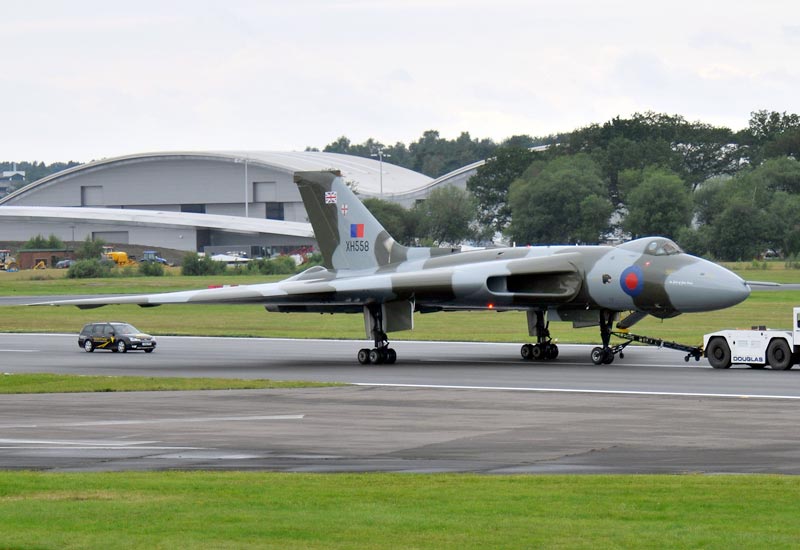
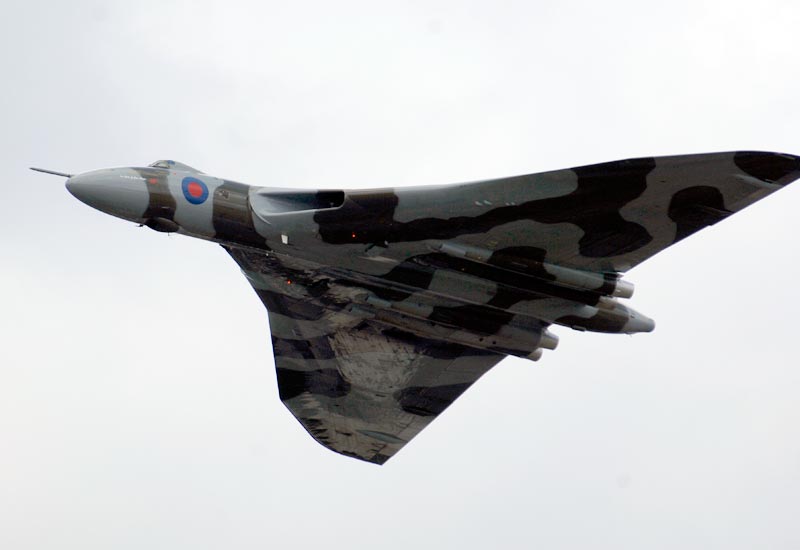
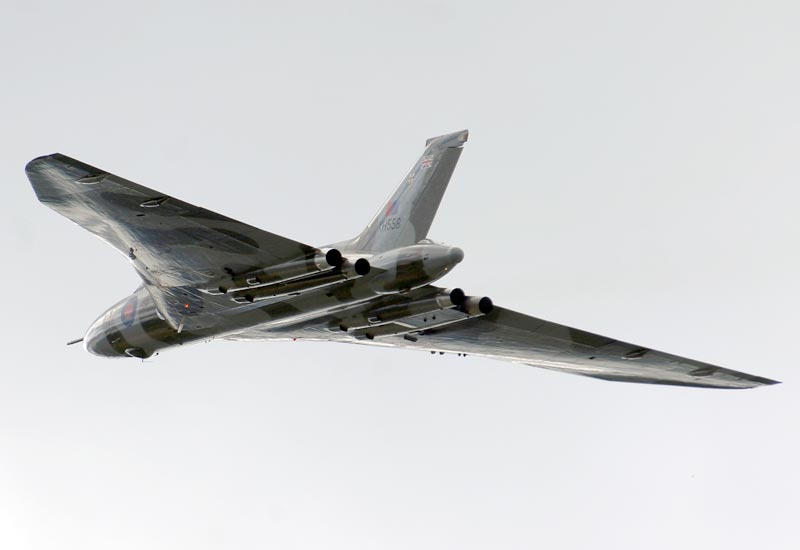
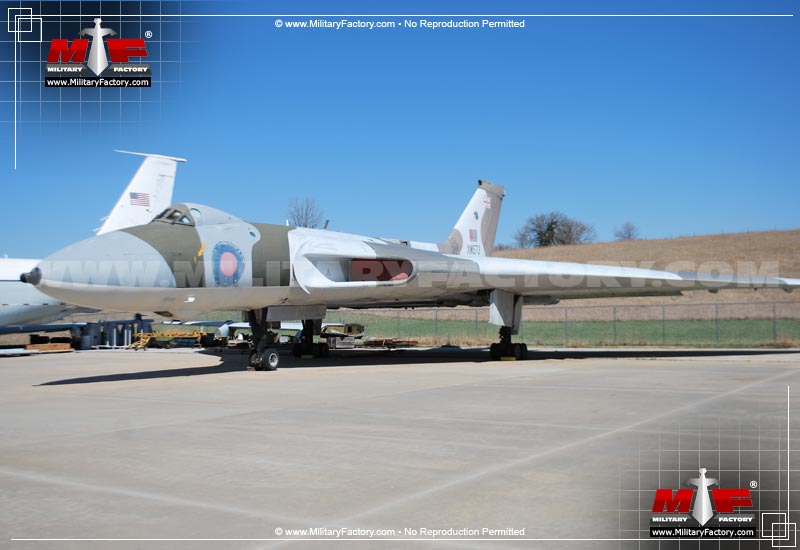
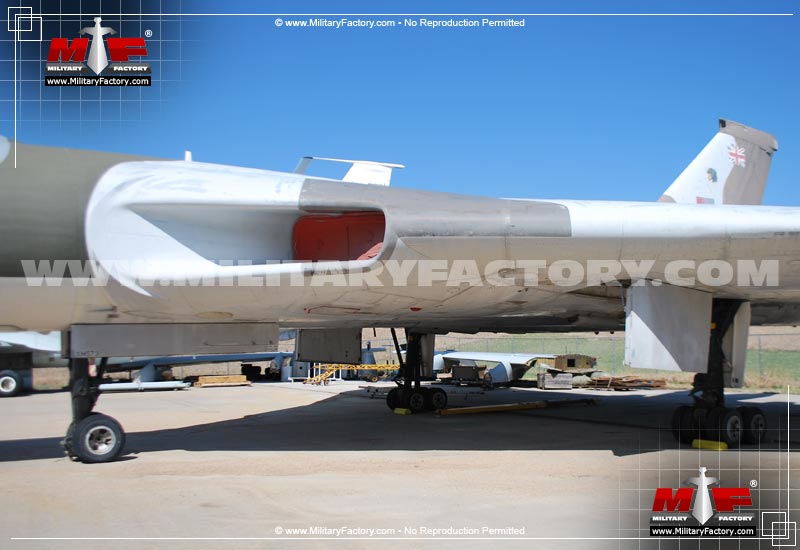
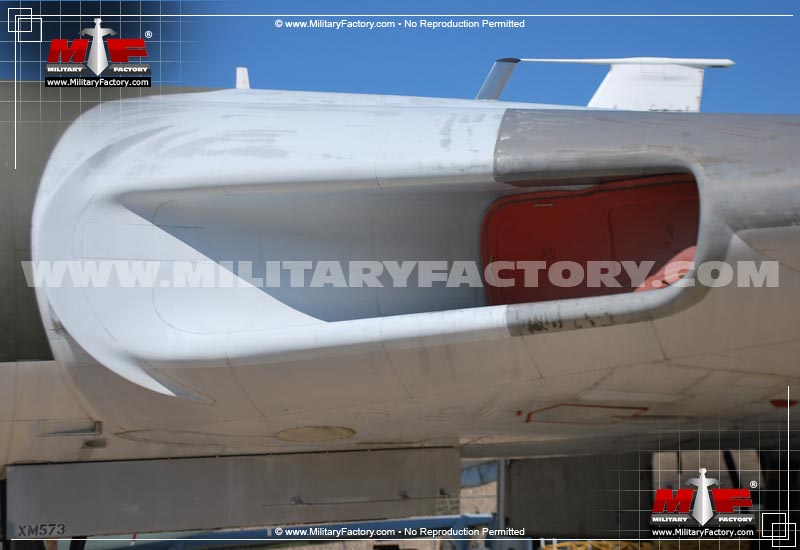
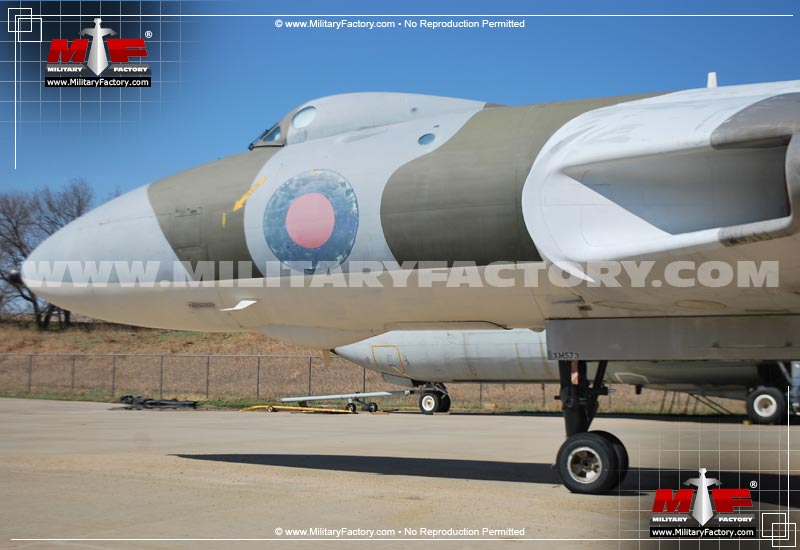
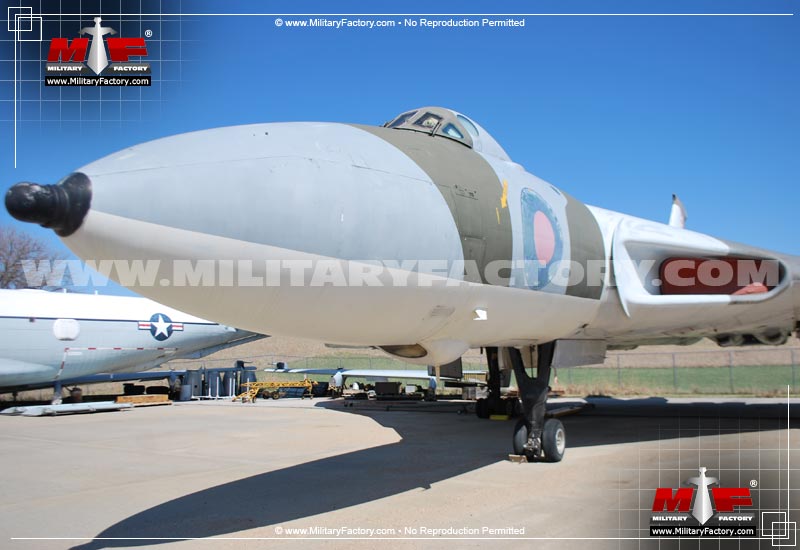
Design of the production Vulcans was indeed impressive. Its flying wing origins were clearly visible in the final production delta-wing configuration. The leading edges of the wings were not a true smooth curve but in fact featured angles of varying degrees, eventually bringing the leading wing edge down to the end of the clipped wingtips - a "kinked" delta shape. The wings were fashionably contoured to extend outwardly from the fuselage, giving the aircraft its smooth overall appearance and housed the four engines, fuel and main landing gears. Intakes for the engines were intelligently mounted at each wingroot and the entire component (from intake to engine exhaust) ran the length of the delta wing. The fuselage itself was streamlined highly, with the cockpit mounted behind a nose cone assembly and just before the wingroot intakes and fuselage extending well forward of the wingroots and some distance aft of the wing trailing edge. Fuel was cleverly split between either wing and a central fuselage location, all monitored in-flight by a fuel management system. The bomb bay was centrally held in the fuselage and could be fitted with additional fuel for increased range.

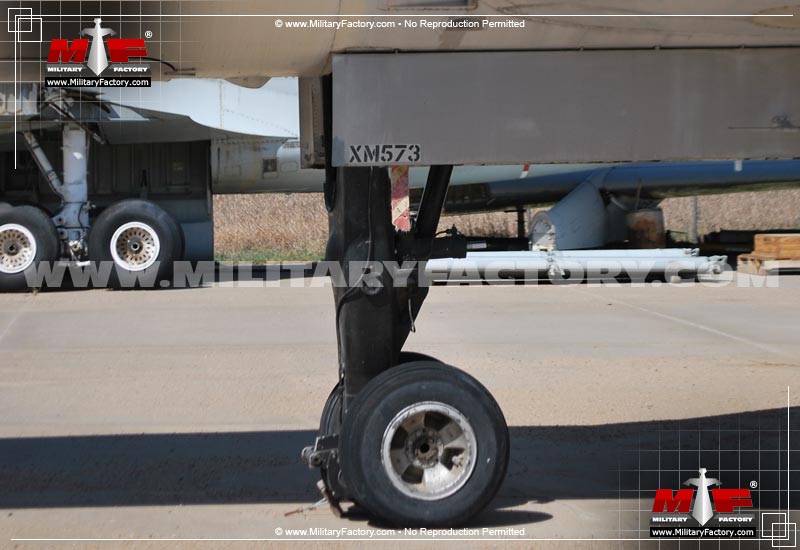
The undercarriage consisted of two main landing gears (retracting forward outboard of the engines) and a nose gear positioned behind and underneath the wingroot intakes. Each main gear was fitted with an eight-wheel bogie and retracted forwards while the nose gear and its two wheels interestingly retracted backwards. The empennage featured a single large dorsal fin extending from about the midway portion of the fuselage, with the base of the fin extending vertically out from about the extreme end point of the engines. The noticeable tail cone housed a drag chute to improve the aircrafts landing distance - this was a large aircraft after all.

Anyway you view it, the Vulcan maintained a distinct look about her even in the wild age of 1950's aircraft design. When viewed in silhouette form from above or below, the type appeared as no other bomber design had before it. It is no wonder that the aircraft has been such an endearing design to fans of aviation for decades since its introduction.

Cockpit
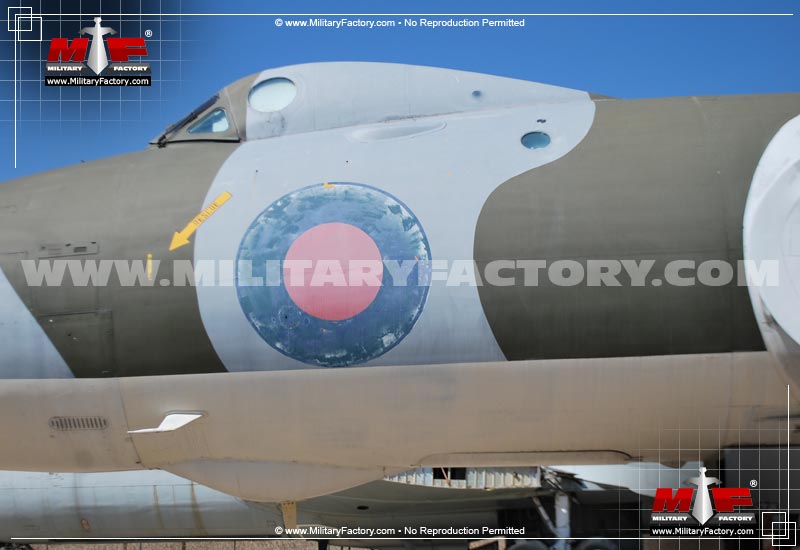
The Avro Vulcan provided accommodation for five standard crew personnel consisting of the pilot and copilot, a systems operator, a navigator and a radar operator along with additional seating for two more. The pilot and copilot had a view out of the front of the cockpit through a five panel windscreen with framing as well as circular windows to the sides allowing for viewing to the left and right. Ejection seats were afforded to the pilot and co-pilot only - but not the entire crew - they would have to bail out of the aircraft the old fashion way.

Armament
Being designed as a bomber, it was only fitting that the Vulcan could mount up to 21,000lbs of ordnance held in an internal bomb bay. Ordnance could consist of conventional or - more importantly - nuclear weaponry. Conventional bombing was covered through use of 21 x 1,000lb bombs. Nuclear munitions varied as they were constantly being developed or improved upon but included the Blue Steel Mk 1 stand-off missile.

Operation Service
The Vulcan series of bombers saw limited use in combat aggression. Vulcan B.Mk 1 model bombers were sent as an intimidation factor during the Malayan Insurgency. Beyond that, they were used to showcase the types reach to the Soviet Union by conducting regular global flights to and fro. Operations with American forces and other NATO allies were a common occurrence. The only true combat actions including the Vulcan came in the 1982 Falklands War between invader Argentina and responder Britain. Vulcan B.Mk 2 bombers were used in small numbers during the conflict and succeeded in providing Britain with an intimidating force - though actual damage caused to enemy ground forces from Vulcans were minimal.

In May of 1982 a single Vulcan bomber was launched from a British mainland airbase and flown to Ascension Island in the Atlantic. From there, the plan required this lone Vulcan to be refueled by as many as eleven Handley Page Victor in-flight refueling aircraft, each aircraft flying in formation, taking its turn in the refueling line and returning to base. Once the last Victor has refueled the Vulcan, the Vulcan proceeded to the Falkland Island air base at Port Stanley under the umbrella of Argentina radar. In an effort to surmise the situation from on high, the Vulcan rose into the umbrella radar system and its warning panel lit up - though the Vulcan's ECM suite proved up to the task. The crew did manage to release their bomb payload on the runway within the 1-second window of opportunity provided for by the rather-obsolete targeting computer before passing the target. The Vulcan and crew immediately climbed away from danger as Argentine ground guns opened up on them. Once safe, the Vulcan was greeted by an allied refueling tanker and landed safely back at Ascension Island to much cheer. The presence of the Vulcan in Argentina airspace proved a great psychological tool for the Argentines now feared their major cities in reach to British bombers. Additionally, the Argentines had loss use of the one runway on the Falklands that would have played a major role in its aerial defense - a critical component to their war-making capabilities was lost for good. For all the preparation and execution, the Vulcan managed only one direct hit on the runway itself, but this proved to knock out the track permanently, assuring it would not play a part in the short-term for Argentine fighters. The mission marked the longest bombing sortie of any aircraft in the history of aviation and went on to be known as the Black Buck Raid.

After the war of 1982, the Vulcan's career as a dedicated bomber was all but over. Several were converted as an interim measure to fulfill a tanker role gap while the Vickers VC10 airframes were being modified for the job. Six such Vulcan B.Mk 2 models were converted for the role and became the Vulcan K.Mk 2. These Vulcans lasted until 1984 as the VC10s came online.

Conclusion
It is no doubt the Avro Vulcan has achieved status as a classic British bomber. Despite its rough development that included losses of life, the system fared well during a period in history that needed it most. The reach of the nuclear-capable platform was exactly what the doctor had ordered in a world where showing off power was seemingly more important that using it. Despite its limited production totals and very limited combat exposure, the distinct design and qualities of the Vulcan have made her a one-of-a-kind aircraft.
Text ©2003-2013 www.MilitaryFactory.com • All Rights Reserved • No Reproduction Permitted
MilitaryFactory.com does NOT sell equipment/weaponry. Material presented throughout this website is for historical and entertainment value and should not to be construed as usable for hardware restoration, maintenance or general operation. Please consult manufacturers for such information. Our disclaimer. Email corrections / Comments to MilitaryFactory at Gmail dot com.
Picture of Avro Vulcan
Pic of the Avro Vulcan
Image of the Avro Vulcan
View All Images (5)

Specifications for the
Avro Vulcan
High-Altitude Long-Range Heavy Bomber


Country of Origin: United Kingdom
Manufacturer: Avro / A.V. Roe - UK
Initial Year of Service: 1956
Production: 136


Focus Model: Avro Vulcan B.Mk 2
Crew: 5


Length: 99.90ft (30.45m)
Width: 110.99ft (33.83m)
Height: 27.17ft (8.28m)
Weight (Empty): 106,000lbs (48,081kg)
Weight (MTOW): 249,122lbs (113,000kg)


Powerplant: 4 x Bristol Siddeley Olympus 301 turbojet engines generating 20,000lbs of thrust each.


Maximum Speed: 646mph (1,040kmh; 562kts)
Maximum Range: 4,598miles (7,400km)
Service Ceiling: 55,003ft (16,765m; 10.4miles)
Rate-of-Climb: 0 feet per minute (0m/min)


Hardpoints: 0
Armament Suite:
21,000 lbs of internal ordnance including 1 x Blue Steel MK 1 Stand-off missile


Variants:
Type 698 - Prototype Model Designation; two examples produced; fitted with 4 x Rolls-Royce 6,500lb thrust Avon RA.3 turbojet engines.


B.Mk 1 - Initial Production Model Designation fitted with Olympus turbojet engines; straight wing leading edge.

B.Mk 1A - Modified Mk 1 models fitted with electronic countermeasures equipment in revised tail cone.

B.Mk 2 - Olympus 301 engines; provision for Blue Steel nuclear stand-off missile; improved powerplant and performance; reinforced landing gears; lengthened wings.

B.Mk 2MRR - B.2 bomber models converted for use as Maritime Radar Reconnaissance aircraft; eight conversion models in all.

K.Mk 2 - B.2 bomber models converted for use as in-flight refueling tankers; six conversion models in all.


Operators: the United Kingdom

ALL AIRCRAFT CATEGORIES

BY DECADE:


1900 to 1909
1910 to 1919
1920 to 1929
1930 to 1939
1940 to 1949
1950 to 1959
1960 to 1969
1970 to 1979
1980 to 1989
1990 to 1999
2000 to 2009
2010 to 2019
2020 to 2029
VIEW ALL
Compare Aircraft


BY TYPE:


Anti-Submarine Warfare (ASW)
Attack Helicopters
Bomber Aircraft
Medium Bombers
Heavy Bombers
Close-Air Support (CAS)
Commercial Aircraft
Dive Bombers
Electronic Warfare Aircraft (EWA)
Experimental / X-Planes
Fighter Aircraft
Floatplane Aircraft
Flying Boat Aircraft
Aerial Refueling Tankers
Helicopters (ALL)
Interceptor Aircraft
Multi-Role Aircraft
Navy Carrier Aircraft
Night Fighters
Reconnaissance / Scout
Search & Rescue (SAR)
Scout Helicopters
Special Purpose
Torpedo Bombers
Trainer Aircraft
Transport Aircraft
Transport Helicopters
Unmanned Aerial Vehicles (UAVs)
Unmanned Combat Air Vehicles (UCAVs)


COLLECTIONS:


4th Generation Fighter Aircraft
5th Generation Fighter Aircraft
US X-Planes
Classic US Warbirds
French Military Helicopters
Grumman "Cats"
Howard Hughes Aircraft
Indian Air Force
Israeli Air Force
Libyan Aircraft
Modern Chinese Aircraft
Modern Chinese Fighters
Modern Military Aircraft
Modern North Korean Aircraft
Modern Trainer Aircraft
Modern US Aircraft
Mikoyan Aircraft
Sukhoi Aircraft
Syrian Aircraft
Top 10 Fighter Aircraft of All Time


AIRCRAFT BY CONFLICT:


Arab-Israeli War (1948)
Cuban Missile Crisis (1959-1962)
Falklands War (1982)
Indo-Pak War (1965, 1971)
Iran-Iraq War (1980-1988)
Lebanon War (1982)
Operation Allied Force (1999)
Operation Desert Storm (1991)
Six Day War (1967)
Spanish Civil War (1936)
Soviet-Afghan War (1979-1989)
Yom Kippur War (1973)


MISCELLANEOUS:


Aircraft Cockpits
Aircraft Manufacturers List
Aircraft Timeline

WORLD WAR 2:


1939 Aircraft
1940 Aircraft
1941 Aircraft
1942 Aircraft
1943 Aircraft
1944 Aircraft
1945 Aircraft
1946 Aircraft
Australian Aircraft
Battle of Britain Aircraft
Bombers
Four-Engine Bombers
British Aircraft
British Bombers
British Transports
Dive Bombers
Canadian Aircraft
Fighters
Chinese Aircraft
French Aircraft
German Aircraft
German Fighters
German Flying Boats
German Jets
Secret Weapons of the Luftwaffe
Italian Aircraft
Imperial Japanese Aircraft
Imperial Japanese Fighters
Mitsubishi Bombers
Navy Aircraft
Pearl Harbor
Polish Aircraft
Romanian Aircraft
US Aircraft
US Bombers
US Navy Aircraft
Soviet Aircraft
Torpedo Bombers
Transport Aircraft
Tuskegee Airmen Aircraft
W.A.S.P. Aircraft
WW2 Aircraft Ranked by Speed
VIEW ALL


WORLD WAR 1:


1914 Aircraft
1915 Aircraft
1916 Aircraft
1917 Aircraft
1918 Aircraft
Aircraft Timeline
Austro-Hungarian Aircraft
Bomber Aircraft
British Aircraft
Fighters
Flying Boats
French Aircraft
Imperial German Aircraft
Italian Aircraft
Scout Aircraft
Russian Empire Aircraft
US Aircraft
WW1 Aircraft Ranked by Speed
VIEW ALL


KOREAN WAR:


Australian Aircraft
Korean War Aces
Korean War Jets
North Korean Aircraft
US Military Aircraft
VIEW ALL


VIETNAM WAR:


Helicopters
North Vietnam Air Force
US Airpower
VIEW ALL


COLD WAR:


1950s French Aircraft
British V-Bombers
Cold War Bombers
Soviet Aircraft
Soviet Bombers
Soviet Interceptors
Soviet Helicopters
Strategic Air Command
US Aircraft
US Bombers
US Interceptors
VIEW ALL

Site Disclaimer | Privacy Policy | Site Map | MF Origins


©2013 www.MilitaryFactory.com • Content ©2003-2013 MilitaryFactory.com • All Rights Reserved • Site Contact Email: militaryfactory at gmail dot com. The "Military Factory" name and MilitaryFactory.com logo are registered ® trademarks and protected by all applicable domestic and international intellectual property laws.


Top MF Stuff: 2013 Military Pay Scale | Military Ranks | WW2 Weapons | Sniper Rifles | Kts to Mph | WW1 Aircraft | Automatic Rifles | Aircraft Cockpits | Vietnam War Weapons | Main Battle Tanks | Submachine Guns | Shotguns | French Military Victories


Most photographic images appearing on this site are courtesy of the United States Department of Defense and are approved for public use. Other images acquired through the public domain. Digital art work courtesy of Dan Alex. Business Consulting by Kyle Williams. Material presented throughout this website is for historical and entertainment value and should not to be construed as usable for hardware restoration, maintenance or general operation. Please consult manufacturers for such information.


eXTReMe Tracker