Military Factory
Military Pay Chart
Global Firepower
Military Industrial Complex
Second World War
Home
Military Pay Scale
Military Ranks
Small Arms
Aircraft
Land Systems
Navy
Education
Military Factory Facebook Logo
flag of United Kingdom

Bristol F.2 Fighter / Armed Reconnaissance / Light Bomber Aircraft (1917)

Authored By Staff Writer | Last Updated: 12/15/2011

It was not until pilots began flying their two-seat F.2's as single-seat fighters that the type saw success in The Great War.

Find a School Near You
Follow Military Factory on Facebook:
Trending on Military Factory:
Recent Articles:
Little MF Logo
Little MF Logo
Little MF Logo
Little MF Logo
Little MF Logo
Little MF Logo
Little MF Logo
Little MF Logo
Little MF Logo
Little MF Logo
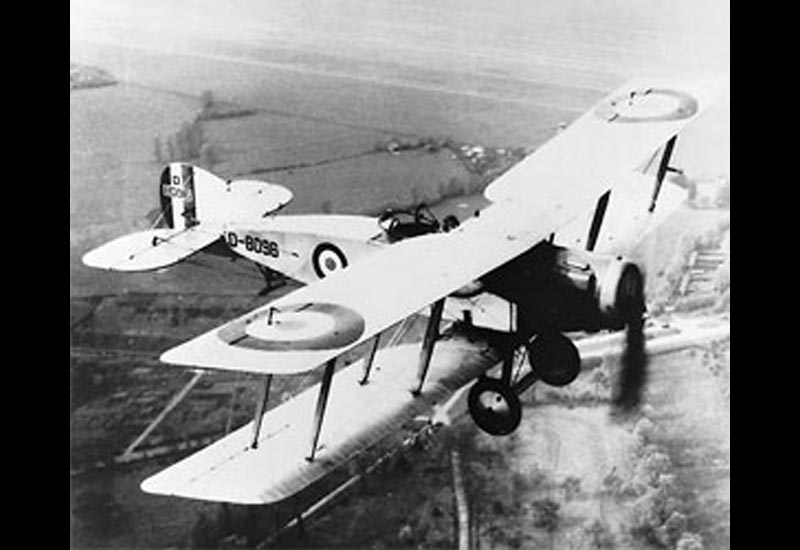
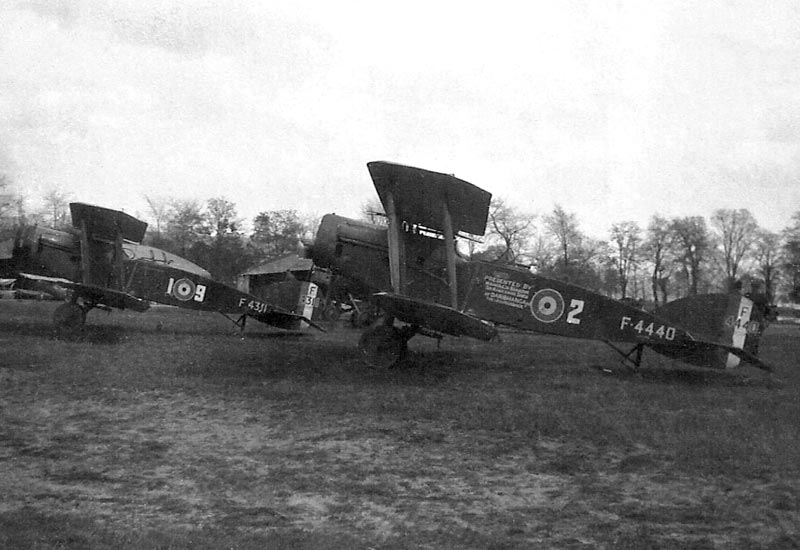
The Bristol F.2 fighter series operated throughout the British Empire for decades, serving through World War 1 and through the interwar years. The system proved a viable fighter platform despite its origination as a reconnaissance aircraft consisting of a two-man crew. The biplane provided the Allies with a surefire response to the ever increasing lethality of the German types they faced. In the end, the F.2 series would be heralded as the best two-seat fighter platform of the entire conflict.

Initially, the aircraft was on the drawing boards as the R.2A reconnaissance plane with a Beardmore 120 horsepower engine in mind and staggered yet equal span wings were connected via pairs of parallel struts. Surplus of the Hispano-Suiza 150 horsepower engine forced a revision in the original thinking and produced the R.2B, this design featuring a sesquiplane wing arrangement with the lower span shorter than the upper. This particular model was also further developed to accept the Rolls-Royce Falcon type engines producing some 190 horsepower. The new powerplant now added crucial power the now redesignated F.2A airframe. F.2A's were delivered in a first batch of 50 aircraft.

In configuration, the pilot sat just behind and below the upper wing with a view over the long engine compartment. His observer - or rear gunner - took the second cockpit position with his single or dual trainable 7.7mm Lewis type machine gun(s). The pilot himself operated a single forward-firing synchronized Vickers machine gun affixed to the upper fuselage. A bombload of up to 240lbs was possible. Construction consisted of a wooden structure covered over with fabric.

Initial use of the F.2 proved awful as pilots were trained to put too much emphasis on providing better arcs of fire for their rear gunners - that a flight of multiple F.2's could work in conjunction on creating an impenetrable rear quadrant governed by their machine guns. This inevitably led to disastrous results. In one such early instance, six F.2's faced off against six (some sources state five) lethal Albatros D.III fighters - the result was four of the F.2's were lost to enemy fire. The F.2 would not see its "true" value in a dogfight until tactics were revised and pilots were allowed to treat their mounts as single-seat fighters - utilizing the aircraft's impressive speed and maneuverability as their primary tool in conjunction with their forward-firing machine gun - and relying on the rear gunner as an added bonus to the aircraft's rear defense. Once this melding of man and machine was achieved, the F.2 went on to become one of the more successful fighter designs of the war.

The F.2B followed as a further development of the F.2A - in all actuality it became the definitive model in the series. The B model featured a more powerful engine - the Rolls-Royce Falcon III water-cooled inline engine offering up 275 horsepower. Other subtle improvements led to better crew protection and fields of view. This model proved so successful, in fact, that it made up the rest of the entire F.2 series production line - outnumbering the preceding A-models by a hefty sum.

First flight of the series was achieved on September 9th, 1916 with operational service being achieved in February of 1917. Production numbered some 5,300 examples and use of the type (amazingly) covered 1916 through 1932. Operators ranged from North American to South America, Europe and Australia. Design of the F.2 was handled by Frank Barnwell with production at Bristol, Armstrong Whitworth and Standard Motors among others.
Text ©2003-2013 www.MilitaryFactory.com • All Rights Reserved • No Reproduction Permitted
MilitaryFactory.com does NOT sell equipment/weaponry. Material presented throughout this website is for historical and entertainment value and should not to be construed as usable for hardware restoration, maintenance or general operation. Please consult manufacturers for such information. Our disclaimer. Email corrections / Comments to MilitaryFactory at Gmail dot com.
Picture of Bristol F.2
View All Images (1)

Specifications for the
Bristol F.2
Fighter / Armed Reconnaissance / Light Bomber Aircraft


Country of Origin: United Kingdom
Manufacturer: British and Colonial Aeroplane Company / Standard Motors / Armstrong Whitworth / Cunard Steamship Company - UK
Initial Year of Service: 1917
Production: 5,308


Focus Model: Bristol F.2B
Crew: 2


Length: 25.82ft (7.87m)
Width: 39.24ft (11.96m)
Height: 9.74ft (2.97m)
Weight (Empty): 2,150lbs (975kg)
Weight (MTOW): 3,250lbs (1,474kg)


Powerplant: 1 x Rolls Royce Falcon III inline piston engine generating 275hp.


Maximum Speed: 123mph (198kmh; 107kts)
Maximum Range: 368miles (593km)
Service Ceiling: 17,995ft (5,485m; 3.4miles)
Rate-of-Climb: 869 feet per minute (265m/min)


Hardpoints: 2
Armament Suite:
1 x 7.7mm Vickers synchronized machine gun
1 OR 2 7.7mm trainable Lewis machine gun(s) in rear cockpit.


Variants:
R.2A - Originally Planned Reconnaissance Model' fitted with Beardmore 120hp engine.


R.2B - Sesquiplane Revision; smaller design that the R.2A fitted with Hispano-Suiza engine.

R.2B - Revision of the R.2B fitted with a Rolls-Royce Falcon series 190hp engine.

F.2A - Reclassification of all R.2 series aircraft; initial 50 example production models.

F.2B - Improved ruggedness and field of vision; modifications throughout; more powerful Rolls-Royce Falcon engines (275 horsepower).

F.2B Mk II - "Tropicalized" Variant for hot weather operations, particularly in the Middle East.

F.2B Mk III - Reinforced Model

F.2B Mk IV - Converted Mk III models with further strengthening of structure and landing gear systems; balanced rudder system implemented; automatic leading-edge slots introduced.

F.2C - Experimental Engine Platform(s)


Operators:
Afghanistan; Australia; Belgium; Canada; Ireland; Greece; Mexico; New Zealand; Norway; Peru; Poland; Spain; Sweden; United Kingdom

ALL AIRCRAFT CATEGORIES

BY DECADE:


1900 to 1909
1910 to 1919
1920 to 1929
1930 to 1939
1940 to 1949
1950 to 1959
1960 to 1969
1970 to 1979
1980 to 1989
1990 to 1999
2000 to 2009
2010 to 2019
2020 to 2029
VIEW ALL


BY TYPE:


Anti-Submarine Warfare (ASW)
Attack Helicopters
Bomber Aircraft
Medium Bombers
Heavy Bombers
Close-Air Support (CAS)
Commercial Aircraft
Dive Bombers
Electronic Warfare Aircraft (EWA)
Experimental / X-Planes
Fighter Aircraft
Floatplane Aircraft
Flying Boat Aircraft
Aerial Refueling Tankers
Helicopters (ALL)
Interceptor Aircraft
Multi-Role Aircraft
Navy Carrier Aircraft
Night Fighters
Reconnaissance / Scout
Search & Rescue (SAR)
Scout Helicopters
Special Purpose
Torpedo Bombers
Trainer Aircraft
Transport Aircraft
Transport Helicopters
Unmanned Aerial Vehicles (UAVs)
Unmanned Combat Air Vehicles (UCAVs)


COLLECTIONS:


4th Generation Fighter Aircraft
5th Generation Fighter Aircraft
US X-Planes
Classic US Warbirds
French Military Helicopters
Grumman "Cats"
Howard Hughes Aircraft
Indian Air Force
Israeli Air Force
Libyan Aircraft
Modern Chinese Aircraft
Modern Chinese Fighters
Modern Military Aircraft
Modern North Korean Aircraft
Modern Trainer Aircraft
Modern US Aircraft
Mikoyan Aircraft
Sukhoi Aircraft
Syrian Aircraft
Top 10 Fighter Aircraft of All Time


AIRCRAFT BY CONFLICT:


Arab-Israeli War (1948)
Cuban Missile Crisis (1959-1962)
Falklands War (1982)
Indo-Pak War (1965, 1971)
Iran-Iraq War (1980-1988)
Lebanon War (1982)
Operation Allied Force (1999)
Operation Desert Storm (1991)
Six Day War (1967)
Spanish Civil War (1936)
Soviet-Afghan War (1979-1989)
Yom Kippur War (1973)


MISCELLANEOUS:


Aircraft Cockpit Pictures
Aircraft Comparison Tool
Aircraft Manufacturers
Aircraft Production Totals
Aircraft Timeline

WORLD WAR 2:


1939 Aircraft
1940 Aircraft
1941 Aircraft
1942 Aircraft
1943 Aircraft
1944 Aircraft
1945 Aircraft
1946 Aircraft
Australian Aircraft
Battle of Britain Aircraft
Bombers
Four-Engine Bombers
British Aircraft
British Bombers
British Transports
Dive Bombers
Canadian Aircraft
Fighters
Chinese Aircraft
French Aircraft
German Aircraft
German Fighters
German Flying Boats
German Jets
Secret Weapons of the Luftwaffe
Italian Aircraft
Imperial Japanese Aircraft
Imperial Japanese Fighters
Mitsubishi Bombers
Navy Aircraft
Pearl Harbor
Polish Aircraft
Romanian Aircraft
US Aircraft
US Bombers
US Navy Aircraft
Soviet Aircraft
Torpedo Bombers
Trainer Aircraft
Transport Aircraft
Tuskegee Airmen Aircraft
W.A.S.P. Aircraft
WW2 Aircraft Ranked by Speed
VIEW ALL


WORLD WAR 1:


1914 Aircraft
1915 Aircraft
1916 Aircraft
1917 Aircraft
1918 Aircraft
Aircraft Timeline
Austro-Hungarian Aircraft
Bomber Aircraft
British Aircraft
Fighters
Flying Boats
French Aircraft
Imperial German Aircraft
Italian Aircraft
Scout Aircraft
Russian Empire Aircraft
US Aircraft
WW1 Aircraft Ranked by Speed
VIEW ALL


KOREAN WAR:


Australian Aircraft
Korean War Aces
Korean War Jets
North Korean Aircraft
US Military Aircraft
VIEW ALL


VIETNAM WAR:


Helicopters (ALL)
Transport Helicopters
North Vietnam Air Force
US Airpower
VIEW ALL


COLD WAR:


1950s French Aircraft
British V-Bombers
Cold War Bombers
Soviet Aircraft
Soviet Bombers
Soviet Interceptors
Soviet Helicopters
Strategic Air Command
US Aircraft
US Bombers
US Interceptors
VIEW ALL

Site Disclaimer | Privacy Policy | Site Map | MF Origins


©2013 www.MilitaryFactory.com • Content ©2003-2013 MilitaryFactory.com • All Rights Reserved • Site Contact Email: militaryfactory at gmail dot com. The "Military Factory" name and MilitaryFactory.com logo are registered ® trademarks and protected by all applicable domestic and international intellectual property laws.


Top MF Stuff: 2013 Military Pay Scale | Military Ranks | WW2 Weapons | Sniper Rifles | Kts to Mph | WW1 Aircraft | Automatic Rifles | Aircraft Cockpits | Vietnam War Weapons | Main Battle Tanks | Submachine Guns | Shotguns | French Military Victories


Most photographic images appearing on this site are courtesy of the United States Department of Defense and are approved for public use. Other images acquired through the public domain. Digital art work courtesy of Dan Alex. Business Consulting by Kyle Williams. Material presented throughout this website is for historical and entertainment value and should not to be construed as usable for hardware restoration, maintenance or general operation. Please consult manufacturers for such information.


eXTReMe Tracker