Military Factory
Military Pay Chart
Global Firepower
Military Industrial Complex
Second World War
Home
Military Pay Scale
Military Ranks
Small Arms
Aircraft
Land Systems
Navy
Education
Military Factory Facebook Logo
flag of United Kingdom

Sopwith Camel Fighter (1917)

Authored By Staff Writer | Last Updated: 11/18/2008

The Sopwith Camel was arguably one of the most successful fighter designs of World War 1.

Find a School Near You
Follow Military Factory on Facebook:
Trending on Military Factory:
Recent Articles:
Though the Sopwith Camel (the official designation being Sopwith Biplane F.1) was designed as a replacement for the Sopwith Pup, the Camel was in fact a further development of the type. The single-seat biplane fighter provided a pivotal punch to the Allied air campaign and saw large numbers in service by the end of February 1918. The type took part in what was believed to be the largest airborne battle of the war on November that same year. By war's end, the Camel became the most important British fighter of the conflict and would go on to achieve a respected existence in pop culture for decades to come.

The prototype Camel featured a Clerget 9Z engine of 110 horsepower. First flight was achieved at Brooklands in February of 1917 paving the way for a pre-production batch of F.1/3-designated models. The Camel entered frontline service in June of 1917 and immediately claimed its first air victories against the stunned German aviators unfortunate enough to square off against a capable pilot behind the Camel's controls. The major production model became the Camel F.1 (the formal Sopwith Biplane F.1 designation was largely disregarded).

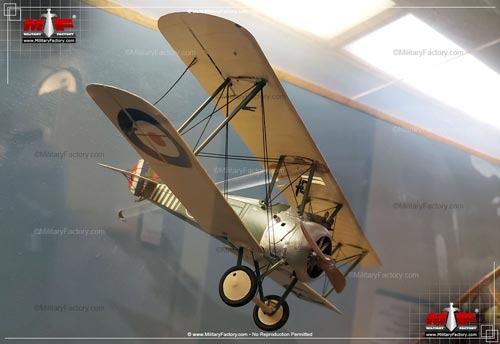
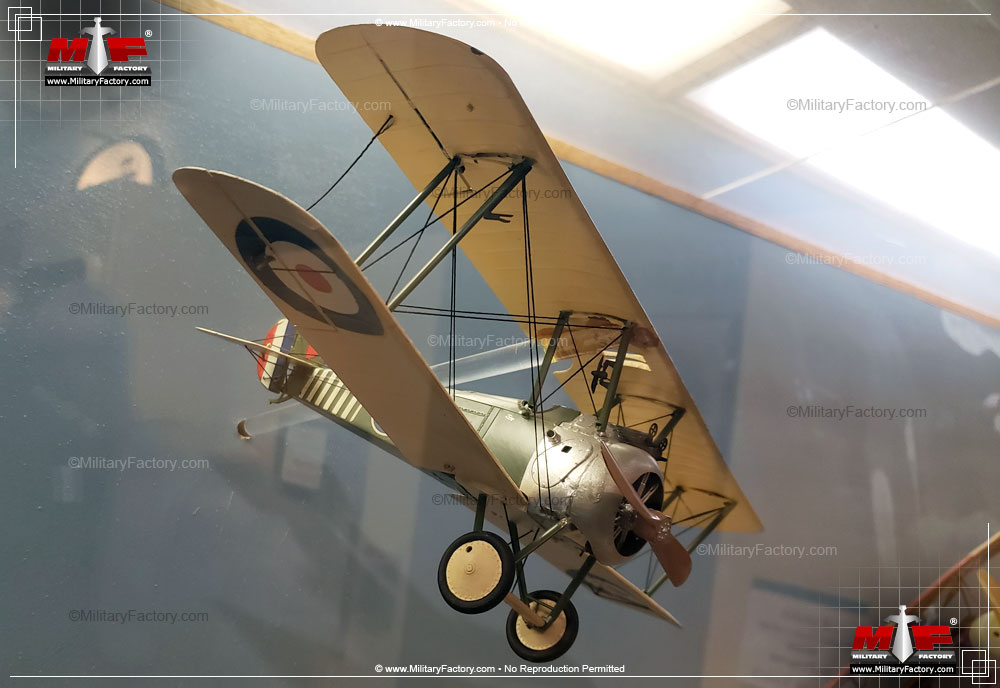
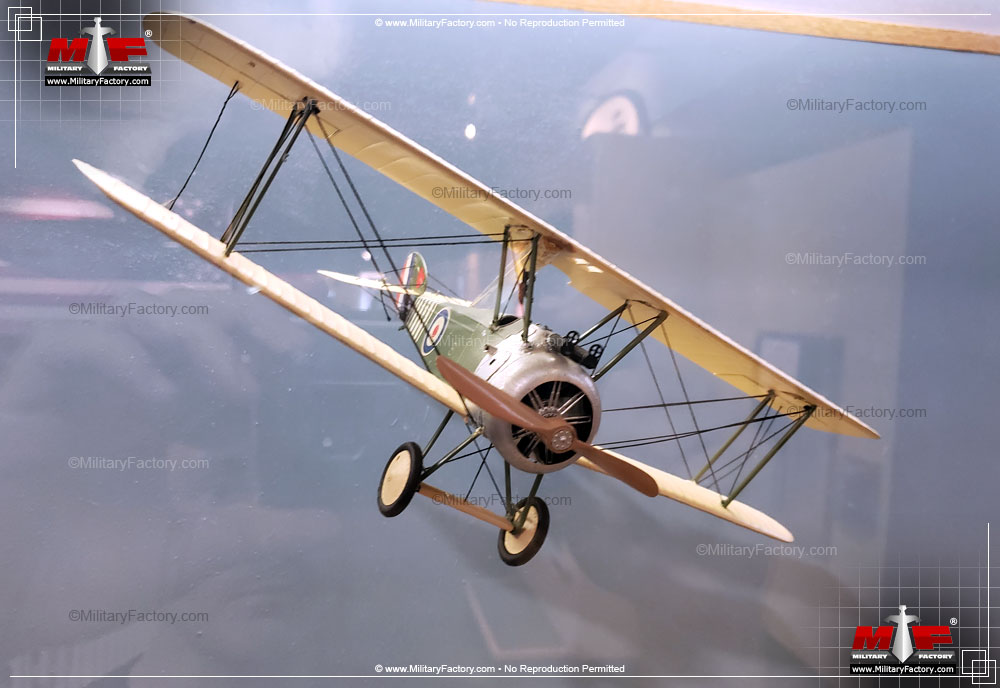
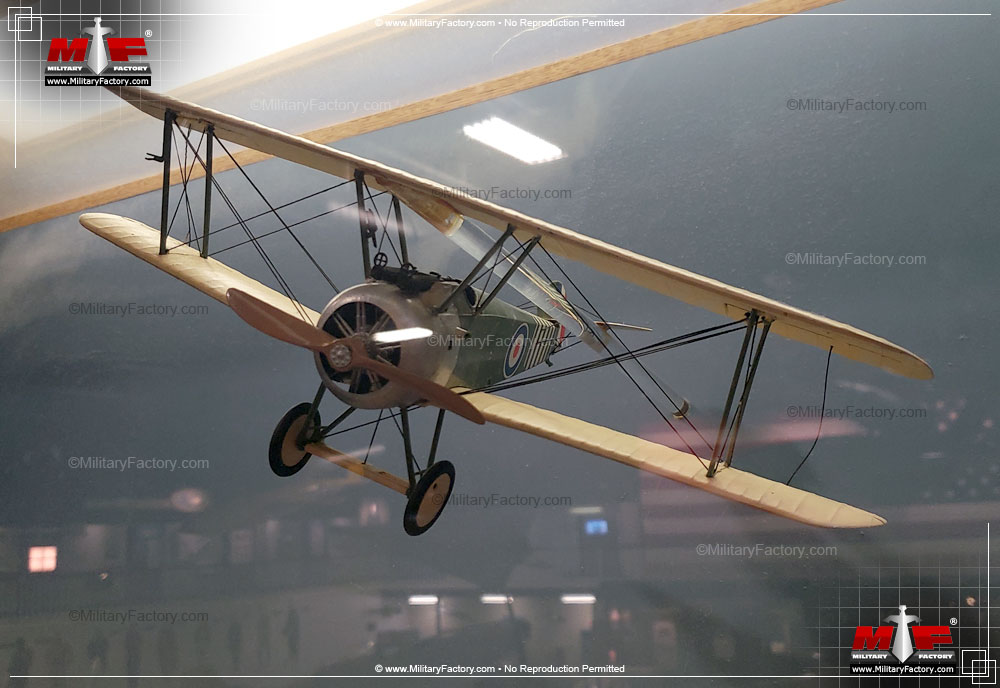
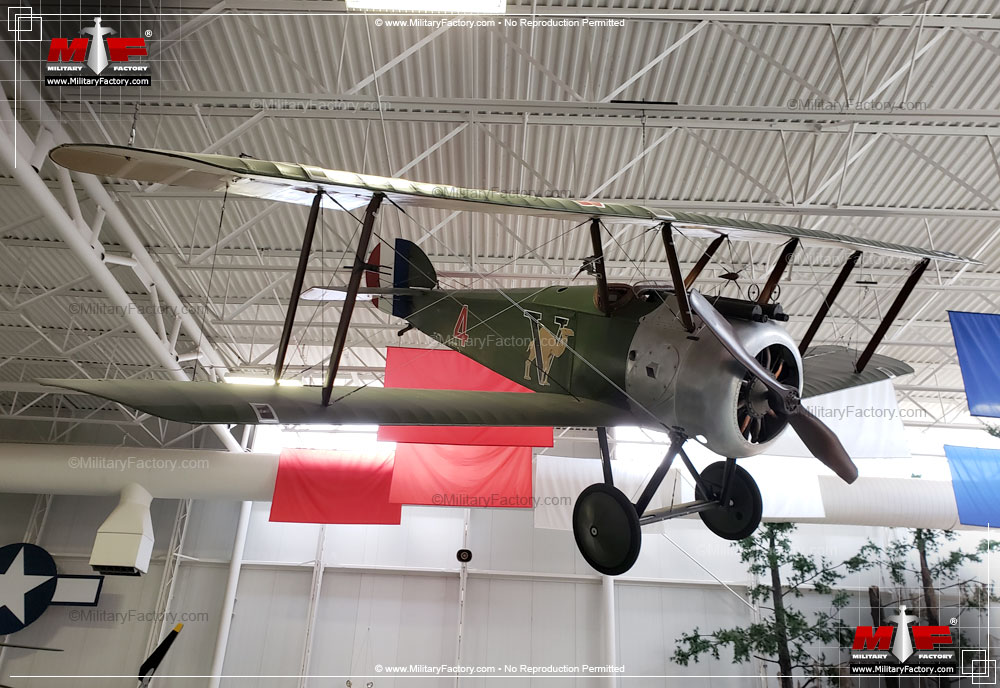
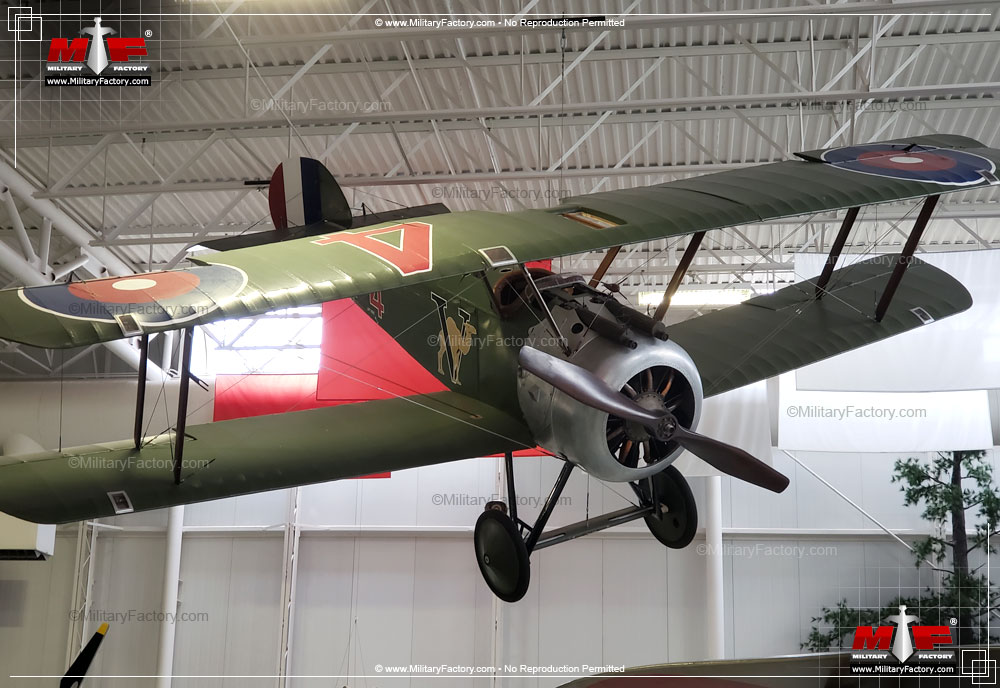
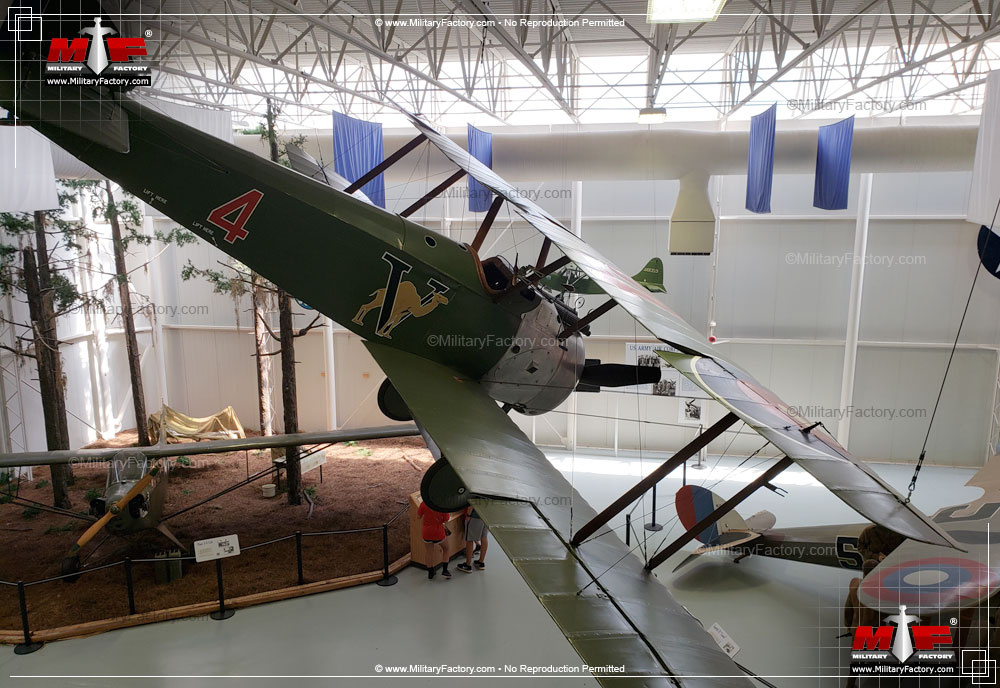
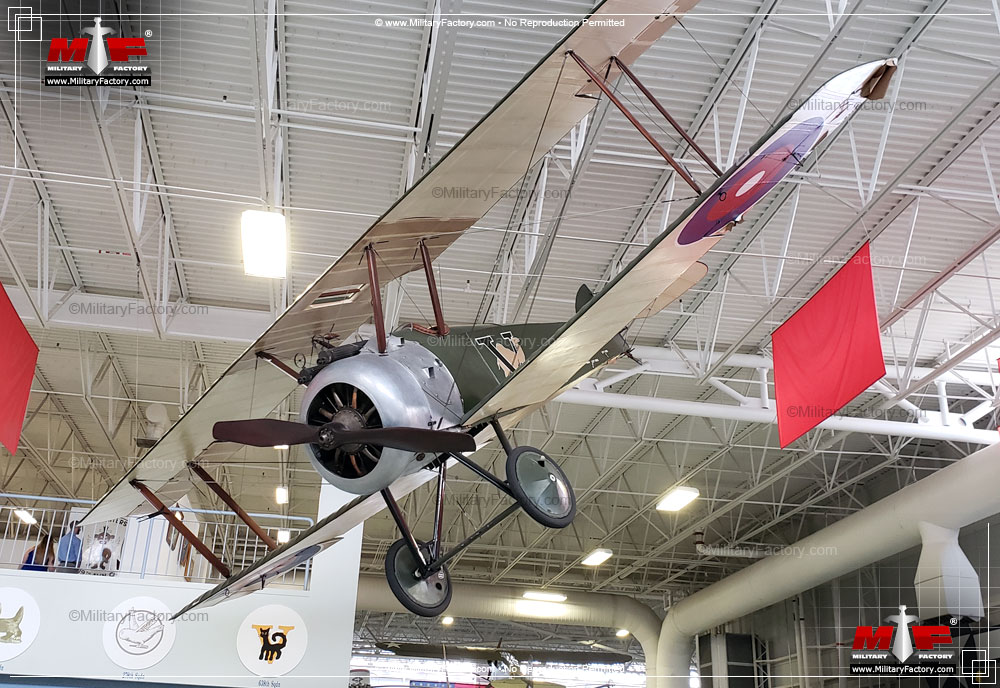
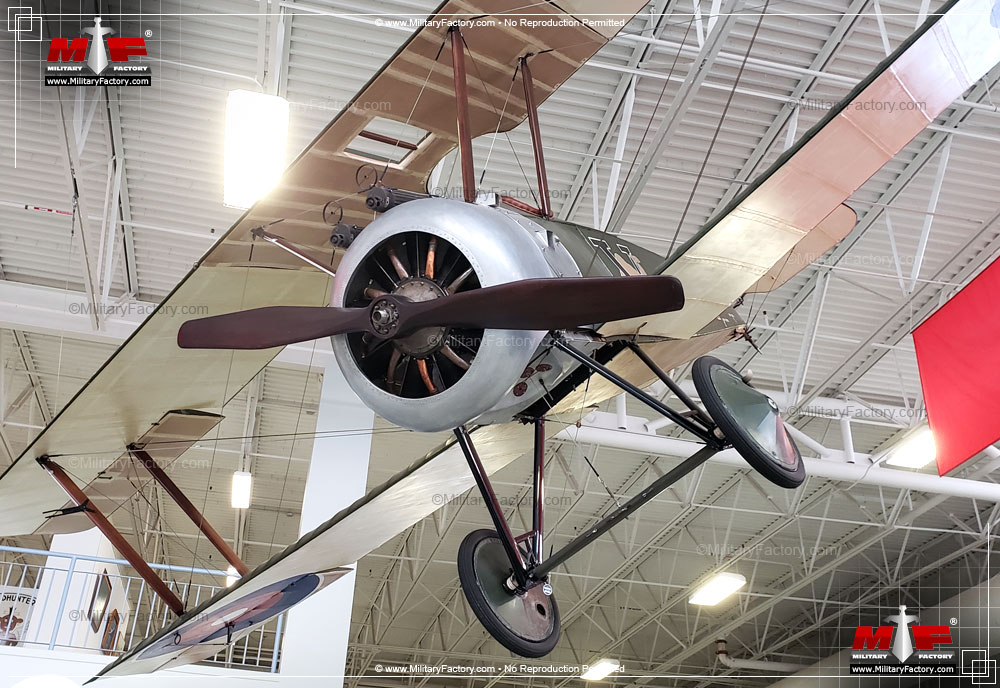
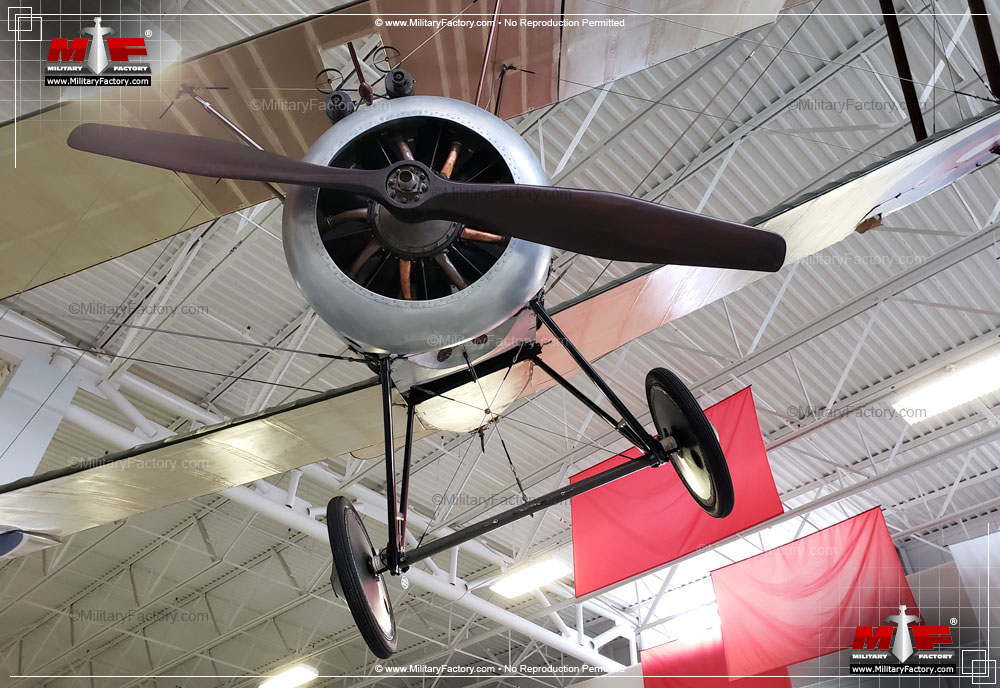
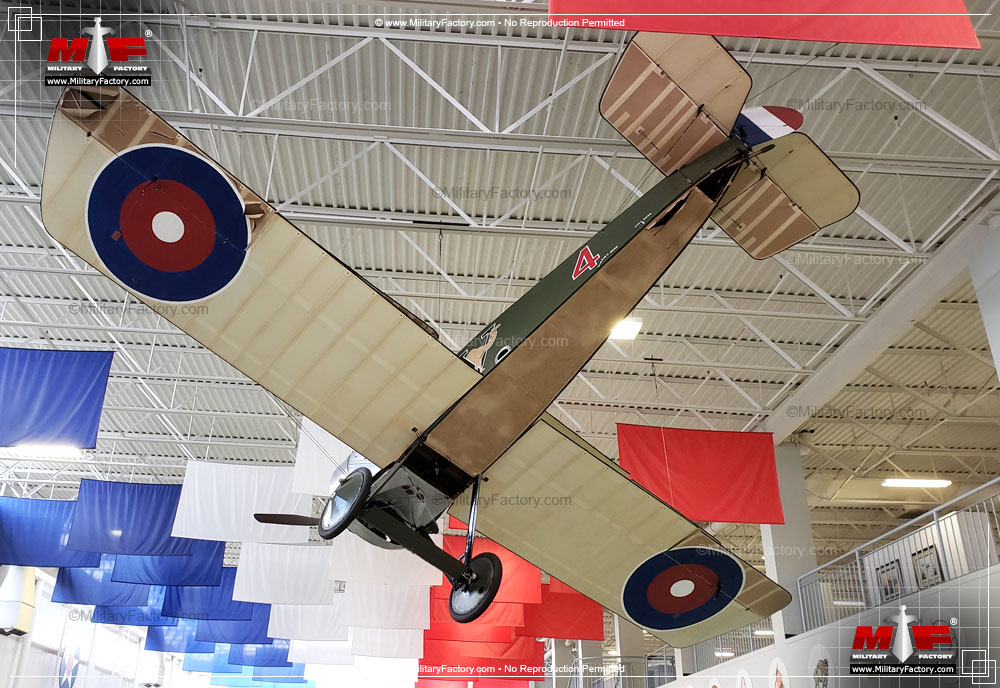
In configuration, the Camel featured equal-span, staggered bi-plane wings (the lower with some dihedral) featuring only a single pair of parallel support struts. Construction consisted of an underlying structure made up mostly of wood covered in fabric with some light alloy skinning over the forward fuselage near the engine. The pilot sat to the rear and underneath the upper wing element. In fact, all major systems were purposefully positioned in the front 7 feet of the fuselage, this including the main landing gears, engine, wings, armament and pilot. Armament consisted of 2 x 7.7mm Vickers-type machine guns firing through the propeller via an interrupter gear (i.e. synchronized). The designation of "Camel" came from the hump created by the fairing over the breeches of these gun installations. Power of the F.1 model was derived from a Clerget 9B 9-cylinder rotary engine of 130 horsepower providing speeds of 115 miles per hour, a ceiling of over 20,000 feet and a range of 485 kilometers.

In practice, the Camel proved a handful to fly, particularly with novice pilots, so much so that it earned a nasty reputation of killing off the less-than-capable aviators. The powerful gyroscopic effect of the Clerget engine coupled with the forward-positioned center of gravity seemingly forced Camel pilots to work for the aircraft's respect. Conversely, the same torque and forward placement of all major systems improved maneuverability beyond those as showcased by her contemporaries to the point that a Camel pilot could count on a responsive right-hand turn almost at will. The natural torque generated by her engine allowed the pilot to achieve quicker turns by using this force to his advantage in a close-knit dogfight. The aircraft was, however, noted for having a particularly brutal spin effect in response to any stalls no doubt due to this very same torque effect. As production progressed, a series of engines were found aboard Camels and included the Clerget types along with the Bentley BR1, the Gnome Monosoupape and the Le Rhone 9J series.

In the end, the Sopwith Camel was credited with the destruction of nearly 1,300 enemy aircraft (some sources go as high as 3,000) making it the most successful Allied aircraft of the war. Despite its successes as a dogfighter, the Camel - like most other 1917 aircraft fighter designs of the war - was slowly slipping out of conventional use as dedicated dogfighters against the new crop of planes. As a result, the Camel would see her last days as a ground strike platform to which it performed this role particularly well. Whereas the Germans fielded their equally effective Halberstadt CL.IV models in this role, the Camel was just as lethal on advancing enemy formations - noted in their involvement in the 1918 March German Offensive, effectively Germany's "last gasp". The Camel saw service in The Great War up through to the last days of the conflict and the signing of the Armistice. Several forms continued in some capacity in the post-war world.

Variants beyond the main F.1 production model included the 2F.1, a navalized Camel featuring folding wings of shorter span, a removable tail section for ease of storage, only a single 7.7mm Vickers synchronized machine gun but also a single 7.7mm Lewis machine gun in the upper wing. These were generally powered by a Bentley BR1 engine. A nightfighter appeared as the Sopwith Camel "Comic" with two Lewis machine guns in the upper wing and worked well in the home defense role against the German Gotha bombers. A more intriguing design alternative appeared in the proposed T.F.1 "Trench Fighter" - a dedicated ground assault model with obliquely downward facing 7.7mm machine guns firing through the cockpit floor (a more natural weapon arrangement for engaging ground targets, particularly those dug in to trenches). Some armor plating was envisioned for pilot and engine protection in this design, important attributes to consider at low altitudes where small arms fire inevitably comes into play.

Canadian Roy Brown was flying his Sopwith Camel on April 21, 1918 and was ultimately credited with the downing of the legendary Manfred von Richthofen - the "Red Baron" himself. Nearly 5,500 Camels were produced.
Text ©2003-2013 www.MilitaryFactory.com • All Rights Reserved • No Reproduction Permitted
MilitaryFactory.com does NOT sell equipment/weaponry. Material presented throughout this website is for historical and entertainment value and should not to be construed as usable for hardware restoration, maintenance or general operation. Please consult manufacturers for such information. Our disclaimer. Email corrections / Comments to MilitaryFactory at Gmail dot com.
Picture of Sopwith Camel
Pic of the Sopwith Camel
Image of the Sopwith Camel
View All Images (4)

Specifications for the
Sopwith Camel
Fighter


Country of Origin: United Kingdom
Manufacturer: Sopwith Aviation Company - UK
Initial Year of Service: 1917
Production: 5,490


Focus Model: Sopwith F.1 Camel
Crew: 1


Length: 18.90ft (5.76m)
Width: 27.89ft (8.50m)
Height: 8.69ft (2.65m)
Weight (Empty): 888lbs (403kg)
Weight (MTOW): 1,422lbs (645kg)


Powerplant: 1 x Bentley BR.1 engine generating 150hp.


Maximum Speed: 118mph (190kmh; 103kts)
Maximum Range: 301miles (485km)
Service Ceiling: 18,999ft (5,791m; 3.6miles)
Rate-of-Climb: 0 feet per minute (0m/min)


Hardpoints: 0
Armament Suite:
2 x 7.7mm synchronized Vickers machine guns


Variants:
Biplane F.1 - Formal Designation


Camel F.1 - Single-Seat Scout; main production model; fitted with various Clerget, Gnome, Bentley and Le Rhone type engines throughout its run.

Camel 2F.1 - Naval Variant; shorter wingspan; folding wings and removeable tail sections; 1 x 7.7mm synchronized Vickers gun and 1 x 7.7mm Lewis gun in upper wing; fitted with Bentley BR1 series engines.

Camel "Comic" - Nightfighter; 2 x 7.7mm Lewis machine guns in upper wing; pilot position moved aft.

F.1/1 - Tapered Wing Panels

F.1/3 - Pre-Production Model Designation

T.F.1 "Trench Fighter" - Proposed Ground Assault Model; obliquely downward facing 2 x 7.7mm Lewis machine guns in cockpit floor; armor plating.


Operators: Australia, Belgium, Canada, Estonia, Greece, Latvia, Netherlands, Poland, Sweden and the United Kingdom.

ALL AIRCRAFT CATEGORIES

BY DECADE:


1900 to 1909
1910 to 1919
1920 to 1929
1930 to 1939
1940 to 1949
1950 to 1959
1960 to 1969
1970 to 1979
1980 to 1989
1990 to 1999
2000 to 2009
2010 to 2019
2020 to 2029
VIEW ALL
Compare Aircraft


BY TYPE:


Anti-Submarine Warfare (ASW)
Attack Helicopters
Bomber Aircraft
Medium Bombers
Heavy Bombers
Close-Air Support (CAS)
Commercial Aircraft
Dive Bombers
Electronic Warfare Aircraft (EWA)
Experimental / X-Planes
Fighter Aircraft
Floatplane Aircraft
Flying Boat Aircraft
Aerial Refueling Tankers
Helicopters (ALL)
Interceptor Aircraft
Multi-Role Aircraft
Navy Carrier Aircraft
Night Fighters
Reconnaissance / Scout
Search & Rescue (SAR)
Scout Helicopters
Special Purpose
Torpedo Bombers
Trainer Aircraft
Transport Aircraft
Transport Helicopters
Unmanned Aerial Vehicles (UAVs)
Unmanned Combat Air Vehicles (UCAVs)


COLLECTIONS:


4th Generation Fighter Aircraft
5th Generation Fighter Aircraft
US X-Planes
Classic US Warbirds
French Military Helicopters
Grumman "Cats"
Howard Hughes Aircraft
Indian Air Force
Israeli Air Force
Libyan Aircraft
Modern Chinese Aircraft
Modern Chinese Fighters
Modern Military Aircraft
Modern North Korean Aircraft
Modern Trainer Aircraft
Modern US Aircraft
Mikoyan Aircraft
Sukhoi Aircraft
Syrian Aircraft
Top 10 Fighter Aircraft of All Time


AIRCRAFT BY CONFLICT:


Arab-Israeli War (1948)
Cuban Missile Crisis (1959-1962)
Falklands War (1982)
Indo-Pak War (1965, 1971)
Iran-Iraq War (1980-1988)
Lebanon War (1982)
Operation Allied Force (1999)
Operation Desert Storm (1991)
Six Day War (1967)
Spanish Civil War (1936)
Soviet-Afghan War (1979-1989)
Yom Kippur War (1973)


MISCELLANEOUS:


Aircraft Cockpits
Aircraft Manufacturers List
Aircraft Timeline

WORLD WAR 2:


1939 Aircraft
1940 Aircraft
1941 Aircraft
1942 Aircraft
1943 Aircraft
1944 Aircraft
1945 Aircraft
1946 Aircraft
Australian Aircraft
Battle of Britain Aircraft
Bombers
Four-Engine Bombers
British Aircraft
British Bombers
British Transports
Dive Bombers
Canadian Aircraft
Fighters
Chinese Aircraft
French Aircraft
German Aircraft
German Fighters
German Flying Boats
German Jets
Secret Weapons of the Luftwaffe
Italian Aircraft
Imperial Japanese Aircraft
Imperial Japanese Fighters
Mitsubishi Bombers
Navy Aircraft
Pearl Harbor
Polish Aircraft
Romanian Aircraft
US Aircraft
US Bombers
US Navy Aircraft
Soviet Aircraft
Torpedo Bombers
Trainer Aircraft
Transport Aircraft
Tuskegee Airmen Aircraft
W.A.S.P. Aircraft
WW2 Aircraft Ranked by Speed
VIEW ALL


WORLD WAR 1:


1914 Aircraft
1915 Aircraft
1916 Aircraft
1917 Aircraft
1918 Aircraft
Aircraft Timeline
Austro-Hungarian Aircraft
Bomber Aircraft
British Aircraft
Fighters
Flying Boats
French Aircraft
Imperial German Aircraft
Italian Aircraft
Scout Aircraft
Russian Empire Aircraft
US Aircraft
WW1 Aircraft Ranked by Speed
VIEW ALL


KOREAN WAR:


Australian Aircraft
Korean War Aces
Korean War Jets
North Korean Aircraft
US Military Aircraft
VIEW ALL


VIETNAM WAR:


Helicopters
North Vietnam Air Force
US Airpower
VIEW ALL


COLD WAR:


1950s French Aircraft
British V-Bombers
Cold War Bombers
Soviet Aircraft
Soviet Bombers
Soviet Interceptors
Soviet Helicopters
Strategic Air Command
US Aircraft
US Bombers
US Interceptors
VIEW ALL

Site Disclaimer | Privacy Policy | Site Map | MF Origins


©2013 www.MilitaryFactory.com • Content ©2003-2013 MilitaryFactory.com • All Rights Reserved • Site Contact Email: militaryfactory at gmail dot com. The "Military Factory" name and MilitaryFactory.com logo are registered ® trademarks and protected by all applicable domestic and international intellectual property laws.


Top MF Stuff: 2013 Military Pay Scale | Military Ranks | WW2 Weapons | Sniper Rifles | Kts to Mph | WW1 Aircraft | Automatic Rifles | Aircraft Cockpits | Vietnam War Weapons | Main Battle Tanks | Submachine Guns | Shotguns | French Military Victories


Most photographic images appearing on this site are courtesy of the United States Department of Defense and are approved for public use. Other images acquired through the public domain. Digital art work courtesy of Dan Alex. Business Consulting by Kyle Williams. Material presented throughout this website is for historical and entertainment value and should not to be construed as usable for hardware restoration, maintenance or general operation. Please consult manufacturers for such information.


eXTReMe Tracker