Military Factory
Military Pay Chart
Global Firepower
Military Industrial Complex
Second World War
Home
Military Pay Scale
Military Ranks
Small Arms
Aircraft
Land Systems
Navy
Education
Military Factory Facebook Logo
flag of China

Xian Y-20 (Kunpeng) Long-Range Strategic-Level Transport (2017)

Authored By Staff Writer | Last Updated: 2/7/2013

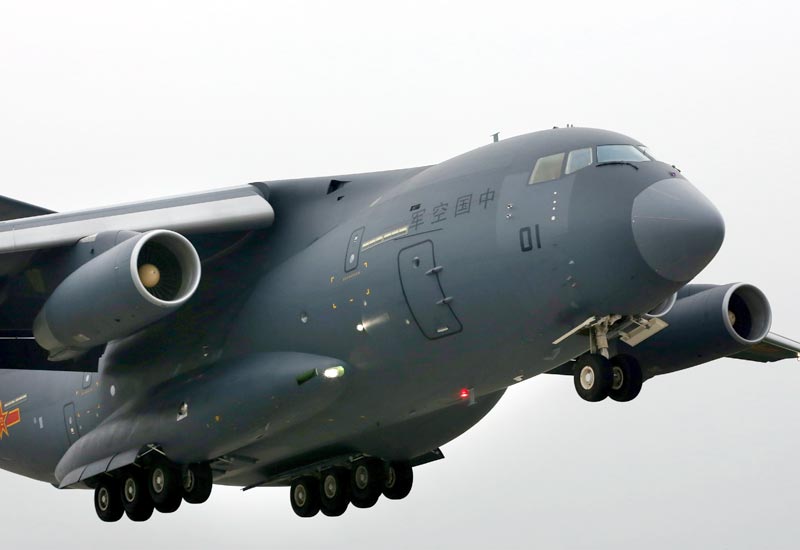
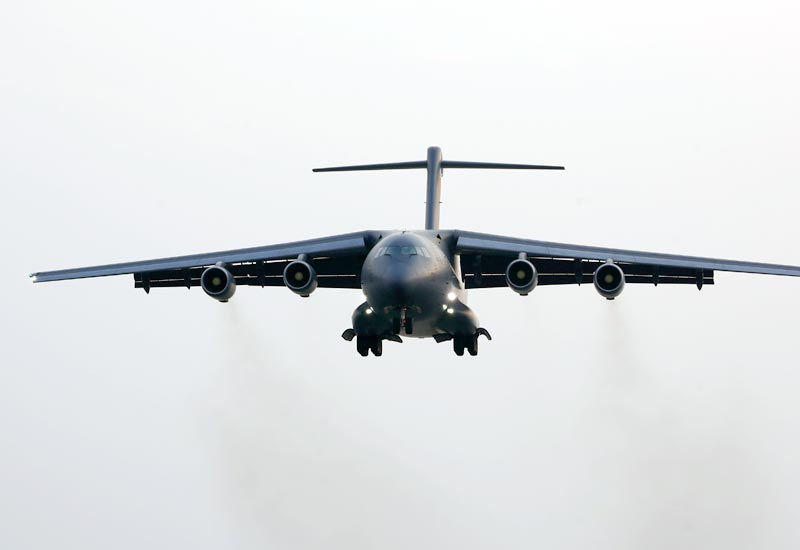
The Xian Y-20 is an indigenous Chinese effort to field a capable long-endurance, strategic-level, heavy-lift transport aircraft for the PLAAF.

Find a School Near You
Follow Military Factory on Facebook:
Trending on Military Factory:
Recent Articles:
After decades of relying - and then locally copying - Soviet Russian aircraft types, the Chinese undertook several indigenous programs to help evolve their burgeoning aviation industry. More recent developments have included the much-publicized Chengdu J-20 stealth aircraft and, in January of 2013, the still-in-development Xian Y-20 taking to the skies in China's bid to develop an in-house strategic airlifter. The program was born in a 2006 initiative while delays pushed back the initial unveiling until December of 2012 to which ground testing quickly ensued. First flight of the Y-20 platform was recorded on January 26th, 2013 with the program now covering two full prototypes headed by the Xi'an Aircraft Industrial Corporation (otherwise recognized simply as "Xian" for the purposes of this article). The Y-20 is not expected to become operational until after 2017 according to several sources. Its design is attributed to Xian's "603 First Aircraft Design Institute".

To date, the Chinese have relied on the Cold War-era Soviet Ilyushin IL-72 for their large-scale air transport requirement - and the Y-20 certainly showcases some similarities to the proven Russian offering while being dimensionally different physically but the same in battlefield role. When it reaches operational-level capabilities, the Y-20 will form a powerful arm of the PLAAF (People's Liberation Army Air Force) and take-on both military- and humanitarian-minded roles while perhaps projecting an appealing end-product to the foreign market requiring a budget-conscious alternative to more expensive Western and Russian offerings including the American C-17 Globemaster III, the Russian Ilyushin IL-76 (and newer Antonov An-70) and the French Airbus A400M Atlas - the Y-20 is thought to be comparable to all of these airframes in scope and function.

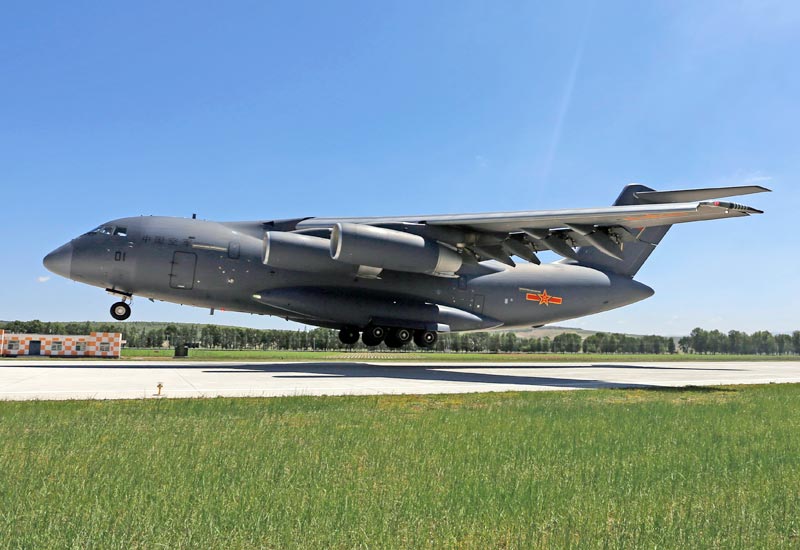
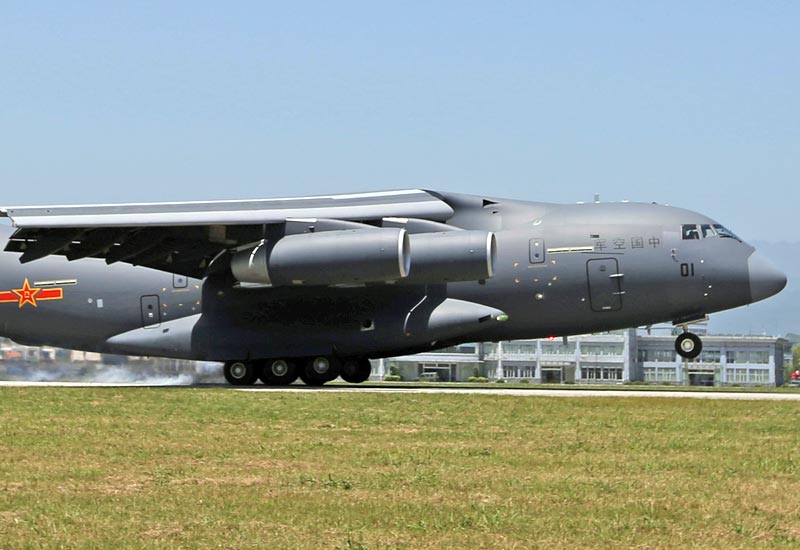
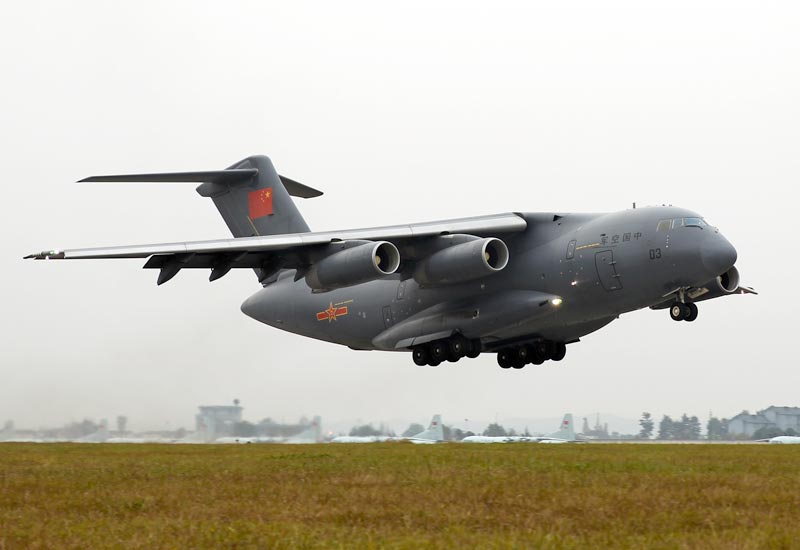
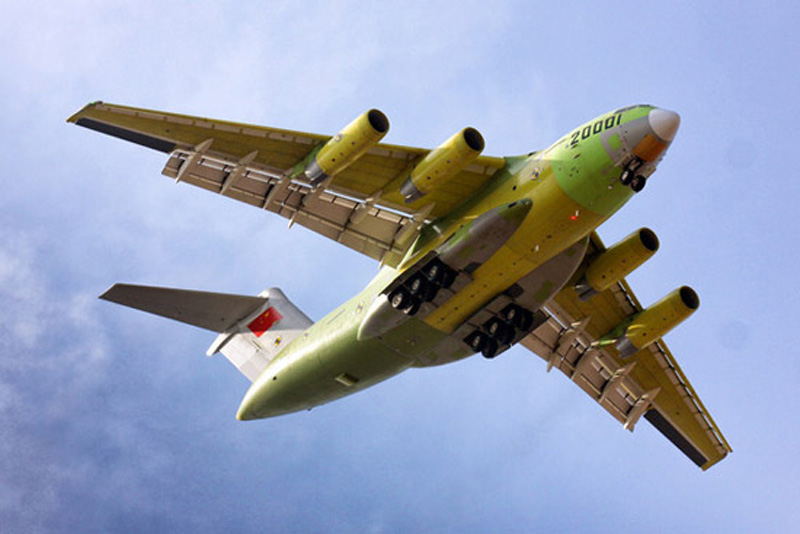
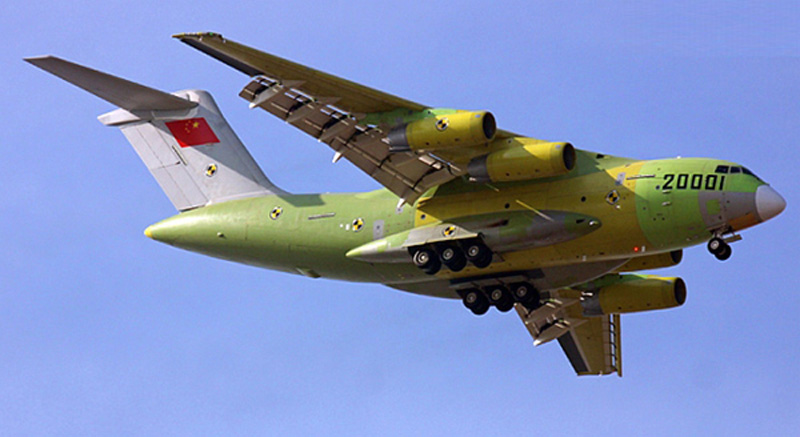
For its general outward configuration, Xian engineers elected for several notable tried-and-true design elements when constructing their Y-20 - design elements pioneered in the successful American Lockheed C-141 Starlifter of the 1960s. The Chinese design relies a deep and wide fuselage for its cargo hold with the flight deck at the extreme front and a "T-style" tail with high-mounted horizontal planes at the rear. This allows the tail section to be elevated from the ground and afford access to a rear powered cargo door when accepting or extracting various cargo types. The elevated tail section forces the main portion of the fuselage to remain rather low on the ground when the aircraft is at rest. As such a large collection of rubber tires are added to the reinforced main landing gear legs -a total of twelve wheels - to support the sheer mass of the airframe. The nose is supported by a standard two-wheeled leg unit. The undercarriage is said to comply with expected "rough-field" operations - a requirement of such aircraft in the modern world.

The Y-20 is given high-mounted monoplane wings with slight sweep along their leading edges and lesser sweep along their trailing edges. This allows engine nacelles to be fitted as underslung units, two to a wing, and provide the ground clearance needed for an aircraft expected to have much traffic around itself when landed. The engines are of local Chinese production though of Russian origin - the same as powering the aforementioned Cold War-era IL-76 (Saturn/Soloviev D-30KP) and the Xian H-6 strategic-bomber-turned-missile-carrier. Wings feature triple-slotted trailing edge flaps and full-span slats which, when coupled with the high-mounted wings and basic four-engined arrangement, allows for the required operational ranges as well as strong low-speed handling and performance characteristics.

The internal configuration of the Y-20 includes a cargo hold intended to transport medium-class disassembled helicopter type airframes, heavy vehicles (including light amphibious tanks) and cargo pallets into combat theaters. No doubt there will be support for seating in the transport of combat-ready infantry elements and airborne units. The Y-20 airframe exhibits an empty listed weight of 100,000 kilograms which can exceed 200,000 kilograms under full load. The operating crew requires just the pilot, a co-pilot and a loadmaster - contrasting the IL-76's flight deck which makes use of five total personnel. The smaller cockpit facility benefits the design by allowing for larger internal hold space for cargo and fuel stores.

When directly compared to the Russian IL-76, the Y-20 features a shorter wingspan, shorter overall fuselage length, wider fuselage diameter (for more critical internal volume) and a higher-rated maximum take-off weight (MTOW) while being able to haul roughly the same amount of goods and equipment. As it stands, the Y-20 is really only limited by Chinese engineering and this focuses primarily on the selected "medium-bypass" DP-30 series engines featured in the flying prototype.

While Chinese military aviation industry has progressed adequately since the days of whole reliance on the Soviet Union, the Chinese engine industry has lagged behind in producing viable, full-power "high-bypass" turbofan units. The technology for more powerful, in-house powerplants remains somewhat elusive for the nation - as it does for India's burgeoning defense scene - for engine development is a proven costly, technology-intensive process with many hurdles to ovwercome. Chinese aviation industry (as well as India's) are some decades behind the powers in the West and Russia which manage jet engine histories reaching as far back as World War 2. In that time, much knowledge has been garnered and refined, ultimately passed on to lesser defense industries in only basic forms. Should Chinese industry eventually develop a capable in-house "high-bypass" turbofan powerplant to power their new Y-20, the transport would certainly become a rather special strategic theater airlifter to be sure.

While still in development as of this writing (2013), the timely debut of the Y-20 appears during an unstable period for the Asia-Pacific region where China's growing military influence is becoming rather obvious. The nation is at odds with Japan on ownership of island chains which retain potentially lucrative natural resources. The unveiling of the Y-20 seems to coincide with the other recent indigenous Chinese developments intended to showcase China as a high-level military player. In the last few years, the country has unveiled various light- and medium-class fighter types, drones, armed battlefield helicopters, next-generation combat tanks and even a new operational aircraft carrier currently (2013) undergoing sea trials. The threat to the region is high enough to warrant constant attention by the American military which maintains a presence in regional waters in the region and on the Korean peninsula. All sides are left to wonder what the next step in a possible showdown will be.
Text ©2003-2013 www.MilitaryFactory.com • All Rights Reserved • No Reproduction Permitted
MilitaryFactory.com does NOT sell equipment/weaponry. Material presented throughout this website is for historical and entertainment value and should not to be construed as usable for hardware restoration, maintenance or general operation. Please consult manufacturers for such information. Our disclaimer. Email corrections / Comments to MilitaryFactory at Gmail dot com.
Picture of Xian Y-20 (Kunpeng)
Pic of the Xian Y-20 (Kunpeng)
View All Images (2)

Specifications for the
Xian Y-20 (Kunpeng)
Long-Range Strategic-Level Transport


Country of Origin: China
Manufacturer: Xian Aircraft Industries Corporation - China
Initial Year of Service: 2017
Production: 2


Focus Model: Xian Y-20 (Kunpeng)
Crew: 3


Length: 154.20ft (47m)
Width: 164.04ft (50.00m)
Height: 49.21ft (15.00m)
Weight (Empty): 220,462lbs (100,000kg)
Weight (MTOW): 485,017lbs (220,000kg)


Powerplant: 4 x Soloviev D-30Kp-2 turbofan engines (to be replaced by WS-20 turbofans in production).


Maximum Speed: 572mph (920kmh; 497kts)
Maximum Range: 2,796miles (4,500km)
Service Ceiling: 42,651ft (13,000m; 8.1miles)
Rate-of-Climb: 0 feet per minute (0m/min)


Hardpoints: 0
Armament Suite:
None.


Variants:
Y-20 - Series Designation


Yun-20 - Alternative Designation

20001 - Initial Prototype Model Designation

"Kunpeng" - Internal Project Codename


Operators: China

ALL AIRCRAFT CATEGORIES

BY DECADE:


1900 to 1909
1910 to 1919
1920 to 1929
1930 to 1939
1940 to 1949
1950 to 1959
1960 to 1969
1970 to 1979
1980 to 1989
1990 to 1999
2000 to 2009
2010 to 2019
2020 to 2029
VIEW ALL
Compare Aircraft


BY TYPE:


Anti-Submarine Warfare (ASW)
Attack Helicopters
Bomber Aircraft
Medium Bombers
Heavy Bombers
Close-Air Support (CAS)
Commercial Aircraft
Dive Bombers
Electronic Warfare Aircraft (EWA)
Experimental / X-Planes
Fighter Aircraft
Floatplane Aircraft
Flying Boat Aircraft
Aerial Refueling Tankers
Helicopters (ALL)
Interceptor Aircraft
Multi-Role Aircraft
Navy Carrier Aircraft
Night Fighters
Reconnaissance / Scout
Search & Rescue (SAR)
Scout Helicopters
Special Purpose
Torpedo Bombers
Trainer Aircraft
Transport Aircraft
Transport Helicopters
Unmanned Aerial Vehicles (UAVs)
Unmanned Combat Air Vehicles (UCAVs)


COLLECTIONS:


4th Generation Fighter Aircraft
5th Generation Fighter Aircraft
US X-Planes
Classic US Warbirds
French Military Helicopters
Grumman "Cats"
Howard Hughes Aircraft
Indian Air Force
Israeli Air Force
Libyan Aircraft
Modern Chinese Aircraft
Modern Chinese Fighters
Modern Military Aircraft
Modern North Korean Aircraft
Modern Trainer Aircraft
Modern US Aircraft
Mikoyan Aircraft
Sukhoi Aircraft
Syrian Aircraft
Top 10 Fighter Aircraft of All Time


AIRCRAFT BY CONFLICT:


Arab-Israeli War (1948)
Cuban Missile Crisis (1959-1962)
Falklands War (1982)
Indo-Pak War (1965, 1971)
Iran-Iraq War (1980-1988)
Lebanon War (1982)
Operation Allied Force (1999)
Operation Desert Storm (1991)
Six Day War (1967)
Spanish Civil War (1936)
Soviet-Afghan War (1979-1989)
Yom Kippur War (1973)


MISCELLANEOUS:


Aircraft Cockpits
Aircraft Manufacturers List
Aircraft Timeline

WORLD WAR 2:


1939 Aircraft
1940 Aircraft
1941 Aircraft
1942 Aircraft
1943 Aircraft
1944 Aircraft
1945 Aircraft
1946 Aircraft
Australian Aircraft
Battle of Britain Aircraft
Bombers
Four-Engine Bombers
British Aircraft
British Bombers
British Transports
Dive Bombers
Canadian Aircraft
Fighters
Chinese Aircraft
French Aircraft
German Aircraft
German Fighters
German Flying Boats
German Jets
Secret Weapons of the Luftwaffe
Italian Aircraft
Imperial Japanese Aircraft
Imperial Japanese Fighters
Mitsubishi Bombers
Navy Aircraft
Pearl Harbor
Polish Aircraft
Romanian Aircraft
US Aircraft
US Bombers
US Navy Aircraft
Soviet Aircraft
Torpedo Bombers
Trainer Aircraft
Transport Aircraft
Tuskegee Airmen Aircraft
W.A.S.P. Aircraft
WW2 Aircraft Ranked by Speed
VIEW ALL


WORLD WAR 1:


1914 Aircraft
1915 Aircraft
1916 Aircraft
1917 Aircraft
1918 Aircraft
Aircraft Timeline
Austro-Hungarian Aircraft
Bomber Aircraft
British Aircraft
Fighters
Flying Boats
French Aircraft
Imperial German Aircraft
Italian Aircraft
Scout Aircraft
Russian Empire Aircraft
US Aircraft
WW1 Aircraft Ranked by Speed
VIEW ALL


KOREAN WAR:


Australian Aircraft
Korean War Aces
Korean War Jets
North Korean Aircraft
US Military Aircraft
VIEW ALL


VIETNAM WAR:


Helicopters
North Vietnam Air Force
US Airpower
VIEW ALL


COLD WAR:


1950s French Aircraft
British V-Bombers
Cold War Bombers
Soviet Aircraft
Soviet Bombers
Soviet Interceptors
Soviet Helicopters
Strategic Air Command
US Aircraft
US Bombers
US Interceptors
VIEW ALL

Site Disclaimer | Privacy Policy | Site Map | MF Origins


©2013 www.MilitaryFactory.com • Content ©2003-2013 MilitaryFactory.com • All Rights Reserved • Site Contact Email: militaryfactory at gmail dot com. The "Military Factory" name and MilitaryFactory.com logo are registered ® trademarks and protected by all applicable domestic and international intellectual property laws.


Top MF Stuff: 2013 Military Pay Scale | Military Ranks | WW2 Weapons | Sniper Rifles | Kts to Mph | WW1 Aircraft | Automatic Rifles | Aircraft Cockpits | Vietnam War Weapons | Main Battle Tanks | Submachine Guns | Shotguns | French Military Victories


Most photographic images appearing on this site are courtesy of the United States Department of Defense and are approved for public use. Other images acquired through the public domain. Digital art work courtesy of Dan Alex. Business Consulting by Kyle Williams. Material presented throughout this website is for historical and entertainment value and should not to be construed as usable for hardware restoration, maintenance or general operation. Please consult manufacturers for such information.


eXTReMe Tracker