Military Factory
Military Pay Chart
Global Firepower
Military Industrial Complex
Second World War
Home
Military Pay Scale
Military Ranks
Small Arms
Aircraft
Land Systems
Navy
Education
Military Factory Facebook Logo
flag of Nazi Germany

Dornier Do 335 Pfeil (Arrow) Fighter-Bomber / Heavy Fighter Aircraft (1945)

Authored By Staff Writer | Last Updated: 7/16/2010

The Dornier Do 335 would have made for one outstanding Luftwaffe fighter and interceptor had it been ready in time.

Find a School Near You
Follow Military Factory on Facebook:
Trending on Military Factory:
Recent Articles:
Little MF Logo
Little MF Logo
Little MF Logo
Little MF Logo
Little MF Logo
Little MF Logo
Little MF Logo
Little MF Logo
Little MF Logo
Little MF Logo
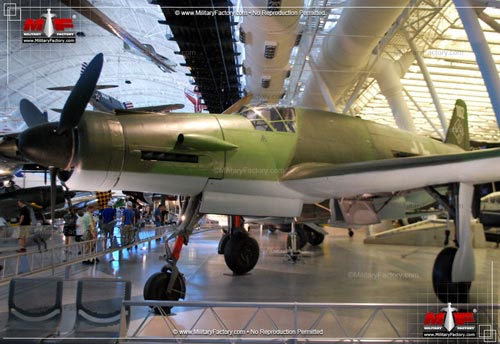
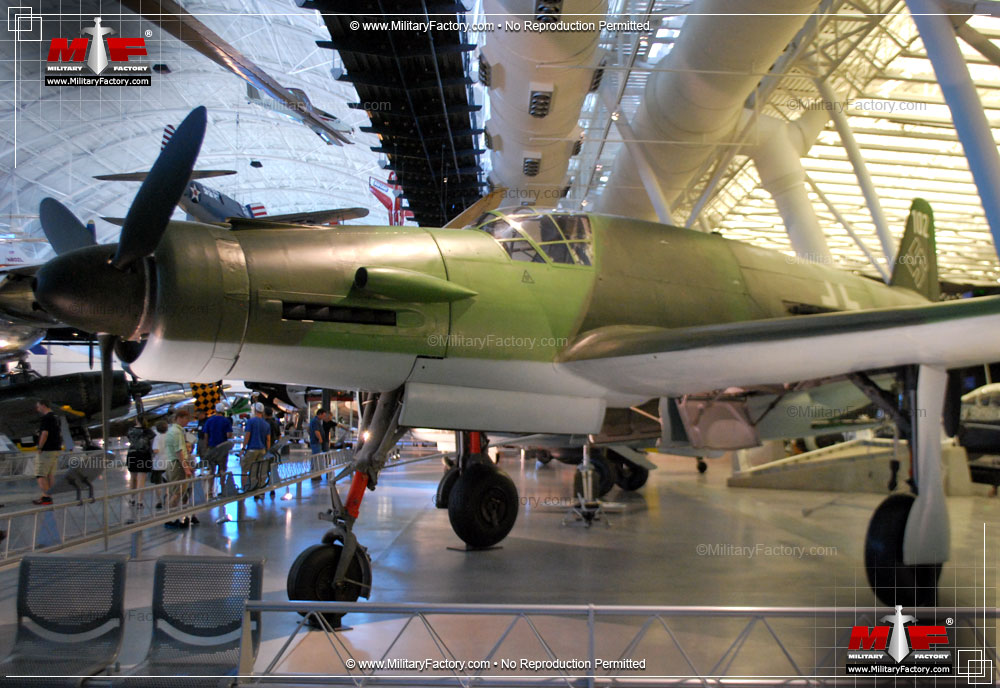
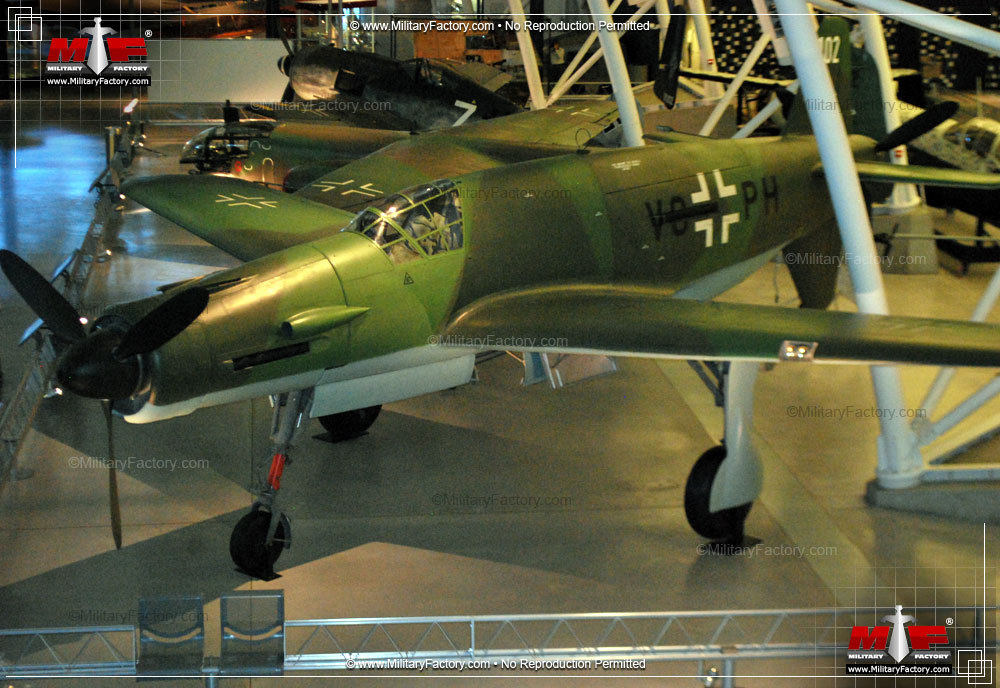
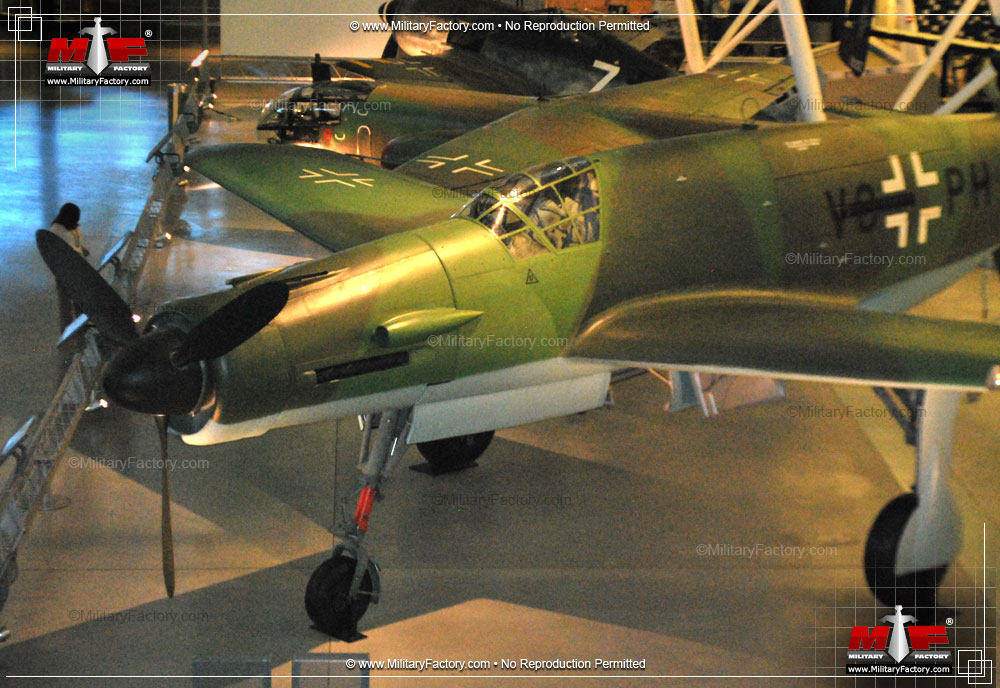
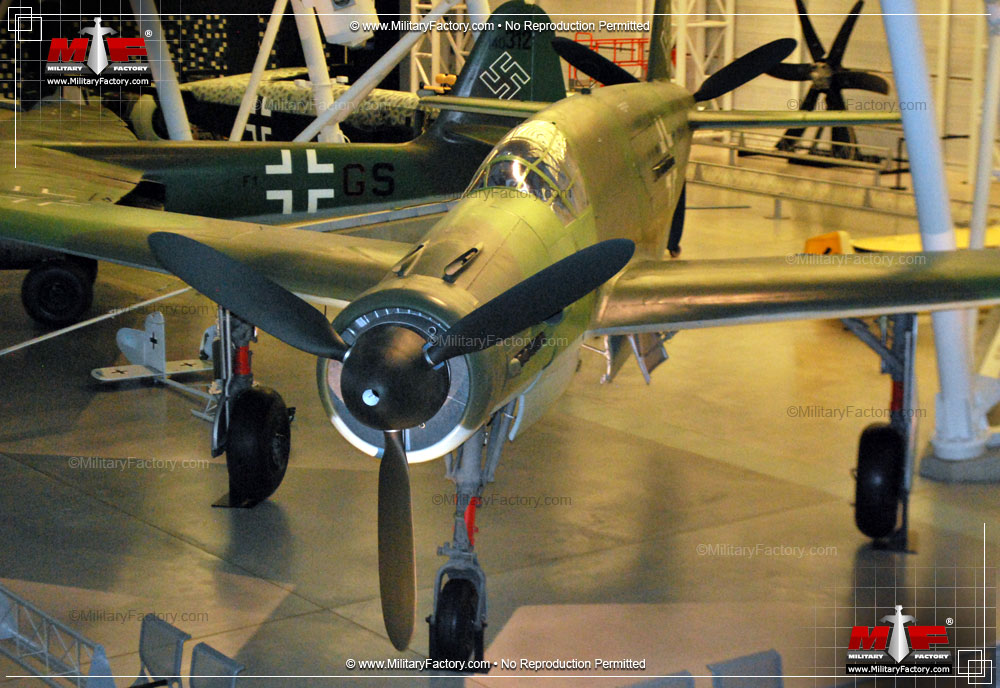
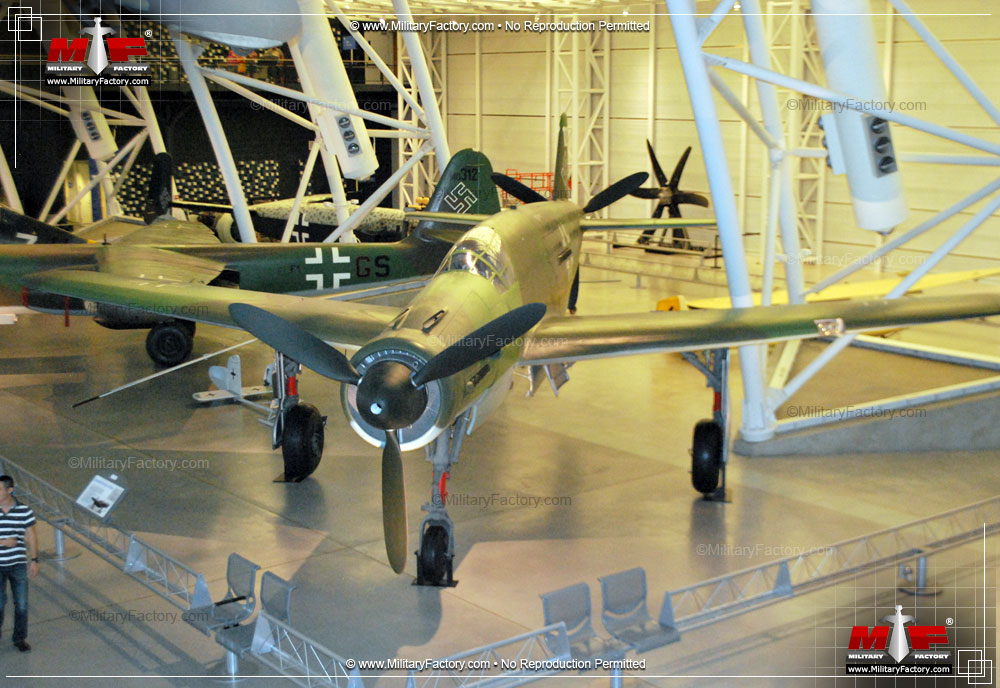
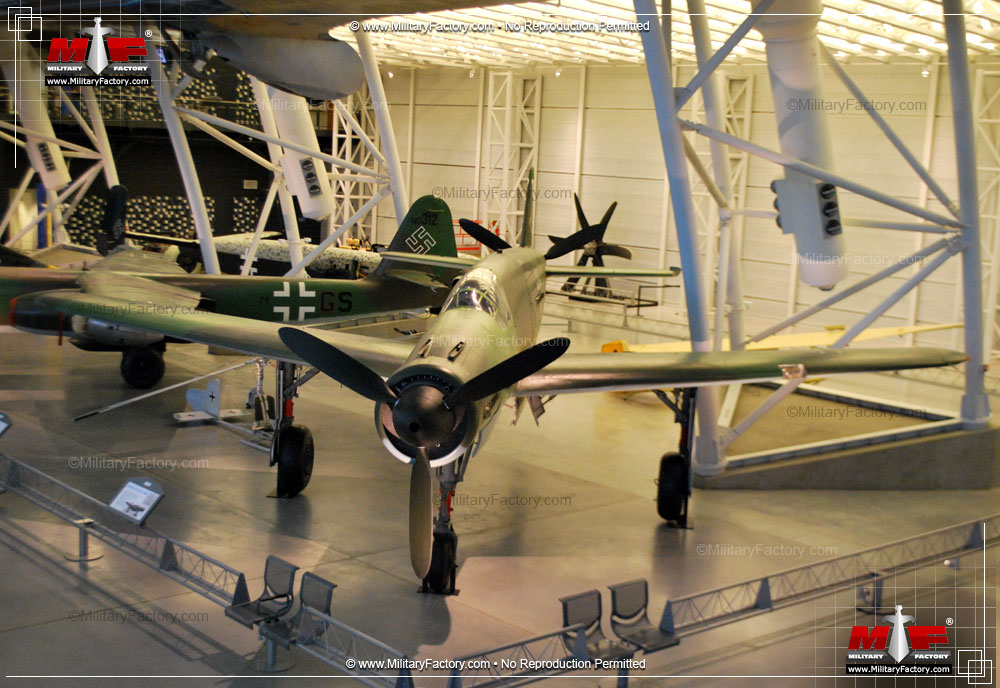
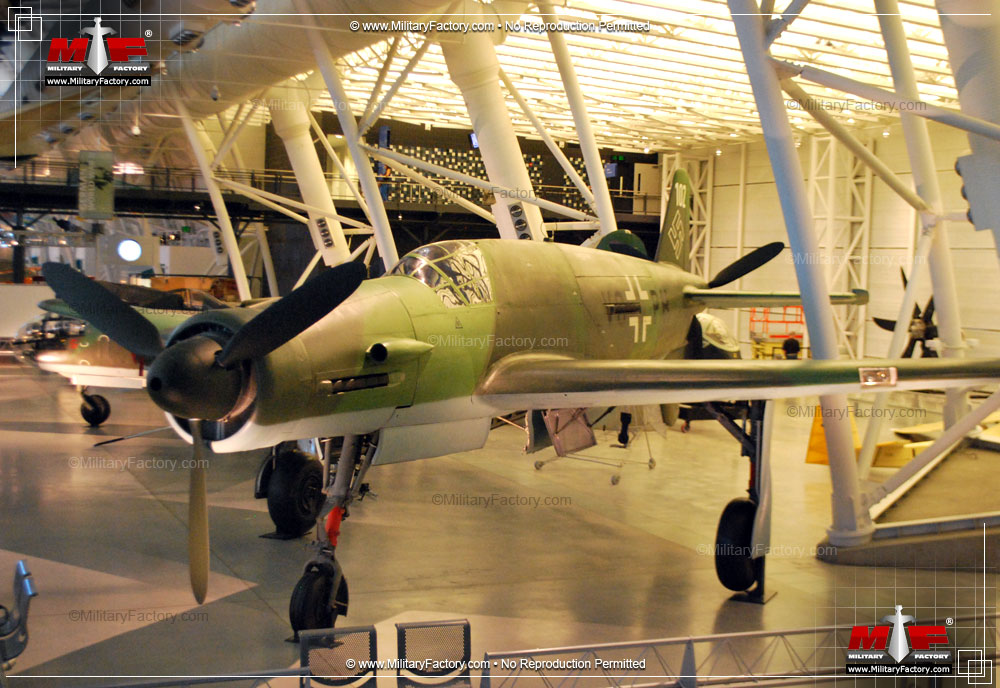
The Dornier Do 335 Pfeil (or "Arrow") was one of the more unique prop-driven designs of the Second World War. Designed and patented by Doctor Claudius Dornier as early as 1937, the Do 335 utilized a concept in which one engine was mounted forward and another aft on a smooth rounded fuselage with a low-monoplane wing. The front engine would be of a puller-type while the other would be a pusher-type working in conjunction. This design attempt was intended to do away with thrust design flaws encountered by single engine fighters of the same class. The result was the Do 335 "Arrow", an aircraft that was powered by two separate engines in a single slim fuselage.

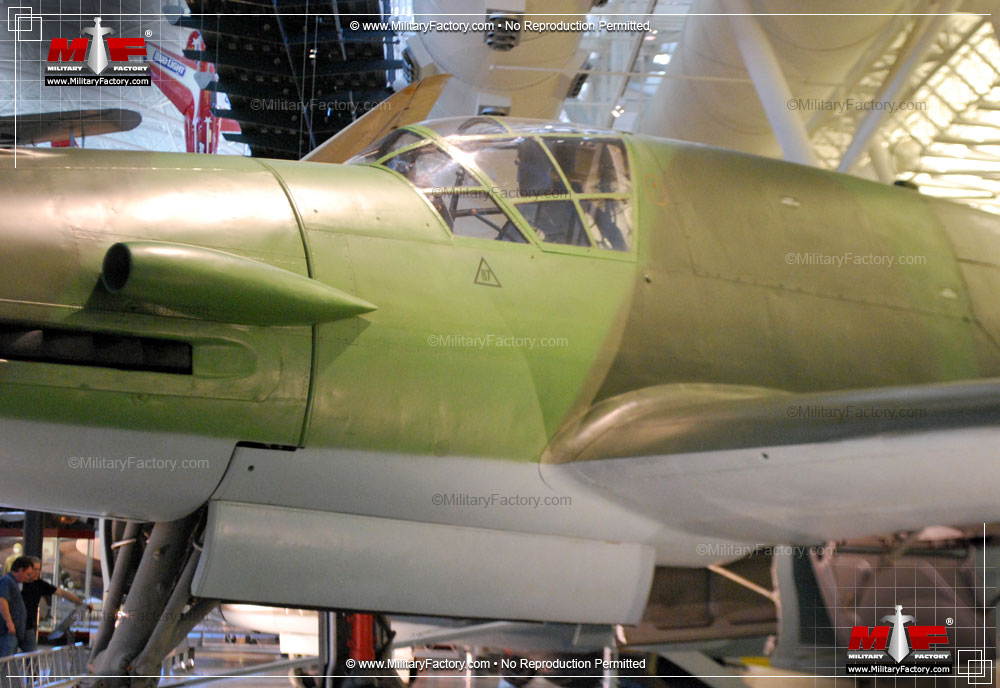
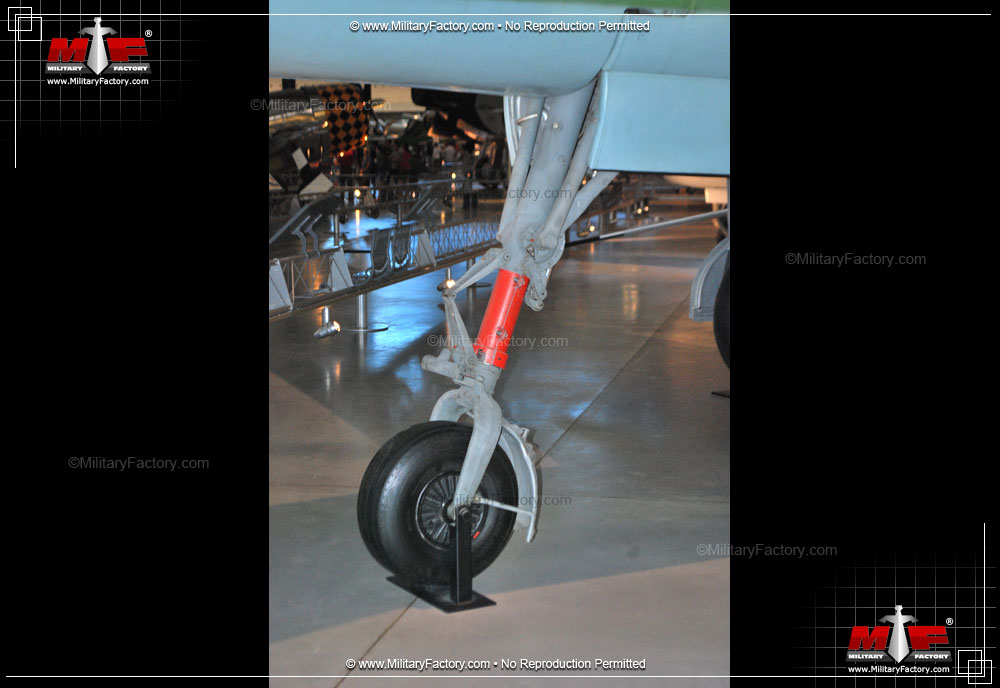
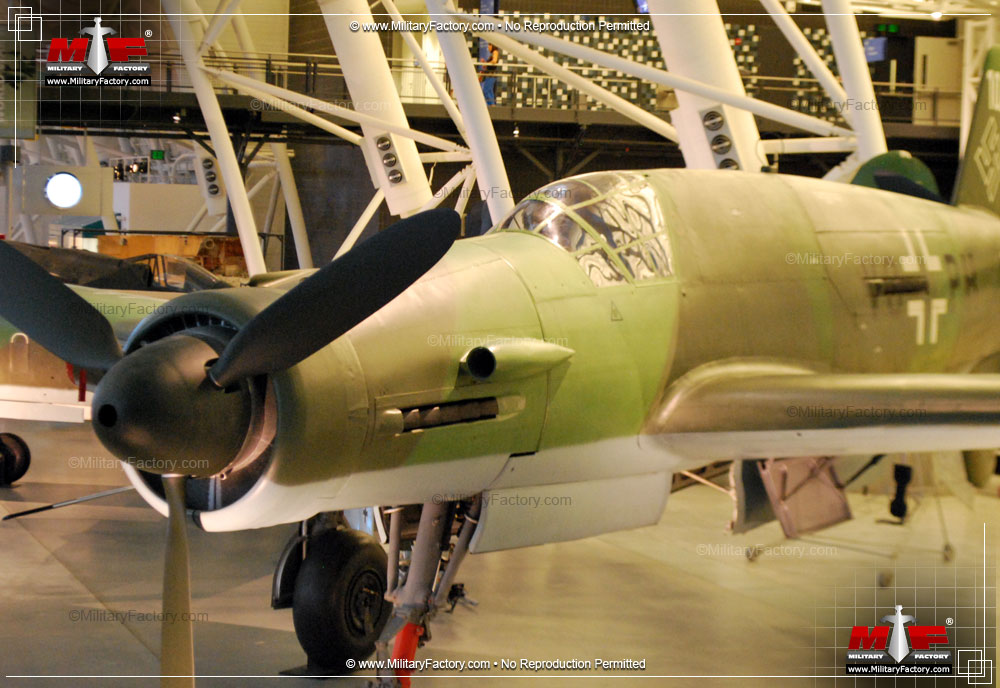
The twin engine design accommodated the pilot in a glazed canopy offering good visibility forward, to the sides and above. A retractable tricycle landing gear was reinforced to accommodate the weight of the airframe and dual engine layout. The landing gear arrangement also made the aircraft to sit rather high when on the ground in an effort to accommodate the clearance of the propeller systems - most notably the rear-mounted one - when the aircraft was taking off. Engines consisted of two Daimler-Benz DB 603 series liquid-cooled 12-cylinder inverted in-line engines. The empennage was dominated by the cruciform tail design which was mounted aft in the fuselage but forward of the rear engine propeller. Armament was 1 x 30mm MG 103 and 2 x 15mm MG 151 cannons and an optional external load of cannon pods, bombs or drop tanks as needed. The Do 335 recorded speeds upwards of 470 miles per hour with both engines and a respectable 350 miles per hour on a single engine. Its rate-of-climb was about 1,750 feet per minute.

Initially appearing as a research aircraft Goppingen Go 9 in 1939, the system was later put through trials and accepted as a Do P.231 type high-speed bomber. Though development was nearing its final stages, the entire project came to null at that point until later resurrected as a high-speed interceptor when need arose for such a platform. The first Do 335 was first prototyped in no fewer than 14 models in September of 1943 with 10 preproduction models appearing in 1944. The D0 335A-1 became the first of 11 production models and were completed but were never fielded due to the fall of Germany in World War 2 - more specifically, the arrival of US Army elements at the Oberpfaffenhofen factory in April of 1945. The United States Air Force received two Do 335's at the end of the war for testing and further research.

In the event of a required ejection, the tail fin and rear propeller would have had been jettisoned via controlled explosives within the rear fuselage. This would have allowed the pilot to then clear the aircraft from the cockpit at speed without having to worry about any of the aft protrusions endangering his exit.

There were many additional variants planned for the Do 335 airframe that included a twin-seat Do 335A-2 trainer but only two of these designs were ever completed. Additional models proposed were a two-seat night-fighter (Do 435), a long-range reconnaissance model (Do 635) and a fighter model with turbojet propulsion in place of the piston engines (Do 535).

The Do 335 would have a proven quite the adversary had it flown in numbers. The dual-engine layout offered up a top speed to best even that of the famed North American P-51 Mustangs by a considerable margin. Couple that with the firepower of large-caliber cannons and the Do 335 had very little to stand in its way besides the jet age itself. For the one Allied claim of encountering an airborne Do 335, the French-piloted Hawker Tempest aircraft was not even able to achieve an effective engagement range to fire on the fleeing Do 335.
Text ©2003-2013 www.MilitaryFactory.com • All Rights Reserved • No Reproduction Permitted
MilitaryFactory.com does NOT sell equipment/weaponry. Material presented throughout this website is for historical and entertainment value and should not to be construed as usable for hardware restoration, maintenance or general operation. Please consult manufacturers for such information. Our disclaimer. Email corrections / Comments to MilitaryFactory at Gmail dot com.
Picture of Dornier Do 335 Pfeil (Arrow)
Pic of the Dornier Do 335 Pfeil (Arrow)
Image of the Dornier Do 335 Pfeil (Arrow)
View All Images (10)

Specifications for the
Dornier Do 335 Pfeil (Arrow)
Fighter-Bomber / Heavy Fighter Aircraft


Country of Origin: Nazi Germany
Manufacturer: Dornier Flugzeugwerke - Germany
Initial Year of Service: 1945
Production: 13


Focus Model: Dornier Do 335 A-0 Pfeil (Arrow)
Crew: 1


Length: 45.44ft (13.85m)
Width: 45.28ft (13.80m)
Height: 14.93ft (4.55m)
Weight (Empty): 16,314lbs (7,400kg)
Weight (MTOW): 21,164lbs (9,600kg)


Powerplant: 2 x Daimler-Benz DB 603E/MW50 liquid-cooled 12-cylinder inverted in-line engines generating 1,750hp each.


Maximum Speed: 477mph (768kmh; 415kts)
Maximum Range: 868miles (1,397km)
Service Ceiling: 37,402ft (11,400m; 7.1miles)
Rate-of-Climb: 1,750 feet per minute (533m/min)


Hardpoints: 2
Armament Suite:
STANDARD:
1 x 30mm MG 103 cannon
2 x 15mm MG 151 cannons

OPTIONAL:
Total of 2,200lbs in externally-held ordnance.


Variants:
Goppingen Go 9 - Research Model


Do P.59 - High-Speed Bomber Model

Do P.231 - Updated High-Speed Bomber Model

Do 335A-0 - Preproduction fighter / bombers of which ten were produced.

Do 335A-1 - First production model of which eleven were completed.

Do 335A-12 - Two-seat trainer; Only two examples completed of this type.

Do 435 - Proposed two-seat nightfighter; neverproduced.

Do 535 - Proposed version powered by turbojet engines; never produced.

Do 635 - Proposed long-range reconnaissance model; never produced.


Operators:
Nazi Germany

ALL AIRCRAFT CATEGORIES

BY DECADE:


1900 to 1909
1910 to 1919
1920 to 1929
1930 to 1939
1940 to 1949
1950 to 1959
1960 to 1969
1970 to 1979
1980 to 1989
1990 to 1999
2000 to 2009
2010 to 2019
2020 to 2029
VIEW ALL


BY TYPE:


Anti-Submarine Warfare (ASW)
Attack Helicopters
Bomber Aircraft
Medium Bombers
Heavy Bombers
Close-Air Support (CAS)
Commercial Aircraft
Dive Bombers
Electronic Warfare Aircraft (EWA)
Experimental / X-Planes
Fighter Aircraft
Floatplane Aircraft
Flying Boat Aircraft
Aerial Refueling Tankers
Helicopters (ALL)
Interceptor Aircraft
Multi-Role Aircraft
Navy Carrier Aircraft
Night Fighters
Reconnaissance / Scout
Search & Rescue (SAR)
Scout Helicopters
Special Purpose
Torpedo Bombers
Trainer Aircraft
Transport Aircraft
Transport Helicopters
Unmanned Aerial Vehicles (UAVs)
Unmanned Combat Air Vehicles (UCAVs)


COLLECTIONS:


4th Generation Fighter Aircraft
5th Generation Fighter Aircraft
US X-Planes
Classic US Warbirds
French Military Helicopters
Grumman "Cats"
Howard Hughes Aircraft
Indian Air Force
Israeli Air Force
Libyan Aircraft
Modern Chinese Aircraft
Modern Chinese Fighters
Modern Military Aircraft
Modern North Korean Aircraft
Modern Trainer Aircraft
Modern US Aircraft
Mikoyan Aircraft
Sukhoi Aircraft
Syrian Aircraft
Top 10 Fighter Aircraft of All Time


AIRCRAFT BY CONFLICT:


Arab-Israeli War (1948)
Cuban Missile Crisis (1959-1962)
Falklands War (1982)
Indo-Pak War (1965, 1971)
Iran-Iraq War (1980-1988)
Lebanon War (1982)
Operation Allied Force (1999)
Operation Desert Storm (1991)
Six Day War (1967)
Spanish Civil War (1936)
Soviet-Afghan War (1979-1989)
Yom Kippur War (1973)


MISCELLANEOUS:


Aircraft Cockpit Pictures
Aircraft Comparison Tool
Aircraft Manufacturers
Aircraft Production Totals
Aircraft Timeline

WORLD WAR 2:


1939 Aircraft
1940 Aircraft
1941 Aircraft
1942 Aircraft
1943 Aircraft
1944 Aircraft
1945 Aircraft
1946 Aircraft
Australian Aircraft
Battle of Britain Aircraft
Bombers
Four-Engine Bombers
British Aircraft
British Bombers
British Transports
Dive Bombers
Canadian Aircraft
Fighters
Chinese Aircraft
French Aircraft
German Aircraft
German Fighters
German Flying Boats
German Jets
Secret Weapons of the Luftwaffe
Italian Aircraft
Imperial Japanese Aircraft
Imperial Japanese Fighters
Mitsubishi Bombers
Navy Aircraft
Pearl Harbor
Polish Aircraft
Romanian Aircraft
US Aircraft
US Bombers
US Navy Aircraft
Soviet Aircraft
Torpedo Bombers
Trainer Aircraft
Transport Aircraft
Tuskegee Airmen Aircraft
W.A.S.P. Aircraft
WW2 Aircraft Ranked by Speed
VIEW ALL


WORLD WAR 1:


1914 Aircraft
1915 Aircraft
1916 Aircraft
1917 Aircraft
1918 Aircraft
Aircraft Timeline
Austro-Hungarian Aircraft
Bomber Aircraft
British Aircraft
Fighters
Flying Boats
French Aircraft
Imperial German Aircraft
Italian Aircraft
Scout Aircraft
Russian Empire Aircraft
US Aircraft
WW1 Aircraft Ranked by Speed
VIEW ALL


KOREAN WAR:


Australian Aircraft
Korean War Aces
Korean War Jets
North Korean Aircraft
US Military Aircraft
VIEW ALL


VIETNAM WAR:


Helicopters (ALL)
Transport Helicopters
North Vietnam Air Force
US Airpower
VIEW ALL


COLD WAR:


1950s French Aircraft
British V-Bombers
Cold War Bombers
Soviet Aircraft
Soviet Bombers
Soviet Interceptors
Soviet Helicopters
Strategic Air Command
US Aircraft
US Bombers
US Interceptors
VIEW ALL

Site Disclaimer | Privacy Policy | Site Map | MF Origins


©2013 www.MilitaryFactory.com • Content ©2003-2013 MilitaryFactory.com • All Rights Reserved • Site Contact Email: militaryfactory at gmail dot com. The "Military Factory" name and MilitaryFactory.com logo are registered ® trademarks and protected by all applicable domestic and international intellectual property laws.


Top MF Stuff: 2013 Military Pay Scale | Military Ranks | WW2 Weapons | Sniper Rifles | Kts to Mph | WW1 Aircraft | Automatic Rifles | Aircraft Cockpits | Vietnam War Weapons | Main Battle Tanks | Submachine Guns | Shotguns | French Military Victories


Most photographic images appearing on this site are courtesy of the United States Department of Defense and are approved for public use. Other images acquired through the public domain. Digital art work courtesy of Dan Alex. Business Consulting by Kyle Williams. Material presented throughout this website is for historical and entertainment value and should not to be construed as usable for hardware restoration, maintenance or general operation. Please consult manufacturers for such information.


eXTReMe Tracker