Military Factory
Military Pay Chart
Global Firepower
Military Industrial Complex
Second World War
Home
Military Pay Scale
Military Ranks
Small Arms
Aircraft
Land Systems
Navy
Education
Military Factory Facebook Logo
flag of Imperial Germany

Rumpler C.VIII Advanced Biplane Trainer (1917)

Authored By Staff Writer | Last Updated: 5/13/2013

The Rumpler C.VIII advanced trainer survived the through to the end of World War 1 and continued limited service into the 1920s.

Find a School Near You
Follow Military Factory on Facebook:
Trending on Military Factory:
Recent Articles:
Little MF Logo
Little MF Logo
Little MF Logo
Little MF Logo
Little MF Logo
Little MF Logo
Little MF Logo
Little MF Logo
Little MF Logo
Little MF Logo
The aircraft, as a viable standalone weapon of war, emerged in World War 1 (1914-1918) along with the "tank". Rivaling the need to promote strong production at factories was the need for capable airmen in which to master the fine new art of military aviation. With that, several concerns were eventually pressed to develop dedicated trainer aircraft in an effort to bring about whole new generations of pilots, ultimately attempting to prove the investment in military aircraft worthwhile to the air powers of the time. In 1917, Rumpler Flugzeugwerke delivered an "advanced" trainer intended to meet the ongoing need of the German Air Service for more skilled pilots coming out of basic training and this product became the Rumpler C.VIII.

Rumpler was founded by Edmund Rumpler in 1909 (as the Rumpler Luftfahrtzeugbau concern) out of Berlin, Germany. While early production was centered around an outside firm's creation, the company soon evolved to design, development and subsequent production of in-house designs to streamline profitability - particularly with the arrival of World War 1 and its grand air war. With this, the firm was responsible for a plethora of aircraft mounts emerging in the fighting including dedicated fighters and several experimental systems.

Classified as an advanced trainer, the C.VIII was just that, an advanced classroom in the skies intended for pilots having completed their initial basic training in simpler mounts. Advanced trainers were certainly more expensive to procure on the whole though, in turn, they offered more defined study environments which produced more skilled pilots in the end. Training was broadened through designs that incorporated much of what final production airframes incorporated, resulting in a more refined student experience. Despite their costs, advanced trainers proved their worth by generating a solid stock of capable airmen.

The Rumpler C.VIII recorded its first flight in 1917 and, having passed all requisite trials (of course expedited to an extent in wartime), was adopted into the German Air Service late that same year. In particular, there proved a need to prepare masses of German airmen for the grand offensive that was to rewrite the lines of the Western Front come the spring of 1918 - attempting to head off the arrival of the Americans and their material might. The C.VIII was in place for such an endeavor and served various trainer groups in the buildup. The attacks began in March of 1918 and lasted until July, making the largest gains since those seen back in 1914. In the end, the Germans gained the tactical victory but failed in their strategic goals as their supply lines were stretched and their primary goals never truly defined. The offensive peaked in April and the German were now subject to the Allied counteroffensive of August which drove the Germans rearwards and provided the death knell leading up to the Armistice of November.

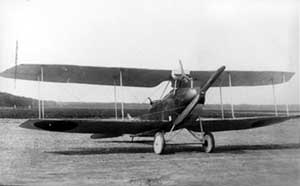
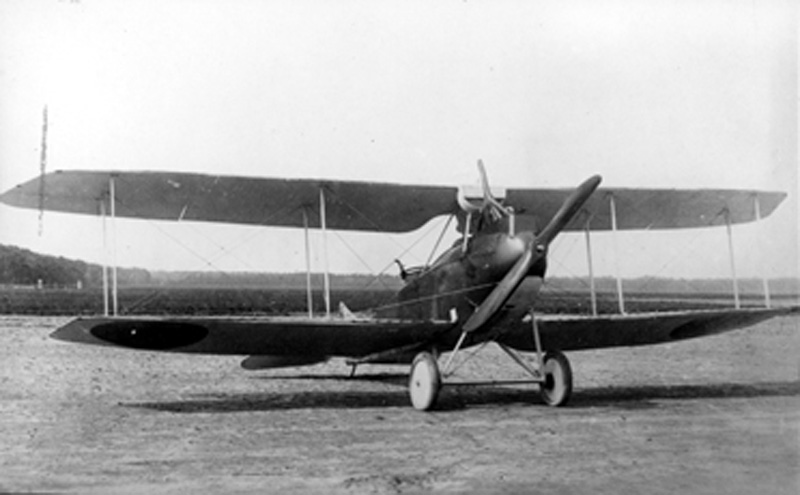
Externally, the Rumpler design proved highly conventional for the period, sporting slightly uneven spanning, single-bay biplane wing assemblies, tandem seating for student and instructor and a traditional single rudder tail unit. The aircraft sported a fixed undercarriage with two main single-wheeled landing gear legs and a tailskid. Power was through a single Argus As III series engine fitted to a forward compartment and powering a two-bladed wooden propeller with an output of 180 horsepower. Performance specifications included a maximum speed of 86 miles per hour with a service ceiling of 13,100 feet and endurance time of approximately four hours.

Rumpler C.VIII trainers were in use throughout the end of World War 1. Only the Netherlands and Finland operated the type in the years following, the former having received 40 examples through trade with the Germans and the latter procuring a sole example for reconnaissance duty, this example flying until 1924. Joining several other well-known aircraft manufacturers of World War 1 such as Sopwith, Rumpler went out of business in 1920, officially bringing an end to the Rumpler line.
Text ©2003-2013 www.MilitaryFactory.com • All Rights Reserved • No Reproduction Permitted
MilitaryFactory.com does NOT sell equipment/weaponry. Material presented throughout this website is for historical and entertainment value and should not to be construed as usable for hardware restoration, maintenance or general operation. Please consult manufacturers for such information. Our disclaimer. Email corrections / Comments to MilitaryFactory at Gmail dot com.
Picture of Rumpler C.VIII
View All Images (1)

Specifications for the
Rumpler C.VIII
Advanced Biplane Trainer


Country of Origin: Imperial Germany
Manufacturer: Rumpler Flugzeugwerke - Imperial Germany
Initial Year of Service: 1917
Production: 125


Focus Model: Rumpler C.VIII
Crew: 1


Length: 26.25ft (8m)
Width: 40.03ft (12.20m)
Height: 10.50ft (3.20m)
Weight (Empty): 3,384lbs (1,535kg)
Weight (MTOW): 6,665lbs (3,023kg)


Powerplant: 1 x Argus As III engine developing 180 horsepower.


Maximum Speed: 87mph (140kmh; 76kts)
Maximum Range: 336miles (540km)
Service Ceiling: 13,123ft (4,000m; 2.5miles)
Rate-of-Climb: 771 feet per minute (235m/min)


Hardpoints: 2
Armament Suite:
OPTIONAL (for advanced training):
1 x 7.92mm fixed, forward-firing machine gun
Up to 110lbs of external stores.


Variants:
C.VIII - Base Series Designation


Operators:
Imperial Germany; Finland; Netherlands

ALL AIRCRAFT CATEGORIES

BY DECADE:


1900 to 1909
1910 to 1919
1920 to 1929
1930 to 1939
1940 to 1949
1950 to 1959
1960 to 1969
1970 to 1979
1980 to 1989
1990 to 1999
2000 to 2009
2010 to 2019
2020 to 2029
VIEW ALL


BY TYPE:


Anti-Submarine Warfare (ASW)
Attack Helicopters
Bomber Aircraft
Medium Bombers
Heavy Bombers
Close-Air Support (CAS)
Commercial Aircraft
Dive Bombers
Electronic Warfare Aircraft (EWA)
Experimental / X-Planes
Fighter Aircraft
Floatplane Aircraft
Flying Boat Aircraft
Aerial Refueling Tankers
Helicopters (ALL)
Interceptor Aircraft
Multi-Role Aircraft
Navy Carrier Aircraft
Night Fighters
Reconnaissance / Scout
Search & Rescue (SAR)
Scout Helicopters
Special Purpose
Torpedo Bombers
Trainer Aircraft
Transport Aircraft
Transport Helicopters
Unmanned Aerial Vehicles (UAVs)
Unmanned Combat Air Vehicles (UCAVs)


COLLECTIONS:


4th Generation Fighter Aircraft
5th Generation Fighter Aircraft
US X-Planes
Classic US Warbirds
French Military Helicopters
Grumman "Cats"
Howard Hughes Aircraft
Indian Air Force
Israeli Air Force
Libyan Aircraft
Modern Chinese Aircraft
Modern Chinese Fighters
Modern Military Aircraft
Modern North Korean Aircraft
Modern Trainer Aircraft
Modern US Aircraft
Mikoyan Aircraft
Sukhoi Aircraft
Syrian Aircraft
Top 10 Fighter Aircraft of All Time


AIRCRAFT BY CONFLICT:


Arab-Israeli War (1948)
Cuban Missile Crisis (1959-1962)
Falklands War (1982)
Indo-Pak War (1965, 1971)
Iran-Iraq War (1980-1988)
Lebanon War (1982)
Operation Allied Force (1999)
Operation Desert Storm (1991)
Six Day War (1967)
Spanish Civil War (1936)
Soviet-Afghan War (1979-1989)
Yom Kippur War (1973)


MISCELLANEOUS:


Aircraft Cockpit Pictures
Aircraft Comparison Tool
Aircraft Manufacturers
Aircraft Production Totals
Aircraft Timeline

WORLD WAR 2:


1939 Aircraft
1940 Aircraft
1941 Aircraft
1942 Aircraft
1943 Aircraft
1944 Aircraft
1945 Aircraft
1946 Aircraft
Australian Aircraft
Battle of Britain Aircraft
Bombers
Four-Engine Bombers
British Aircraft
British Bombers
British Transports
Dive Bombers
Canadian Aircraft
Fighters
Chinese Aircraft
French Aircraft
German Aircraft
German Fighters
German Flying Boats
German Jets
Secret Weapons of the Luftwaffe
Italian Aircraft
Imperial Japanese Aircraft
Imperial Japanese Fighters
Mitsubishi Bombers
Navy Aircraft
Pearl Harbor
Polish Aircraft
Romanian Aircraft
US Aircraft
US Bombers
US Navy Aircraft
Soviet Aircraft
Torpedo Bombers
Trainer Aircraft
Transport Aircraft
Tuskegee Airmen Aircraft
W.A.S.P. Aircraft
WW2 Aircraft Ranked by Speed
VIEW ALL


WORLD WAR 1:


1914 Aircraft
1915 Aircraft
1916 Aircraft
1917 Aircraft
1918 Aircraft
Aircraft Timeline
Austro-Hungarian Aircraft
Bomber Aircraft
British Aircraft
Fighters
Flying Boats
French Aircraft
Imperial German Aircraft
Italian Aircraft
Scout Aircraft
Russian Empire Aircraft
US Aircraft
WW1 Aircraft Ranked by Speed
VIEW ALL


KOREAN WAR:


Australian Aircraft
Korean War Aces
Korean War Jets
North Korean Aircraft
US Military Aircraft
VIEW ALL


VIETNAM WAR:


Helicopters (ALL)
Transport Helicopters
North Vietnam Air Force
US Airpower
VIEW ALL


COLD WAR:


1950s French Aircraft
British V-Bombers
Cold War Bombers
Soviet Aircraft
Soviet Bombers
Soviet Interceptors
Soviet Helicopters
Strategic Air Command
US Aircraft
US Bombers
US Interceptors
VIEW ALL

Site Disclaimer | Privacy Policy | Site Map | MF Origins


©2013 www.MilitaryFactory.com • Content ©2003-2013 MilitaryFactory.com • All Rights Reserved • Site Contact Email: militaryfactory at gmail dot com. The "Military Factory" name and MilitaryFactory.com logo are registered ® trademarks and protected by all applicable domestic and international intellectual property laws.


Top MF Stuff: 2013 Military Pay Scale | Military Ranks | WW2 Weapons | Sniper Rifles | Kts to Mph | WW1 Aircraft | Automatic Rifles | Aircraft Cockpits | Vietnam War Weapons | Main Battle Tanks | Submachine Guns | Shotguns | French Military Victories


Most photographic images appearing on this site are courtesy of the United States Department of Defense and are approved for public use. Other images acquired through the public domain. Digital art work courtesy of Dan Alex. Business Consulting by Kyle Williams. Material presented throughout this website is for historical and entertainment value and should not to be construed as usable for hardware restoration, maintenance or general operation. Please consult manufacturers for such information.


eXTReMe Tracker