There are 61 airplanes from 1960 to 1969 in the Military Factory.
1
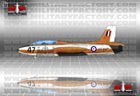
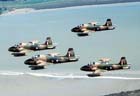
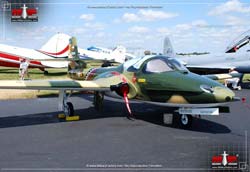
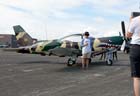
Aermacchi MB.326 The Aermacchi MB.326 series of aircraft has become one of the most successful blends of operational trainer and light attack capabilities. Developed during the Cold War in 1957, the Aermacchi-produced two-seat trainer was alr...
Aero L-29 Delfin (Dolphin) / Maya The Czech designed and produced Aero L-29 Delfin (translating to “Dolphin”; NATO designation of “Maya”) series was a highly utilized Cold War jet trainer aircraft for the Soviet Union and its satellite states. The twin-seat a...
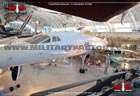
Aerospatiale / British Aerospace Concorde One of the great aviation stories to come out of a post-Cold War world, the British and French-made Concorde stands as the only supersonic transport ever designed and flown on a regular basis. The system offered upper-crust p...
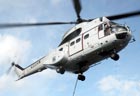
Aerospatiale / Eurocopter SA 330 Puma The SA 330 Puma series of helicopter became a highly used general utility transport through the years 1969 and 1970 with French and English forces. A joint venture put forth by Aerospatiale in France and Westland in the Unite...
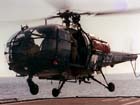
Aerospatiale SA 316 Alouette III The Alouette III-series of light utility helicopters was designed by the French firm of Aerospatiale. In its most basic of forms, the Alouette III can take on most light battlefield and maritime duties, while modifications ca...
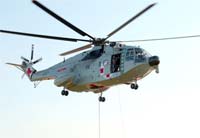
Aerospatiale SA 321 Super Frelon (Super Hornet) The SA 321 Super Frelon is a French-produced multirole helicopter falling under the Aerospatiale brand. The mammoth design became the largest production helicopter designed and built in Europe in any number when it went into ...
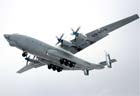
Antonov An-22 Antei (Cock) The Antonov An-22 Antei (or "Cock") was another in the long line of Antonov transports designed and produced throughout the Cold War, with each design seemingly becoming progressively larger in scope. The An-22 was no excepti...
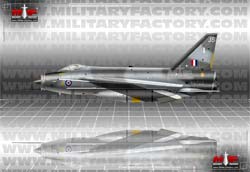
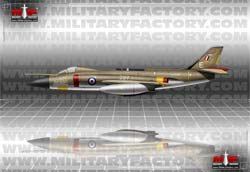
BAC / English Electric Lightning The English Electric Lightning was a unique design in almost every facet of its engineering. The system featured a twin-engine design, though the engines sat one on top of the other, increasing the aircrafts overall height an...
BAe / MDC AV-8S Harrier The AV-8 Harrier series was developed from the impressive Hawker P.1127 demonstrator design that utilized the equally impressive Bristol directional turbofan assembly. The result was the world's first (practical) and operatio...
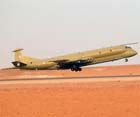
BAe Nimrod The Nimrod aircraft came about as a replacement for the aging and World War Two-era piston-engine Avro Shackleton. Charged with maritime patrol of coastal waters and reconnaissance, the Nimrod had its beginnings on the civili...
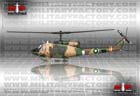
Bell 204 / UH-1B/C Iroquois (Huey) The UH-1 Iroquois was designed to fit a need developed by the United States Army for a utility helicopter capable of MedEvac duty. The UH-1 series would go on to have a prolonged life in both military and civil functions and ...
Bell 205 / UH-1D/H Iroquois (Huey) Based on the successful UH-1B Huey model, the UH-1D was an improved and more powerful version that included increased cabin space for up to 14 passengers. As the YUH-1D (taken from the base Bell 205 airframe), the system firs...
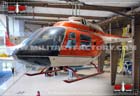
Bell 206 JetRanger The Bell 206 was derived from the unsuccessful OH-4 bid by the Bell company to fulfill a US Army need for a light-weight, turbine-powered, four-seat observation helicopter in 1960. It would not be until 1967 when delays in th...
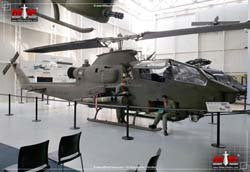
Bell AH-1 HueyCobra Based on the private venture Bell 209 helicopter, the AH-1 Cobra series of helicopters is many a military's primary light attack helicopter. As early as the 1950's Bell corporation was experimenting with armed versions in the...
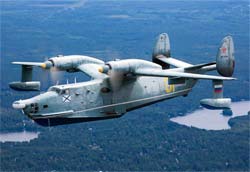
Beriev Be-12 (Mail) The Beriev Be-12 "Mail" was a successful floatplane aircraft for the Soviet Union during the Cold War, fulfilling the role of maritime patrol and reconnaissance. The twin-engine system was designed to replace the other Beriev...
Blackburn Buccaneer The Blackburn Buccaneer was a highly-respected low-level carrier-borne strike aircraft utilized by the Royal Air Force and the Royal Navy.
The Buccaneer featured a crew of two (seated between the engine intakes in tandem)...
Boeing CH-46 Sea Knight The CH-46 Sea Knight is similar in design and role to the CH-47 Chinook series of transport helicopters. Both offer up unobstructed access to the aircraft by keeping engine components mounted above the design. Both also utili...
Boeing CH-47 Chinook The Chinook series of medium-lift helicopters has been a mainstay utility service system for the US Army (among others) for decades since its design and inception. The series featured the highly identifiable twin-tandem rotor...
Boeing OH-6 / MD 500 / MH-6 (Little Bird) The OH-6 series of helicopters is a successful light observation and light attack system fielded with the US Army and special forces since the mid-1960's. The aircraft proved nimble enough to operate in close-support of groun...
Cessna A-37 Dragonfly The Cessna A-37 Dragonfly was born out of a need for close-support aircraft to assist in the Vietnam War. As such, the T-37 jet trainer was converted for the role and became the A-37 series of aircraft. The system would go on...
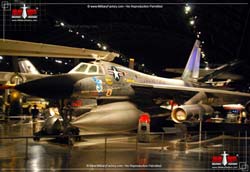
Convair B-58 Hustler The delta-wing Convair B-58 Hustler was the first United States Air Force supersonic operational bomber. The system was designed to be capable of high-altitude flight, which was a popular design concept during the early years...
Dassault Mirage F1 The Dassault Mirage F1 series was designed to replace the successful Dassault Mirage III series. With a host of new features added to the new airframe, the Mirage F1 would be a substantial upgrade to the whole Mirage family o...
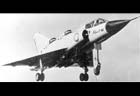
Dassault Mirage IIIV The Mirage IIIV was designed to a NATO requirement for a supersonic VTOL (Vertical Take-Off and Landing) fighter aircraft. The Mirage IIIV was a further development of the successful Mirage III fighter series but featured a s...
Dassault Mirage IV The Dassault Mirage IV series was designed to a French requirement for a supersonic aircraft platform capable of delivering an atomic weapon. The resulting Mirage IV became just that, offering up Mach 2 capabilities and a cei...
Dassault Mirage V (5) / Mirage 50 The Dassault Mirage V / Mirage 50 series of French-built multi-role aircraft stands as the last further development of the successful Mirage III airframe. The Mirage V appeared in 1967 and was intended solely for export, find...
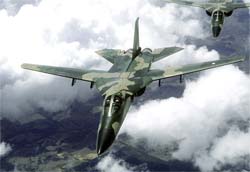
General Dynamics F-111 Aardvark The General Dynamics F-111 "Aardvark" was purposely designed as a variable geometry "swing wing" platform from the outset. The variable sing wing philosophy would allow the aircraft to utilize three pre-determined geometric p...
Grumman A-6 Intruder The Grumman A-6 Intruder series of strike aircraft was designed to a United States Navy specification drawn up covering an attack aircraft capable carrying and delivering large payloads over distance and in any weather. The i...
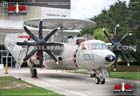
Grumman E-2 Hawkeye The E-2 Hawkeye series serves carrier battle groups (principally in the United States Navy) and is called upon as an all-weather airborne command and control battle space management system. The Hawkeye became operational in 1...
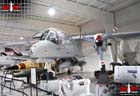
Grumman OV-1 Mohawk Development of the OV-1 Mohawk platform stemmed from a joint requirement fielded by both the United States Army and the United States Marine Corps for a "battlefield surveillance aircraft" displaying rugged and versatile qual...
HAL HF-24 Marut The Hindustan Aeronautics Ltd HF-24 Marut was the first Indian attempt at an indigenous aircraft design since separating from British rule. The Marut - or "Spirit of the Tempest" - was the first design that was produced for t...
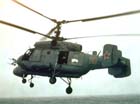
Kamov Ka-25 (Hormone) The Kamov Ka-25 (NATO codename of "Hormone") was developed from the Ka-20, which itself was a response to a Soviet Navy requirement for a ship-borne helicopter to replace the aging Mil Mi-4 platforms. The Ka-25 became a mains...
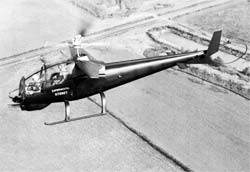
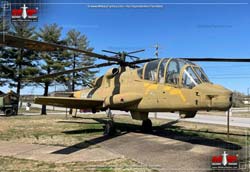
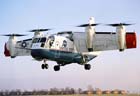
Lockheed AH-56 Cheyenne The Lockheed-designed and produced AH-56A attack helicopter was a failed attempt at the United States Army's AAFSS (Advance Aerial Fire Support System) requirement. Designated the "Cheyenne", the aircraft represented the most...
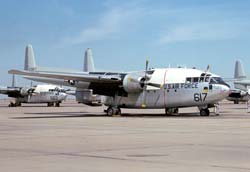
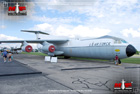
Lockheed C-141 Starlifter The C-141 Starlifter appeared in 1965 - interestingly enough without a prototype preceding its inception - and became the workhorse transport aircraft for the United States Air Force. The aircraft was developed to a Military ...
Lockheed Martin P-3 Orion The P-3 Orion aircraft is a product of Lockheed Martin, designed and accepted at a time when Lockheed could do little wrong in the way of earning government contracts. The P-3 was a direct requirement for a United States Navy...
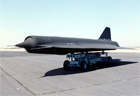
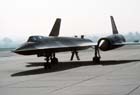
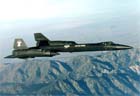
Lockheed Martin SR-71 Blackbird The sleek SR-71 Blackbird spyplane reached an all new plateau in supersonic high-level flight for the Lockheed Corporation. Developed from the YF-121-A interceptor program which spawned the A-12 program which in turn generate...
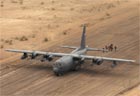
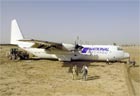
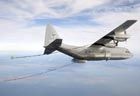
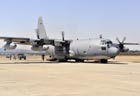
Lockheed MC-130 Combat Talon I / II The MC-130 series is represented by the MC-130E Combat Talon I and the MC-130H Combat Talon II systems. Both utilize the hugely successful C-130 Hercules airframe and were designed specifically for use with special forces ope...
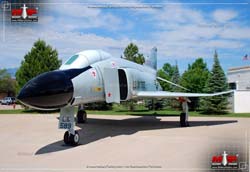
McDonnell Douglas F-4 Phantom II The highly-regarded F-4 Phantom II was the product of the now McDonnell Douglas Corporation. This Vietnam War-era warbird would go onto become one of the most respected combat aircraft in the United States and across the glob...
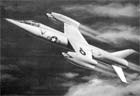
North American A-5 Vigilante The A-5 Vigilante bomber actually began as a private venture by the North American Aviation Company as early as 1953. This development centered around the design of an all-weather, high-level, long range bomber capable of car...
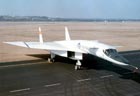
North American XB-70 Valkyrie The XB-70 Valkyrie was intended to be the USAF 'super bomber' for decades to come and was tabbed as the eventual successor to the B-52 Stratofortress in support of the United States Strategic Air Command. Developed with the l...
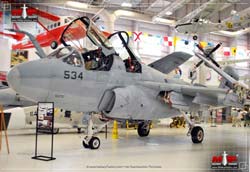
Northrop Grumman EA-6 Prowler The Prowler series of carrierbased aircraft are dedicated electronic warfare systems based on the Vietnam-era A-6 Intruder strike models. Since their introduction, the Prowler series has seen action up through the present Ame...
Republic F-105 Thunderchief The F-105 Thunderchief is more widely remembered for its contributions to the Vietnam War for the United States Air Force but its appearance actually dates back to the late 1950's and 1960's. The system proved quite valuable ...
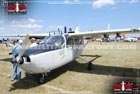
Rockwell OV-10 Bronco The OV-10 Bronco series was a direct result of the United States Marine LARA requirement (Light Armed Reconnaissance Aircraft). The system was designed as a twin-engine high-wing aircraft capable of providing accommodations f...
Saab 35 Draken (Dragon) The uniquely-shaped Saab J35 Draken (meaning "Dragon") stemmed from a Swedish military requirement set forth as early as 1949 that called for an ultimate jet-powered fighter capable of out-flying anything else available to an...
Saab 37 Viggen (Thunderbolt) The Saab Viggen proved to be yet another milestone in the indigenous design theories put forth by the nation of Sweden. The system was designed from the outset to be a battlefield friendly alternative to its opponent counterp...
Sikorsky HH-3 Jolly Green Giant The HH-3E series is no longer in service with the United States Air Force but gained considerable fame in the Vietnam War for its many rescues of downed aircrews in the conflict. The system featured a stretched fuselage and w...
Sukhoi Su-11 (Fishpot) The Su-11, by any regard, is considered a potent fighter. Based on a further development of the inferior and limited Su-9, the Su-11 featured an improved and more powerful turbojet engine capable of 22,046lbs of thrust with a...
Sukhoi Su-15 (Flagon) The Su-15 (NATO codename of "Flagon") series of aircraft was designed by the Sukhoi firm as a true interceptor with the sole purpose of defending Soviet airspace NATO bomber incursions during the Cold War. The system was desi...
Sukhoi Su-7 (Fitter) Though not in service with the Russian Air Force in any capacity these days, the Sukhoi Su-7 (NATO designation of "Fitter") can still be found in a few inventories around the world - mostly in former Soviet-supported states a...
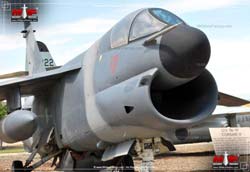
Vought A-7 Corsair II The middle-weight Vought-produced A-7 Corsair II was designed as a replacement for the A-4 Skyhawk light-weight fighter / bomber, and was based on the engineering successes of the F-8 Crusader. Owing its general visual appear...
Yakovlev Yak-28 (Brewer / Firebar / Maestro) Nearly an exact copy of the Yak-25 (and the Yak-26 and Yak-27 for that matter), the Yakovlev Yak-28 was initially thought of as a multi-role fighter-bomber but eventually fulfilled the role of interceptor, reconnaissance and ...
This page features aircraft covering the time period between 1900 and 1919. During this time, flight was just being pioneered and the air war in World War One would solidify the aircraft as a viable fighting machine. Designs throughout wartime forced aviation engineers to learn at a fast pace, usually outdoing themselves design after design. Such was the air of wartime design for aircraft that many would only live to see service for a matter of months before being replaced by more powerful and deadly versions. Design and production of aircraft for military use would continue at war's end and would cause a boom in military spending for new and faster model capable of much more. Aircraft design during these two decades would still revolve around the tried and true fabric-covered skins with synchronized-firing machine guns in the monoplane or biplane designs.