Global Firepower | Military Industrial Complex | Second World War History
Home | Military Pay Scale Chart | Aircraft | Infantry Weapons | Military Vehicles | Navy Ships | Military Education | French Military Victories | Military Ranks | WW2 Weapons
Military Factory Latest from Military Factory
Thumbnail picture of the Dardo infantry fighting vehicle
Dardo IFV
Thumbnail picture of the Supermarine Scimitar fighter
Supermarine Scimitar
Thumbnail picture of the Centauro B1 8x8 tank killer
Centauro 8x8
Thumbnail picture of the Novi Avion fighter
Novi Avion
Thumbnail picture of the FR F2 bolt-action sniper rifle
FR F2
Thumbnail picture of the Lebel Model 1886 bolt-action rifle
Lebel Model 1886
2009 Military Pay Scale Chart - for Army, Navy, Air Force and Marines
  BY DECADE
    · 1900 to 1909
    · 1910 to 1919
    · 1920 to 1929
    · 1930 to 1939
    · 1940 to 1949
    · 1950 to 1959
    · 1960 to 1969
    · 1970 to 1979
    · 1980 to 1989
    · 1990 to 1999
    · 2000 to 2009
    · 2010 to 2019
    · View All Aircraft
  BY TYPE
    · Attack Helicopters
    · Bombers
    · Close-Support
    · Commercial
    · Dive Bombers
    · Experimental
    · Fighters
    · Floatplanes
    · Flying Boats
    · Fuel Tankers
    · Helicopters
    · Interceptors
    · Multi-Role
    · Navy Aircraft
    · Night-Fighters
    · Recon Aircraft
    · Recon Helos
    · Special Purpose
    · Torpedo Bombers
    · Trainer Aircraft
    · Transport Aircraft
    · Transport Helos
    · UAVs
  WORLD WAR 2
    · Full List
    · 1939
    · 1940
    · 1941
    · 1942
    · 1943
    · 1944
    · 1945
    · Australia
    · Battle of Britain
    · Bombers
    · Britain
    · Dive Bombers
    · Canada
    · Fighters
    · China
    · France
    · Germany
    · German Fighters
    · German Jets
    · Italy
    · Japan
    · Mitsubishi Bombers
    · Poland
    · USA Aircraft
    · USA Bombers
    · Soviet Union
    · Torpedo Bombers
  WORLD WAR 1
    · Full List
    · 1914
    · 1915
    · 1916
    · 1917
    · 1918
    · Aces
    · Austria-Hungary
    · Bombers
    · Britain
    · Fighters
    · France
    · Germany
    · Italy
    · Recon Aircraft
    · Russia
    · USA
  KOREAN WAR
    · Full List
    · Aces
    · Australia
    · USA
    · North Korea
  VIETNAM WAR
    · Full List
    · United States
    · North Vietnam

Military Factory > Military Aircraft > Aircraft from 1940-1949
 

Aircraft from 1940-1949
Full-scale war throughout the globe brings the aircraft to new heights

1

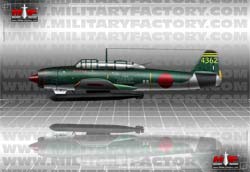
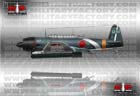
Aichi B7A Ryusei (Grace)
The Aichi-produced B7A Ryusei (translated to "Shooting Star" and nicknamed "Grace" by the Allies) was a limited-production torpedo bomber in service with the Empire of Japan during the latter years of World War Two. Unfortuna...


1944

2

Aichi D3A (Val)
The D3A series of aircraft (dubbed "Val" by the Allies) were thought to be all but extinct when the war in the Pacific began. The rude awakening came in the form of the surprise attack on Pearl Harbor in Hawaii - home to the ...


1940

3

Aichi E13A (Jake)
Based on number alone, the Aichi production E13A series of floatplanes (dubbed "Jake" by the Allies) was the most important such aircraft type for the Japanese Navy during the Second World War. The system was fielded in quant...


1941

4

Aichi E16A Zuiun (Paul)
The E16A Zuiun (translated into "Auspicious Cloud" and codenamed "Paul" by the Allies) was a dedicated reconnaissance floatplane and part-time dive-bomber for the Empire of Japan in World War Two. The system was an excellent ...


1944

5

Aichi M6A Seiran
This oft-forgotten Aichi design was classified as an attack floatplane that was designed to be carried aboard the Japanese Navy I-400 class submarines. The aircraft was held in water-tight containers until implemented into fl...


1945

6

Amiot 354
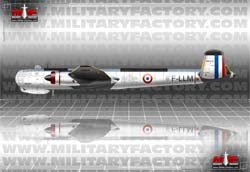
The Amiot 354 bomber and reconnaissance platform was a quite capable aircraft when war broke out over France. The system had its origins based on the unarmed fast transport mail carrier to which some further development would...


1940

7

Antonov An-2 (Annushka)
...


1947

8

Arado Ar 232 Tausendfussler (Millipede)
The Arado aircraft firm produced one of the more identifiable transport aircraft of the Luftwaffe during the Second World War in the form of the Ar 232. Known unofficially as the "millipede" (or "Tausendfussler") thanks to th...


1941

9

Arado Ar 234 Blitz (Lightning)
The Arado Ar 234 "Blitz" (or "Lightning") was part of the German success with turbojet development in the latter years of World War Two. The system was the world's first purpose-built jet bomber to ever enter service, and did...


1944

10

Arado Ar 240
The Arado Ar 240 was designed to an RLM 1938 response to replace the twin engine, two seat Messerschmitt BF 110 Zerstorer heavy fighter, being made obsolete by the changing face of war. The Arado firm and the Messerschmitt fi...


1940

11

Arado Ar E.340
The Arado-produced Ar E.340 was designed to a German requirement for a twin-engined bomber to replace the aging Junkers Ju 88 and Dornier Do 217's currently in service. The design offered up the potential for multirole capabi...


1943

12

Arado Ar E.381
The Ar E.381-series of prototypes was submitted in 1944 for review by the German Air Ministry. Whilst a plethora of companies (including Messerschmitt and Sombold) were competing to fulfill the role of what was to be dubbed "...


1944

13

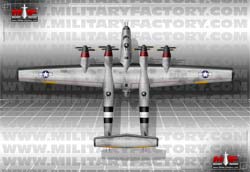
Arado Ar E.530
The idea of twin fuselage aircraft was always in the minds of military aircraft engineers throughout the Second World War. Conceivably, these systems would offer up double the performance and capabilities of their single fuse...


1940

14

Arado Ar E.555
Arado proposed this E.555 flying wing concept towards the end of 1943 as a high-speed long-range bomber. The flying wing concept had eluded aircraft engineers for decades but it was seen as a potentionally stable design allow...


1943

15

Arado Ar E.560
The Arado E.560 series of developmental high-speed jet bombers saw a large evolution on paper. Design of the platform centered around the closing days of the Second World War and showed the extent to which the Germans were pl...


1945

16

Arado Ar E.580
Once the Volksjager competition came around in 1944, Arado Flugzeugwerke went back to a 1943 design it had had and touched it up some, producing the E.580 design model. This aircraft was to be a single-seat, single-engine jet...


1944

17

Arado Ar E.581.4
The Arado Ar E.581.4 was conceived of as a single-seat jet fighter utilizing a delta-wing shape. The system was not a "true" flying wing design in that it made use of twin vertical tail surfaces at the trailing edges. The sys...


1944

18

Arado Ar E.654 (Kampfzerstorer / Skorpion)
The Arado Ar E.654 was proposed as a heavy fighter / destroyer platform designed from another Arado product - the Ar 240. Though the Ar 240 model eventually saw operational service with the Luftwaffe (albeit in limited numbe...


1943

19

Arado Ar Projekt II
The Arado Ar Projekt II was a proposed jet-powered fighter of considerable size. It carried a basic classification of nightfighter / all-weather fighter and appeared in paper form towards the end of the European Campaign. The...


1945

20

Arado Ar TEW 16/43-13
The Arado Ar TEW 16/43-13 was a design concept envisioned as a rocket-propelled interceptor for the German Luftwaffe. The design was put forth by Wilhelm van Nes as one of three possible developments that also included a twin...


1943

21

Arado Ar TEW 16/43-15
...


1943

22

Arado Ar TEW 16/43-19
...


1943

23

Arado Ar TEW 16/43-23
The single-seat, jet-powered Arado Ar TEW 16/43-23 design was penciled sometime in 1943. Categorized as a fighter, the type might have been an impressive addition to the ranks of the Luftwaffe where jet-powered aircraft were ...


1943

24

Armstrong Whitworth Albemarle
The Armstrong Whitworth Albemarle became one of those aircraft designs that evolved into a role not initially envisioned. The system came from an earlier Bristol-designed reconnaissance aircraft that went to nowhere and was d...


1941

25

Avro Lancaster
The Avro Lancaster is regarded by many as the best bomber of either side in the Second World War. The system proved quite capable from the outset and was put into production the same year that the prototype had flown. From th...


1941

26

Avro Manchester
The Avro Manchester was a semi-successful attempt by the Avro firm to fulfill Air Ministry Specification P.13/36. The specification called for a twin engine heavy bomber that could sport a multi-purpose payload of bombs or to...


1940

27

Bachem Ba 349 Natter (Viper)
The Bachem Ba 349 Natter (or "Viper") was another of the ingenious - if desperate - German designs in the ultimate defense of Germany against Allied bombers. The Natter design put to use the ever-developing study of rocketry ...


1945

28

Beech AT-10 Wichita
...


1940

29

Beechcraft C-45 Expeditor
...


1941

30

Beechcraft XA-38 Grizzly / Destroyer (Model 28)
The XA-38 was a developmental twin-engine heavy fighter produced by the Beech Aircraft firm. By all accounts, she was a stable and fast aircraft comparable to even the single engine speedsters of her day. As promising as her ...


1944

31

Bell P-59 Airacomet
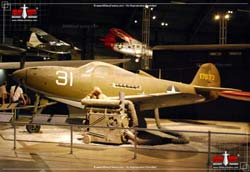
The Bell-produced P-59 Airacomet series is one of those aircraft that becomes more of a study in American jet pioneering than anything else. The aircraft itself was a very average to below average performer, even when compare...


1942

32

Bell P-63 Kingcobra
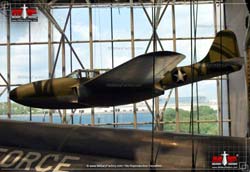
At its core, the Bell P-63 Kingcobra proved a modest improvement over the relative failure that was the P-39 Airacobra. Though the P-39 developed into a useable platform, she never lived up to the original specifications than...


1943

33

Bell X-1
The Bell X-1 was an advanced technology demonstrator that became the first aircraft in the history of aviation to break the speed of sound. Specifically designed to be airdropped from a B-29 Superfortress, the X-1 would then ...


1947

34

Bell XFL Airabonita
The XFL "Airabonita" was a Bell Aircraft Company product developed in parallel with the P-39 Airacobra, a land-based USAAF design that eventually achieved operational status. In essence, the Airabonita was a "navalized" versi...


1940

35

Bell XFM-1 Airacuda
In the same way that the XFM-1 Airacuda was a "different" sort of aircraft, the Bell company itself was "different sort" of aircraft maker. Know more for its unique elements in the P-39 Airacobra piston-engine fighter of Worl...


1940

36

Blackburn Firebrand
The Blackburn Firebrand was a carried-based strike fighter aircraft developed by Blackburn Aircraft of the United Kingdom. She was a design of G.E. Petty and went on to live a troubled development before reaching operation st...


1945

37

Blohm & Voss Bv 138
The Blohm and Voss Bv 138 was a German floatplane that saw quantitative production in the Second World War. Initially conceived of as early as 1936, the system would enter service by 1940 and play the most pivotal role of mar...


1940

38

Blohm & Voss Bv 222 Wiking (Viking)
The Blohm & Voss Bv 222 Wiking (translated to "Viking") was a large German floatplane design of the Second World War. The system was fielded in limited numbers and served the primary role of transport aircraft with some recon...


1941

39

Blohm & Voss Bv 238
The mammoth Blohm & Voss Bv 238 was the next evolution in the Blohm & Voss flying boat series for Germany during World War Two. The system was built as the largest aircraft ever produced by any of the Axis powers and was to p...


1944

40

Boeing B-29 Superfortress
B-29 Superfortress status is often relegated to the aircraft that dropped the atomic bombs (“Fat Man” and “Little Boy”) on Hiroshima and Nagasaki to end the war in the Pacific for the Allies. The fact that there were in fact ...


1943

41

Boeing B-47 Stratojet
The swept-wing B-47 produced by Boeing was a milestone in bomber design in many ways. The system pioneered the traditional bomber layout found on many of todays systems and offered up capabilities unheard of before then. As a...


1947

42

Boeing B-50 Superfortress
Though looking every bit the identical twin of the World War Two-era B-29 Superfortress (also produced by Boeing), the B-50 incorporated enough new elements to deem it an all new aircraft - retaining just 25 percent of the B-...


1948

43

Boeing C-97 Stratofreighter
A post-war design, Boeing developed the C-97 as the Model 367 - a military transport based on the success of the design of the B-29 Superfortress. The Model 777 Stratocruiser was the civilian transport version of the Model...


1944

44

Boeing L-15 Scout
The L-15 Scout was a light and small observation liaison aircraft produced in limited numbers by the Boeing Aircraft Company following World War 2 - only twelve of the type were produced with the United States Army becoming i...


1947

45

Boeing-Stearman PT-17 Kaydet
When The Boeing Company acquired the Stearman company in 1939, it also acquired the design and production rights to the promising Model 75 series, which itself was flow as the X-70 as early as 1933. The two-seat biplane would...


1941

46

Bristol Beaufort
The Bristol Beaufort enjoyed a strong run between the war years of 1940-1943 as the primary British torpedo bomber in service. Designed as the successor to the aged biplane Vildebeest design by Vickers, the Beaufort saw succe...


1940

47

Bristol Brabazon
...


1949

48

Caproni-Campini N1 (CC.2)
With the introduction of the N1 (may also be known as the CC.2), Italy became only the second nation in the world to achieve jet-powered flight (Germany being the first), though the development of this particular aircraft did...


1940

49

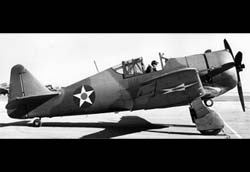
Commonwealth (CAC) Boomerang
The Commonwealth Boomerang (also known as the Commonwealth Aircraft Corporation - or "CAC" - Boomerang) was of completely Australian indigenous design. Based on the CAC Wirraway, which in turn was spawned from the American NA...


1942

50

Consolidated B-24 Liberator
The Consolidated B-24 Liberator became a major player for Allied forces during World War 2. Its exploits ranged the world over - as did her users- and she saw action in a variety of roles in all major theaters. Designed to ov...


1941

51

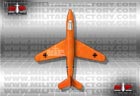
Consolidated B-32 Dominator
The Consolidated B-32 Dominator was a limited production four-engine heavy bomber requested by the United States Air Force as a fail-safe design to the complicated, technology-laden Boeing B-29 Superfortress in development. T...

1945

52

Consolidated PB2Y Coronado
By the middle of the 1930's America was no longer blind to the real possibility that the war would sooner or later be waged along it's shores. As such, the United States Navy took action in the requirement for a new generatio...


1940

53

Consolidated PB4Y-2 Privateer
The Consolidated PB4Y-2 Privateer was a further development of the United States Navy's PB4Y-1 anti-submarine warfare aircraft which, itself, was a further variant based on the successful Consolidated B-24 Liberator bomber ai...


1943

54

Convair B-36 Peacemaker
If developed a few years sooner and the B-36 could have very well taken part in the Second World War. The initial designed was put forth from a United States Army Air Corps requirement for a large intercontinental bomber capa...


1947

55

Curtiss P-40 Warhawk / Kittyhawk / Tomahawk
The P-40 Warhawk / Kittyhawk / Tomahawk series of aircraft was the further development of the P-36 Hawk platform (detailed elsewhere on this site). The Warhawk would become synonymous with the American Volunteer Group fightin...


1941

56

Curtiss SB2C Helldiver
The Curtiss SB2C Helldiver was a rather unassuming dive bomber / reconnaissance aircraft serving throughout World War 2 beginning in 1943. Originally designed in a competition to replace the aging SBC biplane series, the SB2C...


1943

57

Curtiss XP-46
The smallish XP-46 was to be the answer for the deficiencies encountered in the P-40 Warhawk platform. Unfortunately for Curtiss, the XP-46 would be doomed by underperformance and sluggish capabilities - essentially dooming t...


1941

58

Curtiss-Wright C-46 Commando
The United States Air Force utilized the C-46 Commando series as their primary transport workhorse in the Pacific Theater of War during the Second World War. The system was initiated to replace the Douglas series of DC-3 tran...


1942

59

Curtiss-Wright XP-55 Ascender
The XP-55 Ascender was an unorthodox attempt by the Curtiss-Wright company that produced just three prototype models. Answering a United States Army Air Corps call for unconventional aircraft designs, the XP-55 fit the bill w...


1943

60

Curtiss-Wright XP-87 / XF-87 Nighthawk
The XF-87 was a failed proposal attempted by the Curtiss-Wright aircraft design bureau to meet an Air Force requirement for the world's first dedicated radar interceptor aircraft crewed by two personnel and operating under je...


1948

61

de Havilland D.H.103 Hornet / Sea Hornet
From the outset, the de Havilland D.H.103 "Hornet" was designed to a British requirement of a twin-engine, long-range fighter-bomber capable of operations in the Far East. With the specification having been drawn up by 1943, ...


1946

62

de Havilland D.H.98 Mosquito
Few can find much fault in the de Havilland design of its Mosquito series of nightfighters featured so prominently in the Battle of Britain and throughout the entire World War Two campaigns across Europe. The twin-engine nigh...


1942

63

de Havilland DH.100 Vampire
The de Havilland-produced jet fighter holds two key distinctions in the history of aviation. Firstly, the system was the first jet-powered aircraft to successfully land on a movie aircraft carrier (the Sea Vampire) and second...


1946

64

Dornier Do 335 Pfeil (Arrow)
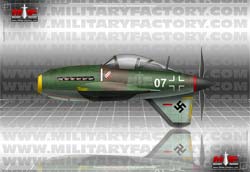
The Dornier Do 335 Pfeil (or "Arrow") was one of the more unique prop-driven designs of the Second World War. Designed and patented by Doctor Claudius Dornier as early as 1937, the Do 335 utilized a concept in which one engin...


1945

65

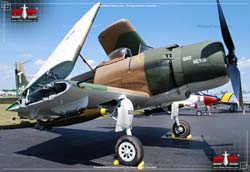
Douglas A-1 Skyraider
The mammoth Skyraider series would have been a major player in the Second World War if it were designed and produced a few years earlier than it had. Regardless, the system would prove itself quite a capable close-support air...


1946

66

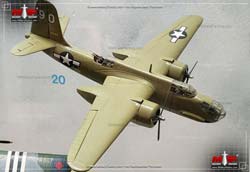
Douglas A-20 Havoc / Boston
The Douglas A-20 Havoc served Allied forces through most of World War 2, fighting for British, American and Soviet forces. The type saw extensive use, proving itself a war-winner capable of withstanding a great deal of punish...


1941

67

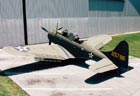
Douglas A-24 Banshee
The Douglas A-24 "Banshee" dive bomber fit the requirement of the United States Army for a capable dive bomber-type aircraft. After witnessing successes of this type by Germany throughout its European offensives, the US Army ...


1941

68

Douglas A-26 / B-26 Invader
The Douglas A-26 Invader was a distinguished twin-engine light bomber whose origins were well-placed in the Second World War. The system proved adept at day and night flying, attacking targets with a bevy of machine guns or d...


1944

69

Douglas B-26K Counter Invader / A-26A Nimrod
The B-26K Counter Invader was based on a highly modified World War Two-era A-26 Invader aircraft. What set the Counter Invader apart from it's predecessor was that the Counter Invader was featured without any turret systems, ...


1948

70

Douglas C-47 Skytrain / Dakota
The C-47 Skytrain was a product of the Douglas Aircraft Company and is regarded as the best transport of World War 2. Interestingly enough, the Skytrain was first born as a civilian passenger airliner in the DC-3 model and be...


1940

71

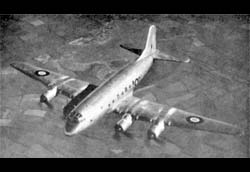
Douglas C-54 Skymaster (DC-4)
Derived from the commercial DC-4 airliner, the C-54 Skymaster was a workhorse transport aircraft for both the United States Army and the United States Navy branches of service. Planned as a technologically superior successor ...


1942

72

Fairchild AC-119 Shadow / Stinger
The AC-119 series was a modified "G" model of the successful C-119 "Flying Boxcar" transport aircraft. The AC-119's would see service throughout the Vietnam War fulfilling a dual-role capability based on model type. "Shado...


1945

73

Fairchild C-119 Flying Boxcar
Fairchild Corporation produced a winner in the post-war world with the introduction of the C-119 "Flying Boxcar". The Boxcar was derived from the C-82 "Packet" transport - looking ever more like the identical to the final C-1...


1947

74

Fairey Firefly
The Fairey Firefly was a hugely successful, two-seat, carrierborne fighter aircraft serving with the Royal Fleet Air Arm through the latter half of the Second World War, eventually seeing service up until the mid-1950's. The ...


1943

75

Fieseler Fi 103R (Reichenberg)
The Fiseler Fi 103R was, in essence, the piloted form of the successful V-1 rocket that terrorized London citizens throughout the Second World War. The piloted system was to be a type of suicide missile that the pilot could a...


1944

76

Fisher XP-75 / P-75 Eagle
General Motors became a major player in the American manufacturing realm when World War 2 arrived for the United States. With its automotive plants adept at mass-production, it was only fitting that the US military look to su...


1943

77

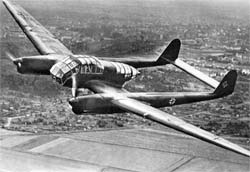
Focke-Wulf Fw 189 Uhu (Owl)
The Focke-Wulf brand Fw 189 Uhu (translated to "Owl") was of the most peculiar aircraft design for the German Luftwaffe in the Second World War, but by no means made less lethal by it's appearance. The system accounted for a ...


1940

78

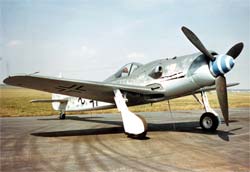
Focke-Wulf Ta 152 Leistungsdaten
The Focke-Wulf Ta 152 aircraft design was intended for use as a high-altitude interceptor for the German Luftwaffe and appeared in the later years of the war. Now managing a defensive type campaign, German warplanners were lo...


1945

79

Focke-Wulf Ta 154 Moskito (Mosquito)
The Ta 154 Moskito ("Mosquito") was another product of the Focke-Wulf aircraft design firm operating for the Third Reich. The design was classified as a night fighter and appeared most promising until a series of delays and l...


1944

80

Focke-Wulf Ta 183 Huckebein
By this time in the war, Germany had already made a stout commitment to the production of fighter designs over bombers. Seeing it that she would be fighting a defensive war for some time to come, models such as the Messerschm...


1945

81

Gloster / Armstrong Whitworth Meteor
The Gloster Meteor became Britain's first operational jet-powered fighter aircraft. It reached operational status in the latter years of World War 2 and saw limited action in the conflict though it never faced off against any...


1944

82

Grumman F4F Wildcat
The Grumman F4F Wildcat was the unsung hero of the Allied Pacific Theater campaign in the early years of World War 2. Often overshadowed by the upcoming Grumman F6F Hellcats and Vought F4U Corsair hotrods, the stubby Wildcat ...


1940

83

Grumman F6F Hellcat
The F6F Hellcat was the successor to - and a logical evolution of – the capable F4F Wildcat series of carrier-borne aircraft fielded by the United States Navy in the Pacific Theater of World War 2. In the conflict, the Hellca...


1943

84

Grumman F7F Tigercat
The F7F Tigercat was another carrier-borne aircraft development in Grumman's long line of "cat" named fighters. The system was originally designed as a twin-engine fighter for use off of the decks of US Navy Midway-class airc...


1944

85

Grumman F8F Bearcat
In many ways, the Grumman F8F Bearcat was the pinnacle of United States piston-engine fighter design. The aircraft arrived within the waning months of World War 2, missing combat action in all theaters altogether, but still m...


1945

86

Grumman HU-16 Albatross
The Grumman HU-16 Albatross platform made appearances all across the globe with United States military forces, rescuing downed US airmen in need. The system was an amphibious platform, allowing for operation from land and / o...


1949

87

Grumman TBF Avenger
The TBF Avenger became a classic warfighter thanks to its resilience in the ongoing battle over the Pacific in the Second World War. Able to deliver payloads of torpedoes, drop bombs and rockets, the system was also capable (...


1942

88

Grumman XP-50 Skyrocket
Firmly entrenched as an aircraft supplier to the United States Navy, the Grumman aircraft company set about to supply an equally lucrative deal with the US Army to produce a hybrid high-speed pursuit fighter and light bomber ...


1941

89

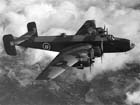
Handley Page Halifax
While the Lancaster Heavy Bomber will always be more identifiable in terms of the British night bombing campaigns of World War Two, the Handley Page Halifax series of bombers should be remembered as being just as equally impo...


1940

90

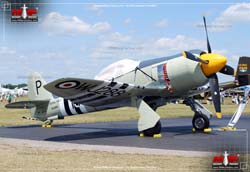
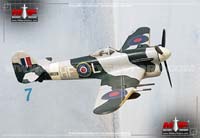
Hawker Sea Fury / Fury
The Hawker Sea Fury was developed out Hawker's Typhoon and Tempest aircraft designs utilized by Britain during World War 2. Though not without their limitations, the Typhoon and Tempest platforms had substantial inherent bene...


1945

91

Hawker Sea Hurricane
The Hawker Sea Hurricane appeared in 1941 in an effort to protect British merchant ships from German naval attacks. Basically modified versions of the successful Hawker land-based Hurricane fighters, Sea Hurricanes were at fi...


1941

92

Hawker Tempest
The Hawker Tempest originally appeared as an improved Hawker Typhoon, the war-winning aircraft that effectively failed in its intended role as an interceptor but went on to star as a low-level fighter-bomber. The Tempest bega...


1944

93

Hawker Typhoon
The Hawker Typhoon (affectionate known as the "Tiffie") was initially intended as a dedicated interceptor and set to succeed the 1930's-era Hawker Hurricane and was first drawn up in 1937. The system was designed to a British...


1941

94

Heinkel He 111 Z (Zwilling)
The He 111 Z (or "Zwilling") was an interesting, albeit bizarre, joining of two He 111 medium bombers (detailed elsewhere on this site). In an attempt to bring together existing designs to produce a large enough transport cap...


1942

95

Heinkel He 162 Volksjager (Peoples Fighter)
The He 162 Volksjager (the "People's Fighter") was developed as a quick solution to stem the tide of the major Allied advances witnessed by German forces in the latter years of the war. The plan was to produce these inexpensi...


1945

96

Heinkel He 177 Greif (Griffin)
The Heinkel He 177 Greif (or "Griffin") was a bomber produced in limited numbers for the German Luftwaffe. By any standard, the aircraft should have made more of an impact on the war for Germany's sake but structural flaws an...


1942

97

Heinkel He 219 Uhu (Eagle-Owl)
The Heinkel He 219 Uhu (meaning "Eagle-Owl") was designed in response to a German need for a dedicated nightfighter type to thwart the advances being made the British nighttime bombing raids on German interests. The He 219 wa...


1943

98

Heinkel He 280
Though never produced in any operational format, the Heinkel He 280 series was the world's first turbojet fighter aircraft designed from the start as a fighter. German scientists were on the cutting edge of turbojet developme...


1941

99

Henschel Hs 129
The Henschel Hs 129 fighter-bomber was built to a 1937 German specification for a twin-engine close-support aircraft with considerable armor protection for pilot and crew and the ability to field twin 20mm cannons at least. T...


1942

100

Henschel Hs 132
The Henschel Hs 132 was another of the ambitious German jet-powered designs under development in the closing years of the Second World War. Developed in response to the mounting losses inherent with the plodding - yet still d...


1945

101

Horten Ho IX / Horten Ho 229
The Horten Ho IX (or "Horten Ho 229" - sometimes wrongly designated the "Gotha Go 229") maintains a certain level of celebrity status in the world of military aviation, essentially becoming the first production-worthy form of...


1945

102

Hughes H-4 Hercules
The famed Hercules aircraft produced and flown only one time by Howard Hughes himself. It was commonly known as the 'Spruce Goose' and termed a failure in the eyes of most but not Mr. Hughes. The idea behind the craft was to ...


1945

103

Hughes XR-11 / XF-11
Though only achieving prototype form, the XF-11 was one of the darling designs of famed American aviator Howard Hughes. Looking very much like an oversized Lockheed P-38, the twin-boom XF-11 was designed to fulfill a United S...


1946

104

IAR 80 / IAR 81
When first unveiled in 1938, the Romanian-produced I.A.R. 80 (IAR = Industria Aeronautica Romana) piston engine, single-seat fighter was a promising performer even when compared to her contemporaries. The aircraft served with...


1941

105

Ilyushin IL-10
The Ilyushin IL-10 was a follow-up design to the classic IL-2 "Shturmovik", an armored ground attack aircraft that won the air war for the Soviets in the East Front of World War 2. Visually similar to its predecessor, the new...


1944

106

Ilyushin IL-2 Sturmovik
The Il-2 Sturmovik (or "Shturmovik") was designed as a low-level close-support aircraft capable of defeating enemy armor and other ground targets. Hardly the fighter, the system was exclusively engineered to take an enormous ...


1941

107

Ilyushin IL-28 (Beagle)
The Ilyushin IL-28 (codenamed "Beagle" by NATO) holds many distinctions in the annals of aviation history - some combat related and others more political. The IL-28 became the first jet-powered bomber in service with the Sovi...


1949

108

Junkers Ju 188 Racher (Avenger)
When the new Junkers Ju 288 - a design meant to replace the Junkers Ju 88 series of bombers - ran into developmental issues with its engines, Junkers set about producing an in-between utilizing the Ju 88's airframe. The Ju 88...


1943

109

Junkers Ju 287
The Junkers Ju 287 was arguably the most unique design of all of the German jet-powered projects in development during and up until the end of World War Two. The system was designed as a high-speed heavy bomber which strayed ...


1944

110

Junkers Ju 390 (New York Bomber)
The Junkers Ju 390 long range heavy bomber aircraft design was intended to be able to strike at locations along the east coast of the United States of America. The Ju 390 itself was a further development of the Junkers Ju 290...


1943

111

Kawanishi H8K (Emily)
The Empire of Japan seemed to be producing its best aircraft designs of the war towards the end of the conflict. The Kawanishi H8K (codenamed "Emily" by the Allies) was such an example. Bred to take the reigns of the similar ...


1942

112

Kawanishi N1K-J Shiden (George)
Despite some early setbacks in design, the Kawanishi N1K1-J "Shiden" (or "violet lightning" - codenamed "George" by the Allies), was an exemplary fighter that was capable of going head-to-head with even the fabled American F6...


1943

113

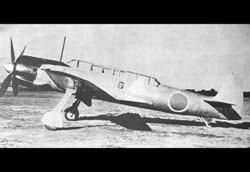
Kawasaki Ki-100
Despite being produced in severely limited numbers (thanks in large part to the Allied bombing campaigns in the Pacific), the Kawasaki Ki-100 is often regarded as one of the best Japanese production fighters available in the ...


1945

114

Kawasaki Ki-45 KAIc Toryu (Nick)
Despite serving in limited numbers, fielded with no search-finding radar and appearing as the only Imperial Japanese Army night-fighter of the Second World War, the Kawasaki-brand Ki-45 KAIc night-fighter platform proved a su...


1944

115

Kawasaki Ki-45 Toryu (Nick)
By 1937, interest in a twin-engine fighter had peaked for the Imperial Japanese Army so much so that a requirement was put forth for the nation's first. Kawasaki entered into the fray successfully and presented the Ki-45 seri...


1942

116

Kawasaki Ki-61 Hien (Tony)
The Kawasaki Ki-61 Hien (meaning "Swallow" and codenamed "Tony" by the Allies) was another of the oft-forgotten yet impressive Japanese-brand fighter designs of the Second World War, joining the equally impressive Kawanishi N...


1943

117

Lavochkin La-11 (Fang)
The Lavochkin La-11 was designed from the successful Lavochkin La-9 series of piston engine fighters with the difference being that the La-11 was to be a long-range bomber escort. The system was under development in the closi...


1947

118

Lavochkin La-5
Design of the Lavochkin La-5 series of low-to-medium altitude fighters was spurred on by a need for equipment capable of matching or exceeding anything the German Luftwaffe was fielding. Initially caught by surprise by the Ge...


1940

119

Lavochkin La-9 (Fritz)
The Lavochkin La-9 series (codename “Fritz” by NATO) was a direct development of the Lavochkin La-126 prototype. In essence, the La-9 represented the La-7 but with all-metal construction as opposed to wood used in the with mo...


1946

120

Lavochkin LaGG-3
The LaGG-3 piston-engine pursuit fighter (the LaGG in the designation coming from "Lavochkin-Gorbunov-Goudkov") was one of the earlier successes of modern aircraft design for the Soviet Union in World War 2. Basically an impr...


1940

121

Lockheed C-69 Constellation
The Lockheed Constellation series of aircraft was a successful design that initially began as a militarized transport, appearing in limited numbers towards the end of World War two, that gained more fame in the civilian trans...


1945

122

Lockheed P2V Neptune
The P2V Neptune series of aircraft was one of the more successful post-war designs for America, with service that spanned decades for a handful of American-friendly countries. The system was designed by Lockheed Corporation f...


1947

123

Lockheed P-80 / F-80 Shooting Star
The Lockheed P-80/F-80 Shooting Star is undoubtedly the world's most successful first generation jet-powered fighter. Appearing by the last few months of World War 2, the Shooting Star failed to undertake a single combat sort...


1945

124

Lockheed PV-1 Ventura / PV-2 Harpoon
...


1942

125

Lockheed T-33 Shooting Star
...


1948

126

Lockheed XP-49
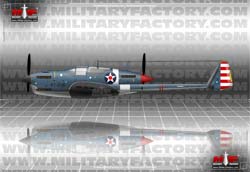
The XP-49 was a development of the Lockheed Corporation and a possible replacement for its successful line of P-38 Lightning aircraft. The XP-49 was to be a high-altitude performer with the capabilities of a well-designed fig...


1942

127

Lockheed XP-58 Chain Lightning
The XP-58 "Chain Lightning" was initially envisioned as a larger version of the successful Lockheed P-38 Lightning twin-boom design capable of downing hordes of enemy bomber formations in single burst shots. The fear covering...


1944

128

Macchi C.202 Folgore (Thunderbolt)
...


1941

129

Martin B-26 Marauder
The Martin B-26 Marauder overcame a rocky start to become one of the finest medium bombers of World War 2. The aircraft was designed with speed from the outset and, as such, a few problems emerged from that approach. The Mara...


1941

130

Martin Baltimore (A-30)
The Martin-produced Baltimore was a light-to-medium class bomber whose design was based highly on the Martin "Maryland" A-22 aircraft. The twin-engine, four-crew system was fielded en masse by forces of the United Kingdom thr...


1941

131

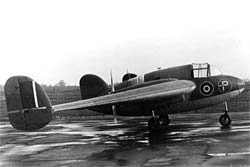
Martin Maryland (A-22)
The Martin-produced Maryland series was classified as a light bomber and saw action as a photographic reconnaissance plane throughout the Second World War. Originally drawn up as a response to a United States Army Air Corps (...


1940

132

Martin PBM-3 / PBM-5 Mariner
The Martin PBM-3 / PBM-5 Mariner was a World War 2-era flying boat used in the maritime reconnaissance role. Martin designed and marketed the type in direct competition with Consolidated, which had already made a "splash" wit...


1941

133

McDonnell F2H Banshee
The twin-engine, single-seat F2H Banshee was based on the successes that the McDonnell company found with the F1H Phantom series of jet aircraft. Even appearing similar to the aforementioned craft, the F2H Banshee was in fact...


1947

134

McDonnell FH-1 Phantom
The FH-1 Phantom served with the United States Navy as their first jet-powered carrer-based aircraft up until 1950 and was in design as early as 1943. The system featured a straight wing design, twin Westinghouse engines, a c...


1948

135

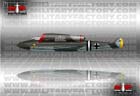
McDonnell XF-85 Goblin
The XF-85 Goblin was an attempt by the McDonnell bureau to realize the dream of a "parasite fighter" program that was actually feasible for use in a wartime environment. The basic theory revolving the parasite fighter was not...

1948

136

McDonnell XF-88 Voodoo
World War 2 proved to American warplanners that the importance of escort fighters for their bombers could not be overstated. The value added by such systems as the P-51 Mustang, P-47 Thunderbolt and P-38 Lightning systems was...


1948

137

McDonnell XP-67 Bat / Moonbat
The XP-67 was the first attempt by the McDonnell corporation to build a fighter for the United States Military. The same corporation would go on to built the superb F-4 Phantom II, F-15 Eagle and F-18 Hornet air superiority a...


1943

138

Messerschmitt Me 163 Komet (Comet)
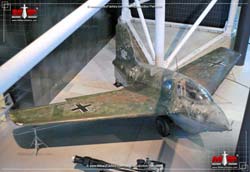
The Me 163 Komet was perhaps the most unique aircraft design of the Second World War. German scientists, always on the cutting edge of evolving war technology, developed a rocket-powered aircraft based on testing completed wi...


1944

139

Messerschmitt Me 262 Schwalbe (Swallow)
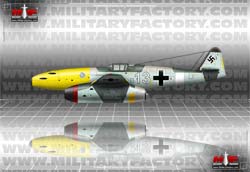
The Me 262 Schwalbe (or "Swallow") is a good case study in the "what if" category centering around poor production design and the bureaucracy inherent in a dictatorship like that of the Third Reich. With the unrealized capabi...


1944

140

Messerschmitt Me 264 Amerika (America)
The Messerschmitt Me 264 was intended as a long-range aircraft and reconnaissance platform that was to supply the German Luftwaffe with a bomber capable of hitting targets within America as well as support Kriegsmarine U-boat...


1942

141

Messerschmitt Me 323 Gigant (Giant)
...


1943

142

Messerschmitt Me 410 Hornisse (Hornet)
The Messerschmitt Me 410 Hornisse ("Hornet") was, in effect, a further development of the unstable Me 210 system. Though improved to some extent by the Hungarians in the Me 210C model, the Me 410 was fitted with a new designa...


1943

143

Messerschmitt Me P.1101
...


1944

144

Mikoyan-Gurevich MiG-1 / MiG-3
Despite being one of the fastest Soviet piston-engine designs in the early years of the war, the MiG-3 was dogged by less-than-stellar handling characteristics and was genuinely still outclassed by German counterparts in the ...


1941

145

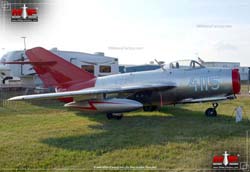
Mikoyan-Gurevich MiG-15 (Fagot)
The MiG-15 (codenamed "Fagot" by the United Nations in reference to a "hastily bundled pile of sticks") became the Soviet Union's first true turbojet-powered fighter design of consequence and the first swept-wing aircraft of ...


1949

146

Mikoyan-Gurevich MiG-9 (Fargo)
The MiG-9 (NATO codename of "Fargo") was only the second attempt by the Soviet Union at designing and producing a viable jet-powered fighter platform. Design was undertaken by the Mikoyan-Gurevich Bureau and - though hardly a...


1946

147

Mitsubishi A6M Reisen (Zeke / Zero)
With a design history beginning as early as 1937, the A6M series (commonly referred to as the "Zero" or by the Allied codename of "Zeke") became the first carrierborne fighter aircraft to supercede all other land-based counte...


1942

148

Mitsubishi G4M (Betty)
Like most of Imperial Japan's aircraft in the early stages of World War 2, the Mitsubishi G4M (codenamed "Betty" by the Allies) was a potent performer in operation as a land-based naval bomber. The system was of a strong desi...


1941

149

Mitsubishi J2M Raiden (Jack)
The J2M Raiden (meaning "Thunderbolt" and codenamed "Jack" by the Allies) was primarily used as a local defense fighter by the Imperial Japanese Navy. The system was designed to combat the growing threat of the high-flying Bo...


1942

150

Mitsubishi Ki-109
The Mitsubishi Ki-109 was a specialized derivative of the Mitsubishi Ki-67 heavy bomber. The Ki-109 was designed specifically to deal with the growing threat posed by the high-attitude American Boeing B-29 Superfortress over ...


1944

151

Mitsubishi Ki-46-III (Dinah)
...


1941

152

Mitsubishi Ki-67 Hiryu (Peggy)
The Mitsubishi-designed Ki-67 Hiryu (translated to "flying dragon" and dubbed "Peggy" by the Allies) is oft-regarded as the best bomber fielded by Japan in the Second World War. The system was of a twin-engine design, armed w...


1944

153

Nakajima B5N (Kate)
By 1941, the B5N series of torpedo bombers were considered the best of their type anywhere in the world. The system was initially designed from 1935 onwards and was in full operational use at the outbreak of the Second World ...


1941

154

Nakajima B6N Tenzan (Jill)
The Nakajima B6N Tenzan (translating to "heavenly mountain") series was a capable torpedo bomber fielded by the Imperial Japanese Navy (IJN) in the Second World War. The system performed capably and would stay in operational ...


1942

155

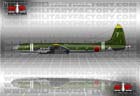
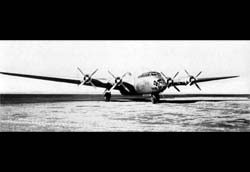
Nakajima G8N Renzan (Rita)
The Nakajima G8N Renzan (or "Mountain Range" - codenamed "Rita" by the Allies) was a heavy bomber design put forth by the Nakajima Aircraft Company in the latter stages of World War 2. The system saw a severely limited produc...


1945

156

Nakajima J1N1-S
The Nakajima J1N1-S series was a dedicated nightfighting aircraft based on the J1N1 Gekko ("moonlight") reconnaissance aircraft platform also of the Nakajima brand. The system found success for a time, particularly against th...


1943

157

Nakajima Ki-44 Shoki (Tojo)
The Nakajima Ki-44 Shoki (meaning "Demon Queller" and codenamed "Tojo" by the Allies) was a single engine monoplane interceptor appearing in production throughout the war years. The system was designed with performance in min...


1941

158

Nakajima Ki-49 Donryu (Helen)
The Nakajima Ki-49 Donryu (meaning "storm dragon" and codenamed "Helen" by the Allies) heavy bomber was intended as a replacement for the out-classed Mitsubishi Ki-21 series of medium bomber. In reality, the newer Ki-49 desig...


1941

159

Nakajima Ki-84 Hayate (Frank)
Out of the many fine fighters available to the Japanese Army in the closing months of World War 2, none were of greater import than the arrival of the Nakajima Ki-84 Hayate (meaning "gale" and known as "Frank" to the Allies. ...


1944

160

North American A-36 Apache (Invader)
The A-36 Apache was a United States Army version of the successful North American P-51 Mustang piston-engine fighter. The original Mustang itself was developed to a British specification but the Mustang went on to see its glo...


1942

161

North American AJ (A-2) Savage
The AJ Savage series of aircraft was a product of the North American Aviation Company for the United States Navy following the Second World War. North American had already made a name for itself by this time with memorable Wo...


1949

162

North American B-25 Mitchell
The North American B-25 Mitchell series of medium bombers went on to become one of the classic American aircraft designs to emerge during World War Two. Designed as early as 1939, the series was built to specifications as req...


1940

163

North American B-45 Tornado
Development of the XB-45 began in 1944 and continued into 1945, representing the later years of the Second World War. With reports that Germany had already succeeded in development of production-quality jet bomber designs, th...


1948

164

North American F-82 / P-82 Twin Mustang
The F-82 Twin Mustang was a purposely-designed aircraft charged with the purpose of providing the United States Air Force with a potent long-range fighter escort while allowing the pilot a much needed break with the addition ...


1946

165

North American F-86 Sabre
The F-86 Sabre was the product of the North American Aviation Company based in the United States of America. The aircraft served a pivotal role in the Korean War by winning back air superiority for the NATO allies, going toe-...


1949

166

North American FJ-1 Fury
The North American FJ-1 Fury aircraft system appeared for a limited time with United States Naval air forces but was instrumental in the design of another North American classic warfighter - the F-86 Sabre. The FJ-1 Fury spaw...


1947

167

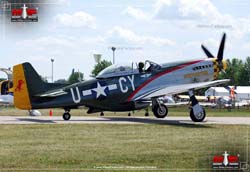
North American P-51 / F-51 Mustang
The North American P-51 Mustang proved an invaluable addition to the Allied cause in the latter half of World War 2. The system was designed and flown in a matter of months and made such an impact that it could clearly be con...


1940

168

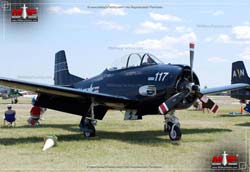
North American T-28 Trojan
...


1949

169

Northrop F-89 Scorpion
The F-89 Scorpion offered up a solid ten years of service for the United States Air Force, charged with the defense of the upper North from Soviet bomber incursions during the Cold War. The F-89 was a large aircraft and desig...


1949

170

Northrop P-61 / F-61 Black Widow
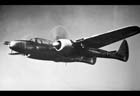
The Northrop P-61 Black Widow became the United States' first aircraft specifically designed from the outset as a platform dedicated to the fine art of night-fighting. Enabled by its complex through highly-effective nose-moun...


1943

171

Northrop XP-56 Black Bullet
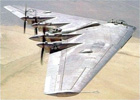
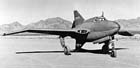
The XP-56 "Black Bullet" was designed by the Northrop company to an Army Air Corps proposal known as the R-40C. The XP-56 stood out as yet another radical design and focused on the flying wing concept while incorporating push...


1943

172

Northrop XP-79
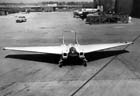
The XP-79 was another of Northrop's flying wing attempts with the initial project being conceived as a rocket-propelled model. The design was dominated by the large horizontal wing surface area with twin vertical tail surface...


1945

173

OQ-2A Aerial Target
...


1941

174

Petlyakov Pe-2
The Petlyakov Pe-2 began arriving in small numbers on the East Front in the summer of 1941. The system owed its pedigree from the developmental Petlyakov-designed VI-100 high-altitude interceptor that featured a pressurized c...


1940

175

Petlyakov Pe-3
...


1941

176

Piasecki / Boeing Vertol H-21 Workhorse / Shawnee
...


1949

177

Piper L-4 Grasshopper
The Piper L-4 Grasshopper evolved from the successful Piper Cub series that took to the air as early as 1930. By 1941, the US Army was in the market for such a light observation and liaison aircraft with rugged reliability, p...


1941

178

Reggiane Re.2000 Sagittaro (Archer)
The Reggiane 2000 series of aircraft was very reminiscent of American interwar designs appearing between 1930 and 1940. The Reggiane maintained a stout profile centered around a large engine, rounded edge wings and traditiona...


1943

179

Republic F-84 Thunderjet / Thunderstreak / Thunderflash
The Republic F-84 Thunderjet appeared as an American post-war design and played a pivotal role in the early years that was the Cold War. The nimble little system provided many an Allied nation with a nuclear-capable deterrent...


1947

180

Republic P-47 / F-47 Thunderbolt
While much of the romance of World War 2 dogfighting often heads in the direction of the USAAF's North American P-51 Mustang or the Vought F4U Corsair, the Republic P-47 Thunderbolt (affectionately nicknamed "the Jug" by her ...


1942

181

Republic XF-12 Rainbow
The Republic XF-12 "Rainbow" was envisioned as the USAAF's new dedicated strategic reconnaissance platform in the latter years of World War 2, going head-to-head with Howard Hughe's XF-11 creation. Unfortunately for both, the...


1946

182

Republic XP-72 Super Thunderbolt
The XP-72 Wasp Major Thunderbolt was intended to be an "ultimate" design of the highly successful P-47 Thunderbolt fighter-bomber as produced by Republic. The XP-72 was to incorporate the successful P-47 airframe and mate it ...


1944

183

Saab J 21
The Saab 21 series of fighter aircraft was of a most unique design - in more ways then one. The system was drawn up to a 1941 response for an indigenous fighter aircraft intended to replace the outdated airframes Sweden was c...


1945

184

Saab J 29 Tunnan (Barrel)
The Saab-produced J 29 Tunnan (meaning "barrel" due to its stubby-like barrel appearance) was the second jet-fighter design produced in Sweden following the Second World War. Following along with other nations at the time, Sw...


1949

185

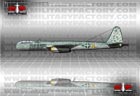
Short S.45 Solent
The Short Solent was a passenger transport "flying boat" designed in the years following World War 2, when a burgeoning passenger market was apparent. Many wartime flying boats were immediately converted to commercial air tra...

1946

186

Short Stirling
The gangly-looking Short Sterling formed the backbone of heavy bomber groups for the RAF from the Battle of Britain on through the end of the war, though by then deemed obsolescent and relegated to transport duties. Designed ...


1940

187

Short Sturgeon SB.3
The Short Sturgeon SB.3 was a set of prototypes ordered as anti-submarine warfare systems. The SB.3 was based highly on the well-performing World War 2-era Sturgeon S.A.1 torpedo bomber, with the SB.3 appearing to help the sy...


1949

188

Sukhoi Su-1 / Su-3
...


1940

189

Sukhoi Su-2
The Sukhoi Su-2 was the first aircraft design of Pavel Sukhoi and became a two-seat light bomber fielded by the Soviet Air Force in World War 2. Though a relatively modern design at the time of its inception, the Su-2 was qui...


1941

190

Supermarine Seafire
With the successful conversions of Hawker Hurricanes to carrier-operation roles, it was decided to take the successful land-based Supermarine Spitfires and attempt the same modifications. The resulting design was the Supermar...


1942

191

Tupolev Tu-4 (Bull)
...


1949

192

Vought F4U Corsair
The F4U Corsair series of aircraft was one of the finer fighter developments of the Second World War, primarily seeing combat in the Pacific Theater of War. The uniquely designed bent-wings and ever-improving powerplant assur...


1942

193

Vought F7U Cutlass
The Chance Vought F7U Cutlass was an interesting aircraft in many ways. For one, the aircraft was the direct result of American research into the jet designs and technologies of the Arado company - the German aircraft firm th...


1949

194

Vought OS2U Kingfisher
The OS2U Kingfisher was a product of the Vought aircraft firm, appearing initially as the VS.310 design to which the United States Navy accepted as a prototype in the XOS2U-1. The prototype would be airborne for trials by 193...


1940

195

Vultee A-35 Vengeance
The A-35 Vengeance was a dive bomber produced by the Vultee Aircraft Company and resulted in over a thousand examples being used by foreign forces under the Lend-Lease Act. Originally ordered for French use as the V-72, some ...

1941

196

Vultee XP-54 Swoose Goose
The Vultee XP-54 was one of the more distinct aircraft creations designed during World War 2. Produced through the essentially "empty canvas / blank check" approach by an Army Air Corps initiative (the specification was known...


1943

197

Vultee XP-81
The Consolidated Vultee XP-81 was a proposed long-range, high-altitude fighter design that was to be the answer for bomber escorting in Europe but, more importantly, throughout the island hopping campaign of the Pacific. The ...


1945

198

Westland Welkin
With its origins in the Westland Whirlwind, the Westland Welkin (meaning "Vault of Heaven") was a twin-engined fighter designed as a high-altitude interceptor to defend against another possible Luftwaffe bombing campaign agai...


1944

199

Westland Whirlwind
The Westland Whirlwind was a most capable design that might have seen even better service numbers were it not for the choice of engines. Originally slated to utilize the Rolls-Royce brand Merlin engines, the Whirlwind platfor...


1940

200

Yakovlev Yak-1 (Krasavyets)
Often overshadowed by its contemporaries in the West (to include the Supermarine Spitfire, North American P-51 Mustang, Messerschmitt Bf 109 and the Focke-Wulf Fw 190) the early production Yakovlev fighter aircraft were some ...


1940

201

Yakovlev Yak-17
The Yak-17 was a solid operator in service with the Soviet Union. As a post-World War Two design, the system had its roots in the Yak-3 piston-engine fighter which spawned the jet-powered Yak-15 - of which the Yak-17 was a di...


1947

202

Yakovlev Yak-23
The Yakovlev Yak-23 was the final iteration of the post-war turbojet designs beginning with the Yak-15 and continuing in the Yak-17 aircraft series. The Yak-23 was similar to the Yak-17 but differed in the utilization of high...


1947

203

Yakovlev Yak-3
The Yakovlev Yak-3 was a further development of the Yak-1 series of fighters (detailed elsewhere on this site) and was well renowned for possessing an impressive rate of climb and unmatched maneuverability. The system appeare...


1944

204

Yakovlev Yak-9 (Frank)
In line with other classic wartime fighters of World War Two, the Yakovlev-produced Yak-9 is no exception. Initially conceived from a developmental version of the Yak-7 that featured a combined construction of wood and metal,...


1943

205

Yokosuka D4Y Suisei (Judy)
The Yokosuka D4Y Suisei (translating to "Comet" and nicknamed "Judy" by the Allies) was a capable dive bomber serving the Imperial Japanese Navy during the Second World War. The system saw some reliability issues in early pre...


1942

206

Yokosuka MXY7-K1 Ohka (Cherry Blossom)
The Yokosuka MXY7-K1 Ohka (translated to "Cherry Blossom") was a single-seat pilot-guided suicide fighter proposed and produced by the Imperial Japanese Navy in a new attempt to thwart the ever-increasing advances by Allied f...


1945

 
  Totals:
206 There are a total of 206 aircraft from 1940-1949 in the Military Factory.


  Collections
  • Sons of Empire - WW2 Aircraft of Japan
  • Aircraft of the Battle of Britain
  • X-Planes Throughout History
  • French Aircraft of the Great War
  • The German Luftwaffe in World War 2
  • Nightfighters - In a Class All Themselves
  • The Top Ten Fighters of All Time
  • Carrier "Born" Aircraft - Navy Mounts
  • If Boats Could Fly - Flying Boat Aircraft


Free GI Bill Guide

Top MF Stuff: Military Pay Scale Chart | Military Ranks | World War 2 Weapons | Sniper Rifles | Conversion Calculators


©2009 www.MilitaryFactory.com • Content ©2003-2009 MilitaryFactory.com • All Rights Reserved • Disclaimer Privacy Policy Site Map Origins
Most photographic images appearing on this site are courtesy of the United States Department of Defense and are approved for public use.
Other images acquired through the public domain. Digital art work courtesy of Dan Alex.
Business Consulting by Kyle Williams

Material presented throughout this website is for historical and entertainment value and should not to be construed as usable for
hardware restoration, maintenance or general operation. Please consult manufacturers for such information.

Site Contact: militaryfactory at gmail dot com (replace "at" with "@" and "dot" with ".") eXTReMe Tracker