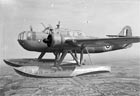
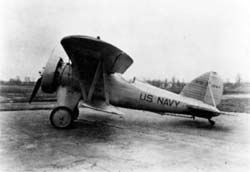
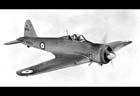
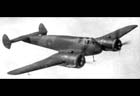
|
|
Aircraft from 1930-1939
The threat of war forces changes and the aircraft truly evolves.
| 1 |
 |
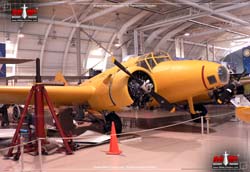
Airspeed Oxford
The Airspeed Oxford was an important British and Commonwealth aerial trainer that served through World War Two. The system appeared in two notable forms as the Oxford I and the Oxford II with a few subvariants sprinkled in be... |

1937 |
|
| 2 |
 |
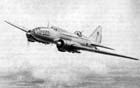
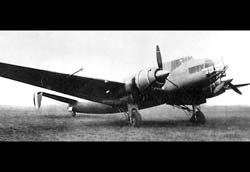
Amiot 143
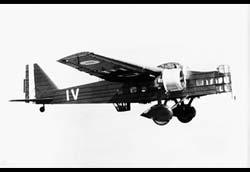
The Amiot 143 of the French Air Force represented an evolution in the Amiot piston-engine bomber series that replaced the Amiot 140 of 1931. First flying in 1935, the Amiot 143 system was an unspectacular design whose time ha... |

1935 |
|
| 3 |
 |
Arado Ar 195
The Arado Ar 195 was prototype design intended for operations from Germany's first aircraft carrier known as the Graf Zeppelin. The aircraft was developed to a requirement for a carrier-based torpedo bomber, to which some thr... |

1937 |
|
| 4 |
 |
Arado Ar 196
The Arado Ar 196 was the principle floatplane of the German Luftwaffe throughout World War 2. The aircraft was showcased in quantity on nearly every front that Germany was threatened - or was threatening - and fared well agai... |

1939 |
|
| 5 |
 |
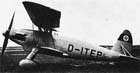
Arado Ar 68
The Arado-production of the Ar 68 signaled a stepping stone for fighter design in the German Luftwaffe. With the air force branch still held in secret from the rest of the world, the Luftwaffe quietly set about building up th... |

1934 |
|
| 6 |
 |
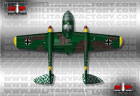
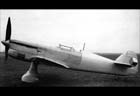
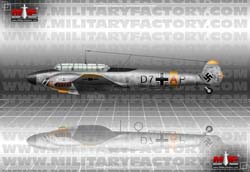
Arado Ar E.500
The E.500 was a proposed heavy fighter design put forth by Arado Flugzeugwerke of Germany. The system was designed as early as 1936 and featured a crew of four consisting of a pilot, co-pilot, dorsal turret gunner and ventral... |

1936 |
|
| 7 |
 |
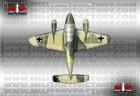
Arado Ar E.561
The Arado Ar E.561 was on the drawing boards as early as 1937. Classified as a heavy fighter, the type would have lived and died via its combination of firepower and performance. World War 2 brought about the need for purpose... |

1937 |
|
| 8 |
 |
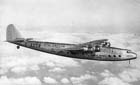
Armstrong Whitworth AW.27 Ensign
The impressive Armstrong Whitworth Ensign AW.27 series was made originally designed to a 1934 British government requirement for an air mail service transport to spearhead an improved method of correspondence to all points of... |

1936 |
|
| 9 |
 |
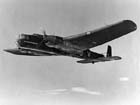
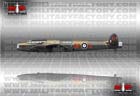
Armstrong Whitworth Whitley
Continuing in the tradition of ugly yet robust and reliable heavy bombers, the British Armstrong Whitworth Whitley was the heavy bomber of choice during the early war years and up through 1942. The massive unappealing design ... |

1937 |
|
| 10 |
 |
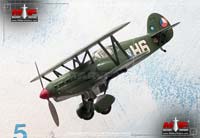
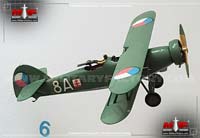
Avia B.534
The Czechoslovakian Avia B.534 series of biplane was a highly regarded though often forgotten product of the European nation. Some reports make it the best aircraft of its category during its early run through the 1930s. Such... |

1934 |
|
| 11 |
 |
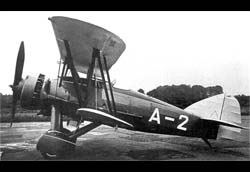
Avions Fairey Fox
Avions Fairey was set up in Belgium as an offshoot of the Fairey Aviation Company of Britain. The production facility was initially created for the local production of the Fairey Firefly, to which the facilities were later us... |

1933 |
|
| 12 |
 |
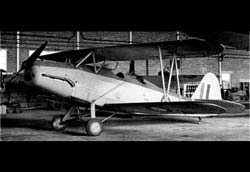
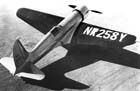
Avro 621 Tutor
The Avro 621 Tutor was a primary component of RAF and RN pilot training in the interwar years. Developed from the World War 1 era Avro 504 series, the 621 type proved to be a follow-up success. Built to some 852 examples, the... |

1933 |
|
| 13 |
 |
Avro Anson
The Avro Anson was a militarized version of the commercial passenger transport Avro 652. The Anson itself was produced to fulfill Specification 18/35 brought about by the British Air Ministry and originally intended for use a... |

1936 |
|
| 14 |
 |
Bell P-39 Airacobra
The Bell P-39 Airacobra is yet another in the long line of aircraft studies stemming from World War 2 in the "what-might-have been" category. The system had all the looks of a top performer, armament that could go head to hea... |

1938 |
|
| 15 |
 |
Beriev Be-2 / MBR-2
The Beriev Be-2 was one of the few floatplanes of note fighting for the Soviet Union throughout World War Two as very little in the way fo attention to the type was given. The floatplane was utilitarian by nature with pedestr... |

1935 |
|
| 16 |
 |
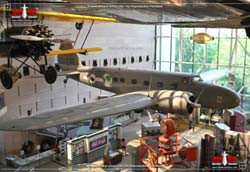
Boeing 314 Clipper (C-98)
The Boeing Model 314 "Clipper" was a floatplane primarily developed by the Boeing Aircraft Company to fulfill a Pan American requirement for a long-range passenger floatplane. The system saw only 12 examples produced in two v... |

1939 |
|
| 17 |
 |
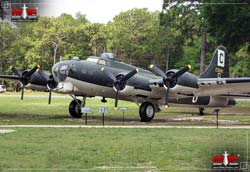
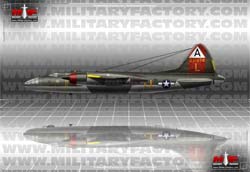
Boeing B-17 Flying Fortress
Though the Consolidated B-24 Liberator was built in greater numbers, the Boeing B-17 Flying Fortress is often regarded as the more important heavy bomber for the American Allies in the Second World War, accounting for over 29... |

1937 |
|
| 18 |
 |
Boeing P-26 Peashooter
The P-26 became the first all-metal fighter design for the United States. Appearing similar to the later "Gee Bee" series of racers, the P-26 replaced the P-12 to which the newer P-26 outclassed in nearly every way.
The P-... |

1932 |
|
| 19 |
 |
Boulton Paul Defiant
The inter-war years saw a vast shift to more modern and potent aircraft platforms. The Boulton Paul Defiant followed as only the RAF's third such monoplane aircraft and, amazingly enough, the Defiant also became the RAF's fir... |

1937 |
|
| 20 |
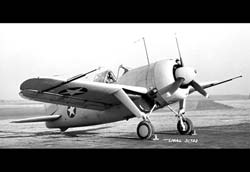
 |
Brewster F2A Buffalo
The stubby F2A Buffalo series became the United States Navy's first operational aircraft of monoplane design. Despite this honor, the system as a whole failed to live up to expectations set forth by technology and combat tact... |

1937 |
|
| 21 |
 |
Bristol Beaufighter
Serving until the 1960s with the Royal Air Force, the Bristol Beaufighter (or simply "Beau") became a national hero through her service in the Battle of Britain, World War Two and beyond. The Beaufighter became the world's fi... |

1939 |
|
| 22 |
 |
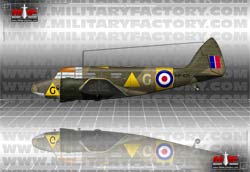
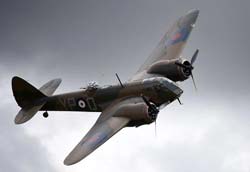
Bristol Blenheim
The Bristol Blenheim billed as a bomber though when it was officially installed into operational active service, the aircraft was quite capable of outrunning some fighters. The twin-engine, 3-person aircraft would equip the f... |

1935 |
|
| 23 |
 |
CANT Z.501 Gabbiano (Gull)
The CANT Z.501 Gabbiano (meaning "Gull") was a floatplane aircraft developed in Italy and shared a resemblance to the successful American Consolidated PBY Catalina series. By the time of the Second World War, the design shoul... |

1936 |
|
| 24 |
 |
Consolidated PBY Catalina
Maritime aircraft play an understated role, especially in that of war time. Fly boats came to pass, first in peace-time development as early as 1901, and ultimately in the First World War. Their development, with experience g... |

1936 |
|
| 25 |
 |
Curtiss A-12 (Shrike)
The A-12 was an inter-war product of the Curtiss Aeroplane and Motor Company first appearing in 1933. The type became the first quantitative monoplane aircraft in service with the United States Army Air Corps upon its incepti... |

1933 |
|
| 26 |
 |
Curtiss P-36 Hawk / Mohawk
The P-36 Hawk aircraft produced by Curtiss was a widely accepted and operated weapon system. From its initial appearance once can see the influence that the P-36 had in the design of the P-40 Warhawk of "Flying Tigers" fame. ... |

1935 |
|
| 28 |
 |
Curtiss XP-42
The Curtiss XP-42 was a further development of the Curtiss P-36 Hawk model though it would share some initial outward similarities to Curtiss' most well known aircraft - the P-40 Warhawk. Later in its development, the XP-42 w... |

1939 |
|
| 29 |
 |
de Havilland D.H.82 Tiger Moth
The Tiger Moth series produced by the UK firm of de Havilland went on to become one of the more beloved trainers of all time, sending many a British and Commonwealth nation pilot in the inter-war years and through World War T... |

1931 |
|
| 30 |
 |
Dewoitine D.500
The D.500 series, as a whole, was merely a stop-gap design for France - bridging a gap between two eras of aviation resulting from post-World War One design and preceeding World War, commonly known as the interwar years. The ... |

1936 |
|
| 31 |
 |
Dewoitine D.520
The Dewoitine D.520 was a single seat piston-engine fighter designed and built for the French Air Force. Developed from lessons learned in their ill-fated D.513 design, Dewoitine produced a fighter of sleek design and accepta... |

1939 |
|
| 32 |
 |
Dornier Do 17
The Dornier Do 17 (sometimes referred to as "the Pencil" due to its fundamental shape) was a respect medium bomber class utilized by the German Luftwaffe in the Battle of Britain and throughout the Second World War.
Initia... |

1934 |
|
| 33 |
 |
Dornier Do 18
Though a serviceable flying boat with a successful pedigree, the Dornier Do 18 was highly outclassed and outdated at the start of World War 2 and was subsequently used in limited numbers, relegated mostly to air and sea rescu... |

1938 |
|
| 34 |
 |
Dornier Do 215
The Dornier Do 215 was originally intended for export, beginning life as a redesignated version of the Dornier Do 17 light/medium bomber. Three prototypes were initially produced from the Do 17K - the V1, V2 and V3 - each wit... |

1939 |
|
| 35 |
 |
Dornier Do 217
The Dornier Do 217 was a multi-faceted performer for the German Luftwaffe that ended up fulfilling various roles from bomber to reconnaissance aircraft, aerial test bed to torpedo bomber. The twin-engine 4-man aircraft appear... |

1938 |
|
| 36 |
 |
Dornier Do 22
The Dornier Do 22 was a German-designed and produced three-man floatplane. It was produced in Germany and Switzerland for the export market despite the fact that the aircraft proved a winning design for the Germans. The Do 22... |

1938 |
|
| 37 |
 |
Dornier Do 24
The Dornier Do 24 was a capable flying both serving in limited numbers both Allied and Axis powers in World War 2. The system was classified as a flying boat, capable of operations on both land and sea, and was the product of... |

1937 |
|
| 39 |
 |
Douglas SBD Dauntless
The Douglas DBS Dauntless dive bomber was a key cog in the America Navy war effort throughout the Pacific during World War 2. Though a product of the middle-to-late 1930's, the type continued to soldier on even as more advanc... |

1938 |
|
| 41 |
 |
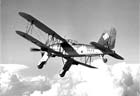
Fairey Swordfish
The Fairey Swordfish was one of the unsung heroes of the Second World War. With Britain seemingly fighting the world war all on its own, much pressure fell upon its air force and navy branches to produce results. The Swordfis... |

1936 |
|
| 42 |
 |
Fiat BR.20 Cicogna (Stork)
The Fiat BR.20 Cicogna (translated to "Stork") was a medium bomber in service with the Italian Air Force in the late inter-war years and early years of World War Two. Much like other inter-war designs however, the Cicogna was... |

1936 |
|
| 43 |
 |
Fiat CR.32
Arguably the best biplane fighter of Italian design before the start of the Second World War. The plane was also built for export for Spain and Sweden air defence. The Fiat CR.32 saw air combat service with Spain in the Spani... |

1938 |
|
| 44 |
 |
Fiat CR.42 Falco (Falcon)
Despite its by-gone era appearance, the Fiat CR.42 Falco (meaning "Falcon") played a crucial role in the early war years for Italy, serving as the primary fighter for the Italian air force (Regia Aeronautica. The system was f... |

1939 |
|
| 45 |
 |
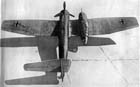
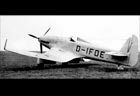
Fiat G.50 Freccia (Arrow)
The Fiat G.50 Freccia (meaning "Arrow") series provided the Italian Air Force with a then-modern monoplane fighter featuring a retractable undercarriage, all-metal construction and an enclosed cockpit. During this period in a... |
1938 |
|
| 46 |
 |
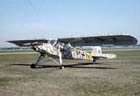
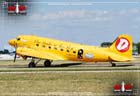
Fieseler Fi 156 Storch (Stork)
The seemingly fragile Fieseler Fi 156 Storch(or "Stork") does not seem to have a home in a global conflict as World War 2 was yet the little machine became a spectacular multi-purpose airframe to which the Third Reich put to ... |
1937 |
|
| 47 |
 |
Focke-Wulf Fw 187 Falke (Falcon)
Despite demonstrating some impressive performance statistics from underpowered engines, the Focke-Wulf product Fw 187 Falke (or "Falcon") never materialized into a production quantity models. Similar in design and reach to th... |

1937 |
|
| 48 |
 |
Focke-Wulf Fw 190 Wurger (Shrike)
The Focke-Wulf Fw 190 single-seat fighter is held by some to be the best German piston fighter of the Second World War - and with good reason as the weapon system accounted for hundreds of Allied bomber and fighter losses thr... |

1939 |
|
| 49 |
 |
Focke-Wulf Fw 200 (Condor)
The German Fw 200 Condor was initially a trans-Atlantic passenger and cargo (mail) aircraft developed by Focke-Wulf and legendary designer Kurt Tank in 1936. Early prototypes were fitted with the Pratt & Whitney Hornet radial... |

1938 |
|
| 50 |
 |
Fokker D.XXI
Designed by Anthony Fokker in 1935, the Fokker D.XXI first flew on March 27th, 1936. The system was originally intended to fill the ranks of the Netherlands East Indies Army Air Service but the arrival of World War 2 eventual... |

1938 |
|
| 51 |
 |
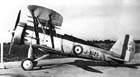
Gloster Gauntlet
Gloster Gauntlet origins lay in a Gloster design appearing in the late 1920's for the Royal Air Force and served throughout the 1930's with several local and foreign-based air groups. The aircraft was designed as a fighter an... |

1935 |
|
| 52 |
 |
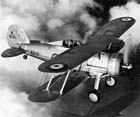
Gloster Gladiator
The Gloster Gladiator was a product of the Gloster Aircraft Company and a design of one Henry Phillip Folland. Achieving first flight on September 12th, 1934, the system was officially introduced into Royal Air Force service ... |

1937 |
|
| 53 |
 |
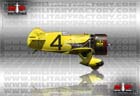
Granville Gee Bee (Series)
The Gee Bee (deriving its name from a shortened form of "Granville Brothers") racers became the unofficial symbol of the "Golden Age" of flight during the interwar years. Its unique design and high-speed performance allowed i... |

1931 |
|
| 54 |
 |
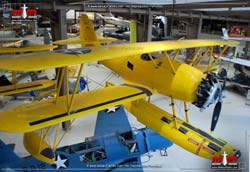
Grumman F2F
Leroy Grumman designed this portly biplane fighter for the United States Navy. Grumman had already made a steady image for his company with the design of the FF-1, a similar two-seat biplane fighter that proved quite the spee... |

1935 |
|
| 56 |
 |
Hawker Fury (I & II)
The Hawker Fury was the mainstay of Britain air defense throughout the 1930's until being replaced by the Gloster Gladiators. The Fury's design was in all actuality, a stop-gap design while the Hawker Hurricane was being desi... |

1931 |
|
| 57 |
 |
Hawker Hurricane
The Hawker Hurricane was indeed the true star of Britain's march against the Third Reich. Often overshadowed by the sleeker and sexier Supermarine Spitfire, the Hurricane system evolved from the Hawker "Fury Monoplane" as it ... |

1937 |
|
| 58 |
 |
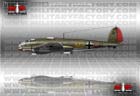
Heinkel He 111
Though the base He 111 was arguably the most important bomber of the Third Reich during the Second World War, the idea of bombers winning the war was lost on German warplanners - in particular Adolph Hitler - whom envisioned ... |

1936 |
|
| 59 |
 |
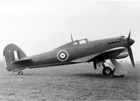
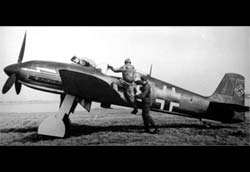
Heinkel He 112
The Heinkel He 112 was the only serious threat (next to the Messerschmitt Bf 109) to becoming Germany's first modern monoplane design in operational service. The aircraft exhibited potential right from the start but was ultim... |

1935 |
|
| 60 |
 |
Heinkel He 178
The Heinkel-produced He 178 has the distinct honor of becoming the world's first aircraft to fly solely with a turbojet engine. The aircraft was already in the design stage in 1936, eventually hitting the skies before the war... |

1939 |
|
| 61 |
 |
Heinkel He 51
The He 51 was a product of the German Heinkel firm and a design of the Gunter twins, Walter and Siegfried. The Gunters became part of the Heinkel firm in 1931 and made the He 49 their first product with the company. The He 49... |

1935 |
|
| 63 |
 |
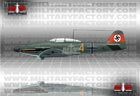
Henschel Hs 123
The Henschel-produced Hs 123 aircraft became the last operational biplane for the German Luftwaffe during World War two. Born from a German requirement for a dive-bomber aircraft as early as 1933, several Henschel Hs 123 test... |

1936 |
|
| 64 |
 |
Ilyushin IL-4
In many ways the Ilyushin-brand IL-4 was a "forgotten" bomber of the Second World War - at least in the West - though it formed the majority of Soviet bomber wings and was produced in excess of 5,000 examples. The system perf... |

1937 |
|
| 65 |
 |
Junkers Ju 87 (Stuka)
Before the Allies would gain air superiority over the skies of France and Germany, the Junkers Ju 87 "Stuka" dive bomber would reign supreme. The system, for a time, became the terror of both civilian and soldier alike, as th... |

1937 |
|
| 66 |
 |
Junkers Ju 88
The Junkers Ju 88 represented one of the better and more successful bomber designs attributed to the German Luftwaffe. The system performed on a variety of levels, achieving success with most every role and saw production rea... |

1939 |
|
| 67 |
 |
Kawanishi H6K (Mavis)
Though looking very much the part of a German-produced Dornier series flying boat, the Kawanishi brand H6K series (codenamed "Mavis" by the Allies) had more in common with Western flying boat designs if anything. Interestingl... |

1938 |
|
| 68 |
 |
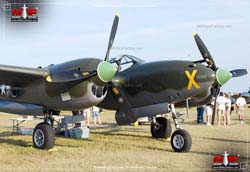
Lockheed P-38 Lightning
The Lockheed P-38 Lightning (often called the "Fork-Tailed Devil" from the German perspective) was the brainchild of aviation engineer Kelly Johnson. The name "Lightning" itself is believed to be derived from the designation ... |

1939 |
|
| 70 |
 |
Macchi MC.200 Saetta (Lightning)
The Macchi M.C.200 Saetta (or "Lightning") was the main production fighter in the Italian military when Italy entered the Second World War. Overall, a most basic of fighter designs, armed with 2 x 12.7mm machine guns and dece... |

1938 |
|
| 71 |
 |
Martin B-10
The Martin B-10 medium bomber was a breakthrough design for American military aviation when it appeared on the scene in 1932. Though made obsolete at the outbreak of hostilities in World War Two, the type persevered in other ... |

1932 |
|
| 73 |
 |
Messerschmitt Bf 109
The Messerschmitt Bf 109 was the quintessential fighter for the Third Reich throughout the Second World War. Clandestine German involvement in the Spanish Civil War allowed Bf 109 pilots to develop tactics and responses that ... |

1935 |
|
| 74 |
 |
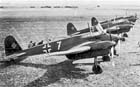
Messerschmitt Bf 110 Zerstorer (Destroyer)
The twin-engine Messerschmitt Bf 110 Zerstorer (or "Destroyer" or even "Heavy Fighter" in some sources) was initially designed to meet a German specification for a "high-speed bomber and heavy fighter". The result was the les... |

1939 |
|
| 75 |
 |
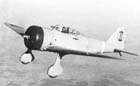
Mitsubishi A5M (Claude)
The Mitsubishi A5M (code-named "Claude" by the Allies) became the world's first shipborne monoplane fighter aircraft when it was inducted into service with the Imperial Japanese Navy in 1937. The system served in some capacit... |

1937 |
|
| 76 |
 |
Mitsubishi Ki-21 (Sally)
The Mitsubishi Ki-21 (codenamed "Sally" by the Allies) was a successful medium bomber in service with the Japanese Air Force since 1939, seeing combat action up until 1945 despite the fact that the aircraft was already outcla... |

1939 |
|
| 77 |
 |
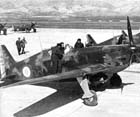
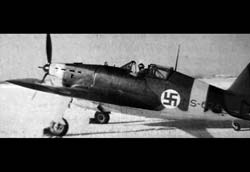
Morane-Saulnier M.S.406
The Morane-Saulnier M.S.406 was a single engine, piston-powered, single-seat fighter appearing just before the outbreak of hostilities between France and Germany. Though a solid design by 1930's standards, the system did not ... |

1938 |
|
| 78 |
 |
Nakajima Ki-27 (Nate / Abdul)
The Nakajima Ki-27 "Nate" (known early on as "Abdul") was a successful low-monoplane, all-metal with stressed skin fighter design employed by the Empire of Japan throughout the Second World War. Initially conceived of as a pr... |

1937 |
|
| 79 |
 |
Nakajima Ki-43 Hayabusa (Oscar)
The Nakajima Ki-43 Hayabusa (meaning "Peregrine Falcon" and codenamed "Oscar" by the Allies) was a mass-produced fighter for the Imperial Japanese Army in World War 2. Next to the Mitsubishi A6M "Zero" types, the Oscar was th... |

1932 |
|
| 80 |
 |
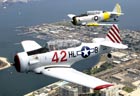
North American T-6 Texan
The T-6 Texan was and is a world famous single-engine aircraft primarily known for its use as a trainer. A product of the North American Aviation Company, the T-6 Texan appeared during the years spanning World War 2, survived... |

1936 |
|
| 82 |
 |
Polikarpov I-16
The Polikarpov I-16 fighter proved to be quite the little aggressor before and throughout the Second World War. Initially seeing combat in the Spanish Civil War, the system would go on to see more during the Soviet invasion o... |

1935 |
|
| 85 |
 |
PZL.23 Karas
The PZL.23 "Karas" (meaning "the crucian carp") series of aircraft was a conventional - yet outdated - monoplane light bomber / reconnaissance platform of Polish design in World War 2. The system was wholly inadequate in spee... |

1936 |
|
| 88 |
 |
Savoia-Marchetti SM.79 Sparviero (Sparrowhawk)
The Savoia-Marchetti SM.79 Sparviero series of tri-engined bombers was the best bomber for the Italian Axis power in the Second World War. Aptly named the "Sparrowhawk", the system was double-effective in the anti-shipping ro... |

1934 |
|
| 90 |
 |
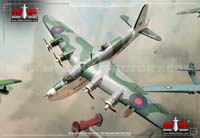
Short Sunderland
The Short Sunderland was the premiere flying boat of World War Two for the British. Often regarded as the best flying boat of the war, the Sunderland played up to some great strengths including potent self-defense armament an... |

1937 |
|
| 92 |
 |
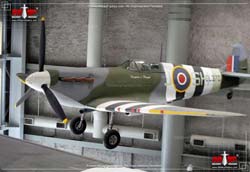
Supermarine Spitfire
The legendary Spitfire earned fame through its exploits in the Battle of Britain, often shadowing the equally successful Hawker Hurricanes. The Spitfire's image of a sleek and fast fighter with firepower to boot captured the ... |

1938 |
|
| 95 |
 |
Tupolev SB-2
The Tupolev SB-2 (the "SB" in the designation standing for "skorostnoi bombardirovschik" meaning "fast bomber") was a light-to-medium class bomber in service with Soviet forces in the Second World War. At the time the system ... |

1936 |
|
| 96 |
 |
Vickers Wellington
The Vickers-produced Wellington medium-class bomber was a principle bomber of the Royal Air Force at the start of the Second World War, serving up until late 1943 when it was relegated to maritime support roles. The Wellingto... |

1938 |
|
| 98 |
 |
Vultee BT-13 Valiant
The BT-13 Valiant was a stellar trainer aircraft used for basic flight training and for blind instrument training throughout World War 2. The rear cockpit was equipped with a curtain that could be moved forward to cover the s... |

1939 |
|
|
| |
|
| Totals: |
| 98 |
There are a total of 98 aircraft from 1930-1939 in the Military Factory. |
|
|